704.228.7788
 704.228.7788
 06/03/2025
 10 minutes Read
The best gutter guards of 2026 keep leaves, pine needles, and debris out of your gutters so water flows where it should, away from your roof, fascia, and foundation. But not every guard on the market earns its price, and some create more problems than they solve. As roofers who install and repair gutter systems across the Charlotte area, we see which guards actually hold up in NC’s heavy rain and heavy tree cover, and which ones fail within a season or two. This guide ranks the gutter guard types by real-world performance, breaks down 2026 pricing, and tells you honestly which ones to skip for homeowners in Cornelius and surrounding areas.
Here’s what you’ll learn in this guide:
- The gutter guard types ranked: Which designs perform and which underperform.
- 2026 pricing: What you’ll actually pay per linear foot, DIY and professional.
- What to avoid: The guards we’ve watched fail on real NC homes.

5 Gutter Guard Types, Ranked by Performance
After years of installing and servicing gutters on Charlotte-area homes, here’s how the main gutter guard types actually rank. We’re ranking by real-world performance and longevity, not by marketing claims.
Quick Comparison: Gutter Guard Types
If you’re short on time, here’s how the five types stack up at a glance.
| Rank | Type | Best For | Blocks Pine Needles? | Lifespan | Install |
| 1 | Micro-Mesh | Heavy tree cover, fine debris | Yes | 15+ years | Professional (premium) or DIY |
| 2 | Reverse Curve | Moderate debris, low maintenance | Partially | 15+ years | Professional |
| 3 | Screen | Large leaves, light debris | No | Varies by material | Easy DIY |
| 4 | Brush | Short-term or budget stopgap | No | Short | Very easy DIY |
| 5 | Foam | Not recommended in NC | No | Short | Easy DIY |
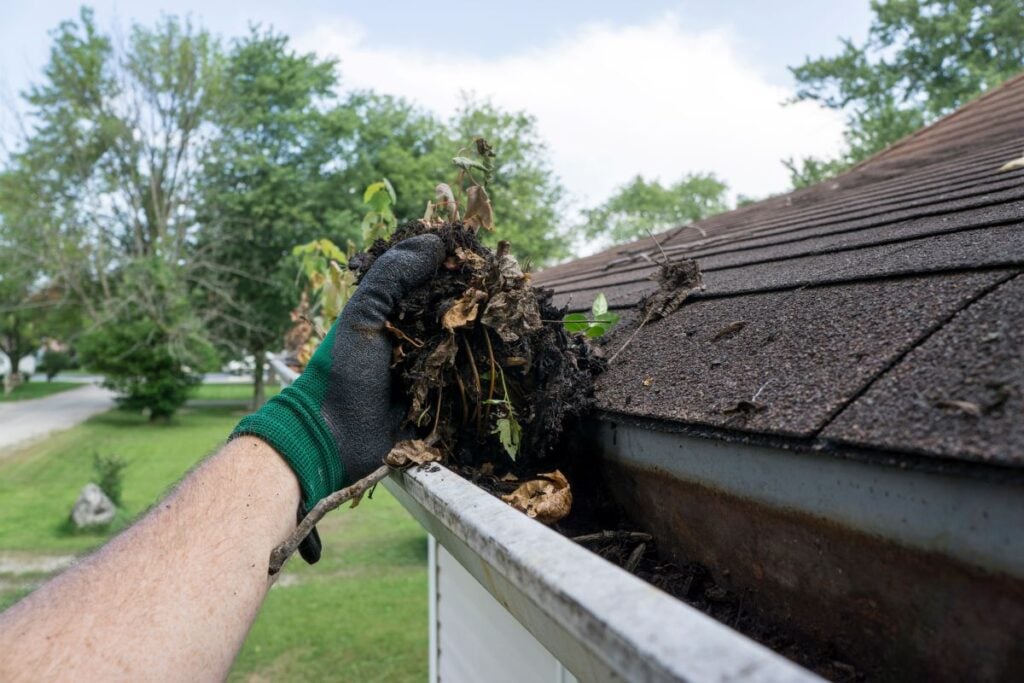
1. Micro-Mesh Guards (Best Overall)
Micro-mesh guards are the top performers, full stop. A fine stainless steel mesh, often 275 microns, blocks everything from oak leaves down to shingle grit and pollen while letting water through. They’re the only type that reliably handles NC’s pine needles and spring pollen, and quality systems last 15 years or more. The tradeoff is cost and the need for professional installation on premium systems.
- Why it ranks first: Blocks the widest range of debris, including fine pine needles and pollen.
- Material: Stainless steel micro-mesh on an aluminum or uPVC frame.
- Lifespan: 15-plus years for quality systems.
- Best for: Homes with heavy tree cover, pine needles, or fine debris.
- Tradeoff: Higher cost, and premium systems require professional installation.
2. Reverse Curve / Surface Tension (Strong, If Installed Right)
Reverse curve guards use a solid metal hood that channels water into the gutter while debris slides off the edge. When installed correctly at the right pitch, they perform well in heavy rain. Installed wrong, water overshoots the gutter entirely. This is the type where installation quality matters more than the product itself.
- Why it ranks second: Strong performance in heavy rain when installed correctly.
- Material: Solid aluminum or plastic hood over the gutter.
- Lifespan: 15-plus years for metal versions.
- Best for: Moderate debris and homeowners wanting a low-maintenance system.
- Tradeoff: Installation-sensitive, and can be visible from the ground.
3. Screen Guards (Solid Budget Option)
Screen guards are perforated metal or plastic panels that block large debris while letting water through. They’re affordable, easy to install, and fine for homes without much fine debris. They won’t stop pine needles or pollen, so they’re a light-debris solution.
- Why it ranks third: Affordable and effective against large debris only.
- Material: Perforated aluminum, steel, or plastic panels.
- Lifespan: Varies widely, metal outlasts plastic significantly.
- Best for: Homes with mostly large leaves and minimal fine debris.
- Tradeoff: Lets pine needles, pollen, and small grit through.
4. Brush Guards (Short-Term Only)
Brush guards are cylindrical bristles that sit inside the gutter and block leaves while water flows around them. They’re cheap and easy to drop in, but debris gets tangled in the bristles and they need frequent cleaning. We recommend these only as a temporary or budget stopgap.
- Why it ranks low: Debris tangles in the bristles and requires frequent cleaning.
- Material: UV-resistant poly bristles on a wire spine.
- Lifespan: Short, and performance drops as debris accumulates.
- Best for: Temporary or short-term budget solutions.
- Tradeoff: High maintenance, doesn’t block small debris.
5. Foam Inserts (Avoid in NC)
Foam inserts are porous blocks that fit into the gutter channel. They’re the lowest-performing option in North Carolina’s climate. The foam absorbs water, stays wet, and grows mold and mildew in NC’s humidity, then breaks down and clogs. We don’t recommend them here.
- Why it ranks last: Absorbs water, grows mold, and breaks down in NC humidity.
- Material: Porous foam blocks.
- Lifespan: Short, especially in humid climates.
- Best for: Almost nothing in North Carolina’s climate.
- Tradeoff: Becomes a clogged, moldy mess within a season or two.

What Gutter Guards Cost in 2026
Gutter guard pricing spans a wide range depending on type, material, and whether you install it yourself or hire a pro. Here’s what to expect in 2026.
2026 Gutter Guard Pricing
Professional gutter guard installation runs roughly $15 to $47 per linear foot in 2026 depending on the system, while DIY guards cost far less. According to This Old House, which surveyed 1,000 homeowners nationwide, professionally installed guards average between $32 and $47 per linear foot. Premium micro-mesh systems sit at the top of that range, while basic DIY screens can run just a few dollars per foot.
- Professional micro-mesh: Roughly $15 to $47 per linear foot installed, system-dependent.
- Professional reverse curve: Comparable premium pricing, often at the higher end.
- DIY micro-mesh: Lower cost, from a few dollars per linear foot.
- DIY screen guards: The most budget-friendly, often $1 to $6 per linear foot.
- Whole-home estimate: A typical home has 150 to 200 linear feet of gutter.
What Drives the Price
Several factors move a gutter guard quote up or down. Knowing them helps you compare bids fairly.
- Guard type and material: Micro-mesh and metal cost more than plastic screens.
- Linear footage: More gutter means more material and labor.
- Professional vs DIY: Installation labor is a major cost on premium systems.
- Roof access: Steep or multi-story homes raise labor costs.
- Gutter condition: Old or damaged gutters may need repair or replacement first.
How to Choose the Right Gutter Guard
The best guard for your home depends on your trees, your roof, and your budget. Here’s how to match the guard to your situation.
Match the Guard to Your Debris
Start with what’s actually falling on your roof. The debris type is the single most important factor in choosing a guard.
- Heavy pine needles or pollen: Micro-mesh is the only reliable choice.
- Large leaves only: Screen or reverse curve guards work well.
- Mixed heavy debris: Micro-mesh handles the widest range.
- Minimal tree cover: Basic screens may be all you need.
- Wooded lot: Invest in premium micro-mesh for long-term protection.
Factor In Your Roof and Gutters
Your roof pitch and gutter condition affect which guards will actually work on your home.
- Steep roofs: Need guards rated for high water flow.
- Low-slope roofs: Avoid reverse curve systems that can overshoot.
- Older gutters: Check condition before adding guards.
- Gutter size: Confirm guard compatibility with your gutter type, whether 5-inch or 6-inch.
- Existing damage: Repair sagging or leaking gutters before installing guards.
What to Avoid When Buying Gutter Guards
This is where we save you money. The most common gutter guard mistakes cost homeowners more in the long run than they save upfront. Here’s what to steer clear of.
The Mistakes We See Most
Each of these feels like a deal in the moment and becomes a headache later. Avoid them.
- Cheap plastic screens: Warp in NC heat, crack over time, and let small debris through.
- Foam inserts: Absorb water, grow mold, and clog fast in NC humidity.
- Brush guards for permanent use: Tangle with debris and need constant cleaning.
- Buying on price alone: The cheapest guard often becomes the most expensive to replace.
- DIY reverse curve: These are installation-sensitive and easy to get wrong.
Why Installation Quality Matters
Even the best guard fails if it’s installed wrong. Reverse curve systems overshoot when the pitch is off. Micro-mesh needs a secure, properly sloped mount. And any guard installed over damaged gutters just hides a problem that keeps growing. A guard is only as good as the gutter system and the installation behind it.
- Pitch matters: Wrong slope sends water over the gutter instead of into it.
- Secure mounting: Loose guards shift, gap, and let debris in.
- Gutter condition first: Guards don’t fix sagging or leaking gutters.
- Roof edge integration: Poor integration lets water under the shingles.
- Professional assessment: A pro matches the guard to your specific roof and gutters.

Finding the Right Gutter Protection for Your Home
The best gutter guard isn’t the most expensive one or the one with the loudest ad. It’s the one that matches your home’s trees, your roof, and your gutters, installed correctly by someone who knows what NC weather does to a gutter system. Micro-mesh wins for most Charlotte-area homes with tree cover, screens work for lighter debris, and foam and brush guards are rarely worth it here. As a GAF Master Elite Contractor and CertainTeed SELECT ShingleMaster in the top 3% of roofers nationwide, Roof Medic handles gutter installation and guards as part of a complete roof system, and we inspect first and recommend second so you get the guard that actually fits your home. If you’re weighing gutter guards or need your gutters assessed, contact Roof Medic today for guidance. We work with homeowners throughout Cornelius and surrounding areas and we’re happy to walk you through your options. Contractor License #79946.
Last Updated: August 2026
FAQs
Will I still need to clean my gutters with guards installed?
Occasionally, yes. Quality gutter guards dramatically reduce how often you need to clean your gutters, but no guard is truly maintenance-free. Micro-mesh systems need only occasional debris brushed off the top, while screens and brushes need more frequent attention. Plan on a yearly inspection to keep everything flowing.
Do gutter guards prevent ice dams?
Not directly. Gutter guards keep debris out, which helps water flow, but they don’t prevent ice dams on their own. Ice dams form from heat escaping through the attic and melting snow unevenly. Proper attic insulation and ventilation are the real fixes for ice dams, with guards playing a supporting role.
Are gutter guards worth the cost in North Carolina?
For most NC homes, yes. With heavy tree cover, pine needles, and pollen-heavy springs, gutter guards save significant cleaning time and prevent the water damage that clogged gutters cause. The key is choosing the right type. A quality micro-mesh system pays off, while a cheap foam insert is money wasted.
What gutter guard is best for pine needles?
Micro-mesh is the only type that reliably blocks pine needles. Pine needles are fine and sharp enough to slip through screen guards, surface tension guards, and brush guards. If you have pine trees near your home, a stainless steel micro-mesh system with a fine micron rating is the right investment.
Can I install gutter guards myself?
Some types, yes. DIY screen guards and snap-in mesh are manageable for a handy homeowner comfortable on a ladder. Premium micro-mesh and reverse curve systems are better left to professionals, since they’re installation-sensitive and often tied to warranties that require professional installation. Weigh the savings against the risk of a bad install.