704.228.7788
 704.228.7788
 04/16/2026
 8 minutes Read
Gutter screens are the simplest way to keep leaves, twigs, and shingle granules out of your gutters without tearing out the system you already have. But not every screen works the same way, and the wrong choice can actually make your gutters worse instead of better. For homeowners in Mooresville and surrounding areas, choosing the right screen depends on your roof pitch, the trees around your home, and how much storm water your gutters need to move.
This guide breaks down the four most common types of gutter screens, how each one performs in North Carolina weather, and what to look for when deciding which style fits your home.
In this post, you’ll learn:
- The four main screen types: Mesh, foam, brush, and reverse curve.
- Pros and cons: How each one holds up against debris, ice, and heavy rain.
- How to choose: What to weigh before you buy or book an installation.
Why Gutter Screens Matter in North Carolina
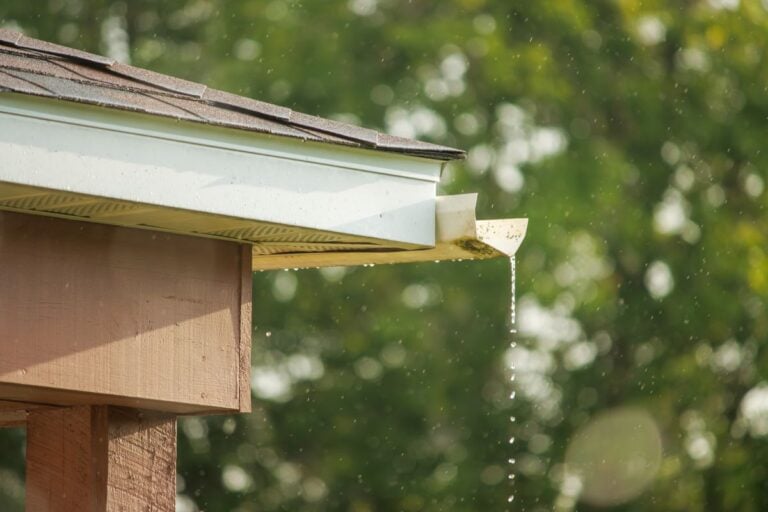
North Carolina homes deal with a unique combination of debris and water. Heavy tree cover drops leaves, pine needles, and seed pods across most of the year, and Charlotte averages around 43 inches of rainfall annually according to the National Oceanic and Atmospheric Administration. Clogged gutters in that environment overflow fast, and overflow is what causes fascia rot, foundation erosion, and interior leaks.
A good gutter screen reduces how often you need to clean your gutters and keeps water flowing where it’s supposed to go. A bad one traps debris on top, blocks water flow, or collapses under ice load.
What Gutter Screens Actually Do
Gutter screens sit over the open top of your gutter and let water pass through while blocking larger debris. Some screens lay flat across the gutter, some curve over the front edge, and some fill the gutter trough entirely. The goal is the same: less maintenance, fewer clogs, and a longer life for the gutter system.
- Reduce cleaning frequency: A well-chosen screen cuts gutter cleanings from twice a year down to once every few years.
- Prevent ice dams: Keeping debris out helps water drain properly in winter, reducing the risk of ice buildup at the roof edge.
- Protect the roof system: Clean gutters move water away from the fascia, soffit, and roof decking instead of backing it up.
- Extend gutter life: Less standing water and debris means less corrosion and seam failure over time.
The 4 Main Types of Gutter Screens
Each of the four screen styles below solves the debris problem in a different way. The right one for your home depends on your specific conditions, not on which one markets itself the loudest.
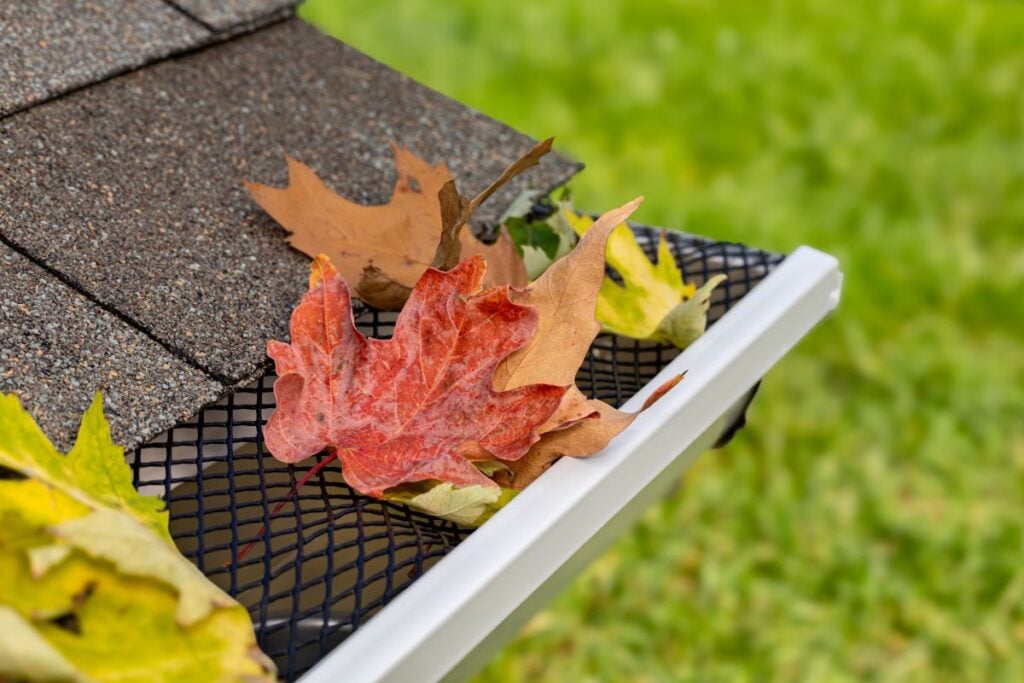
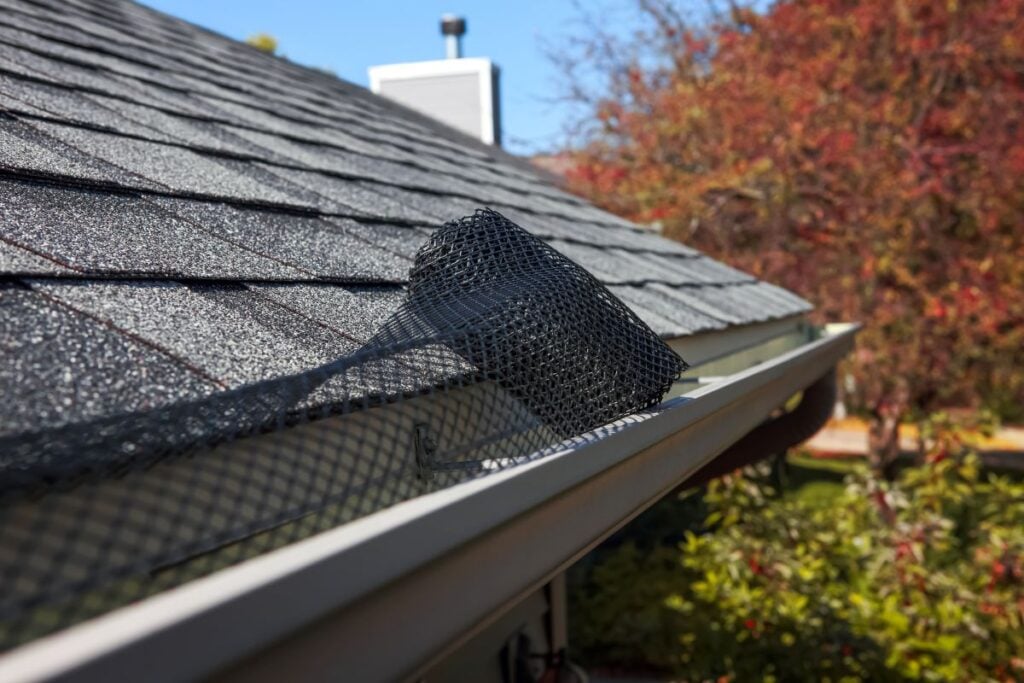
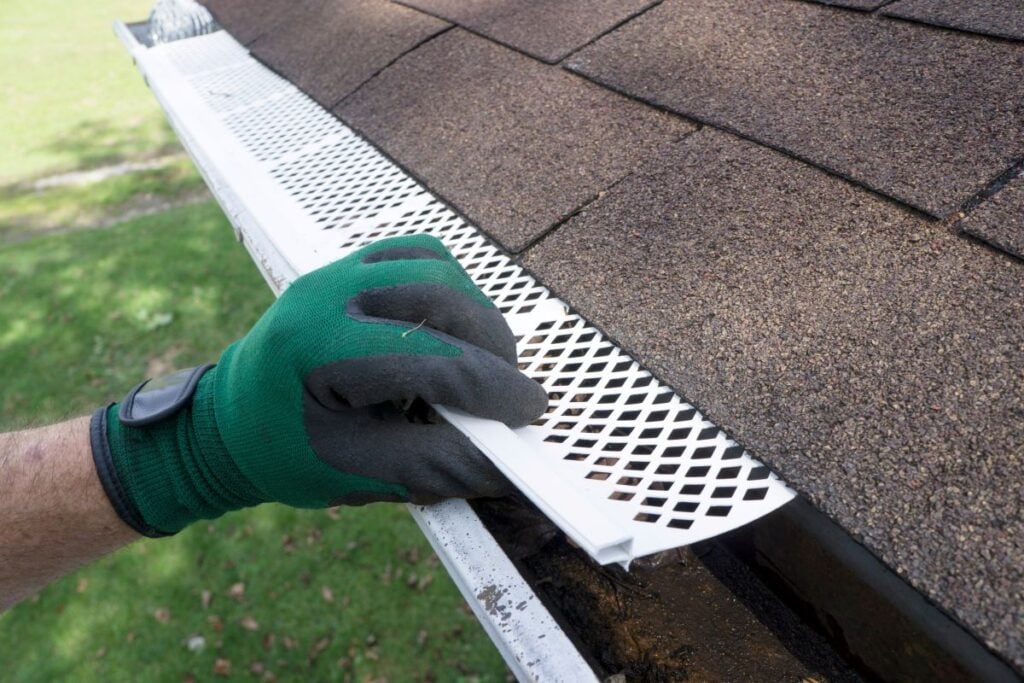
- Metal or plastic mesh screens: Flat panels with small holes that snap or screw over the top of the gutter. Affordable, easy to install, and effective against larger debris like leaves and sticks. Very fine mesh versions also block shingle granules and pine needles.
- Foam gutter inserts: Wedge-shaped foam blocks that fill the gutter trough. Water soaks through the foam while debris stays on top. Low cost and DIY friendly, but they can hold moisture and break down faster in heavy tree cover.
- Brush-style guards: Long cylindrical brushes that sit inside the gutter like a pipe cleaner. Debris catches on the bristles above the water flow. Simple to install but need frequent cleaning to stay effective.
- Reverse curve (surface tension) covers: Solid covers that curl over the front of the gutter with a narrow slit for water to follow. Water clings to the curve and drops into the gutter while debris rolls off the edge. Typically the most expensive option but the most hands-off once installed.
How Each Type Performs in Real Conditions
Performance on a product page is one thing. Performance on a Mooresville and surrounding areas roof in the middle of a summer thunderstorm is something else. Here’s how each of the four screen types actually holds up.
Mesh Screens
Fine metal mesh is the screen our team sees most often on homes with good long-term results. It blocks nearly all debris, including pine needles and shingle granules, and it handles heavy rainfall without overflow when installed correctly. Cheaper plastic mesh can sag, crack in cold weather, or blow off in high winds, so material quality matters more than the mesh style itself.
Foam Inserts
Foam is the easiest and cheapest option, which makes it tempting for DIY installs. The trade-off is lifespan. Foam absorbs water, collects fine debris inside the foam itself, and breaks down within a few years in humid climates. It also creates a surface where seeds can germinate, turning your gutters into planters. For most homes in North Carolina, foam is a short-term solution at best.
Brush Guards
Brush-style guards work best on homes with light debris, mostly leaves and larger twigs. The bristles trap debris on top, but fine material like pine needles and shingle granules slide right through and collect at the bottom of the gutter. They’re also harder to clean than mesh because debris tangles in the bristles. If your home is surrounded by pine trees, brush guards will disappoint you.
Reverse Curve Covers
Reverse curve covers are engineered to shed debris off the front edge while water follows the curve into the gutter. When installed at the right pitch, they’re highly effective. When installed at the wrong pitch, heavy rain overshoots the slit and pours past the gutter entirely. These systems almost always require professional installation, and they work best on moderate roof pitches with consistent eaves.
How to Choose the Right Gutter Screen for Your Home
The best screen for your neighbor may be the wrong one for you. A few specific factors should drive the decision, and a thorough inspection is the only way to know which one truly fits.
Factors That Actually Matter
- Tree type and coverage: Pine needles and maple seeds slip through screens that handle oak leaves just fine. Heavy pine cover pushes the decision toward fine mesh.
- Roof pitch: Steeper pitches generate faster water runoff, which can overshoot reverse curve covers. Lower pitches handle them better.
- Rainfall intensity: Charlotte summer storms dump water fast. Any screen you choose needs to handle peak flow, not just average rainfall.
- Gutter condition: Screens don’t fix failing gutters. If your existing gutters sag, leak, or have seam separation, install new gutters first and add screens after.
- Warranty and installation quality: A professionally installed system with a workmanship warranty outperforms a bargain DIY kit every time, even when the materials look similar.
Questions to Ask Before You Buy
Before you commit to a gutter screen system, a short list of questions will save you from the most common regrets we see on service calls in Mooresville and surrounding areas.
- What debris does it actually block: Ask for specifics on pine needles and shingle granules, not just “leaves and debris.”
- How is it attached: Snap-in is easy but can blow off. Screw-in lasts longer but requires proper installation.
- What’s the warranty: Look for both a product warranty and a workmanship warranty if it’s professionally installed.
- Does it void the roof warranty: Some systems attach under the shingles, which can affect the manufacturer’s roof warranty if done incorrectly.
- How do I clean it: Every screen needs occasional maintenance. Know what that looks like before you buy.
How Roof Medic Approaches Gutter Screens
Roof Medic inspects first and recommends second. If your gutters are in good shape and the right screen would save you years of maintenance, we’ll tell you which one fits your home. If your gutters need to be replaced first, we’ll say that too. No pressure to add a product that doesn’t belong on your roof.
What We Look at During an Inspection
- Gutter condition: We check for sagging, leaks, and seam separation before recommending any cover.
- Roof pitch and eave profile: We confirm the pitch is compatible with the screen style you’re considering.
- Tree coverage: We note the types of trees near the home and match the screen to the actual debris you’ll see.
- Existing warranty status: We make sure any installation protects your roof warranty rather than risking it.
Materials and Workmanship
Roof Medic installs gutter screen systems paired with the roof and gutter system so everything works together. Our workmanship warranty is 2 years standard and 5 years when homeowners follow our recommended approach. That’s backed by the same team that holds GAF Master Elite and CertainTeed SELECT ShingleMaster status, placing us in the top 3% of roofers nationwide.
Protect Your Gutters With the Right Screen for Your Home
The right gutter screen keeps debris out, water moving, and your roof system working the way it should. The wrong one creates more problems than it solves. Roof Medic has served Mooresville and surrounding areas with honest inspections, straightforward recommendations, and the kind of workmanship that comes from a veteran-owned team that takes your home as seriously as you do.
Ready to find out which gutter screen fits your home? Contact Roof Medic today to schedule an inspection. We’ll give you the honest answer on what your gutters actually need, not a sales pitch for the most expensive option on the shelf.