 704.228.7788
 704.228.7788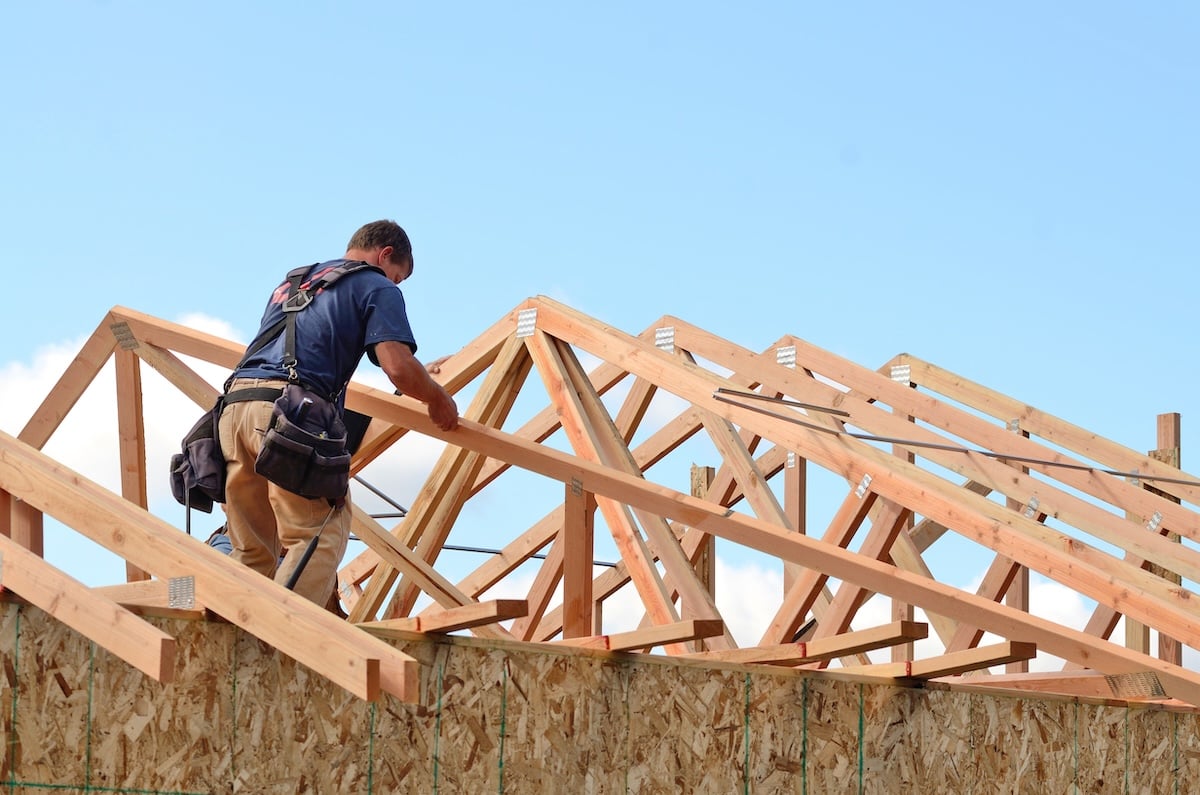
 05/29/2025
 11 minutes Read
If you’re planning a new roof build, an addition, or a major renovation, the rafters vs trusses decision shapes your budget, your timeline, and whether you’ll ever get usable attic space out of the roof. Both systems hold up your roof, but they’re built in completely different ways, cost different amounts, and suit different projects. Rafters are cut and assembled on-site the old-fashioned way. Trusses arrive prefabricated and ready to set. This guide breaks down the real differences, the 2026 costs, and which one is actually better for your situation.
Here’s what you’ll learn in this guide:
- What each system is: How rafters and trusses are built and how they work.
- The 7 key differences: A side-by-side breakdown of cost, speed, strength, and more.
- Which is better for your project: How to match the framing to your home and budget.
Rafters vs Trusses: Quick Comparison
Before we get into the detail, here’s the fast version. This table covers the differences most homeowners care about most.
| Feature | Rafters | Trusses |
| Cost (installed) | Higher ($7–$30/sq ft) | Lower ($5–$14/sq ft) |
| Installation time | Slower, built on-site (2–5 days) | Faster, prefabricated (1–2 days) |
| Attic space | Open attic or vaulted ceilings | Limited by internal webbing |
| Customization | Highly customizable | Limited flexibility |
| Structural strength | Strong, may need support beams on long spans | Engineered for long spans and even loads |
| Labor | More skilled labor required | Less on-site labor |
| Best for | Custom homes, renovations, attic space | New builds, budget projects, speed |
What Are Rafters?
Rafters are the traditional way to frame a roof. They’ve been used for centuries and still show up on custom homes and renovations where flexibility matters more than speed.
Traditional Stick Framing
Rafters are long, angled wood beams cut and assembled on-site to form the roof frame, a method often called stick framing. A skilled carpenter measures, cuts, and installs each piece to fit the specific roof. That hands-on process is what makes rafters flexible, and also what makes them slower and more expensive.
- Built on-site: Each rafter is cut and fitted by hand during construction.
- Centuries-old method: Proven, familiar to experienced carpenters.
- Ridge board and joists: Rafters tie into a ridge board at the peak and ceiling joists below.
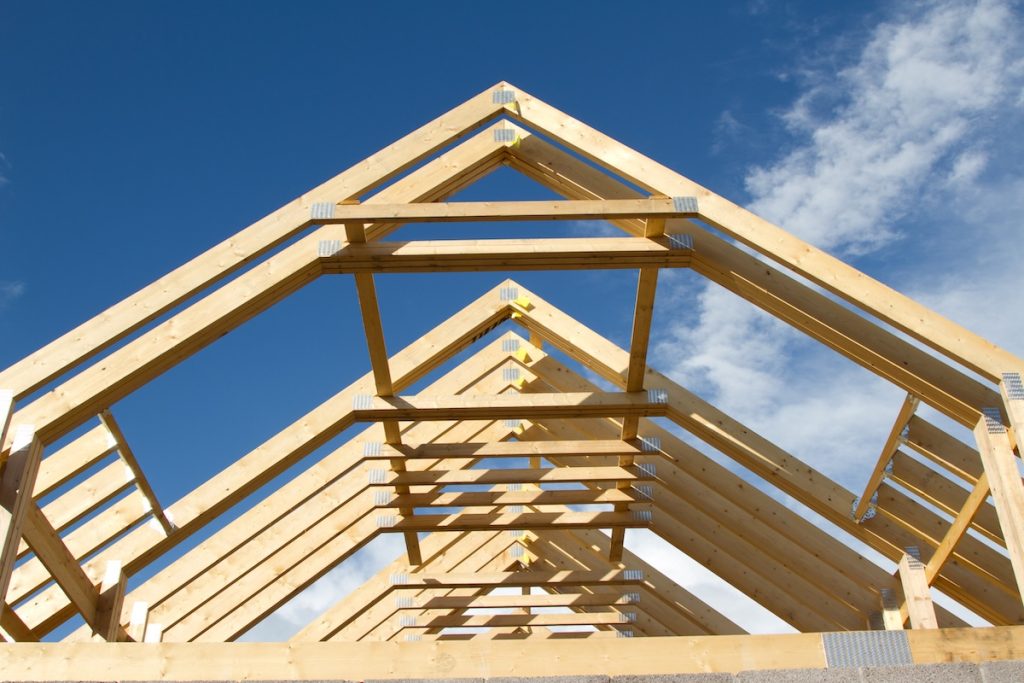
- Open framing: No internal webbing, leaving the roof cavity open.
- Skill-dependent: Quality depends heavily on the carpenter’s craftsmanship.
Why Homeowners Choose Rafters
Rafters win when a project needs flexibility, attic space, or a custom roofline. They’re the choice for homeowners who want more than a standard roof.
- Open attic space: No webbing means room for storage or future living space.
- Vaulted ceilings: Ideal for cathedral ceilings and exposed-beam looks.
- Custom rooflines: Handles irregular, asymmetrical, or complex designs.
- On-site changes: Framing can be adjusted during construction.
- Renovation matching: Easier to tie into an existing framed structure.
What Are Trusses?
Trusses are the modern standard for new construction. Most new homes built today use them, and for good reason.
Pre-Built Triangular Frameworks
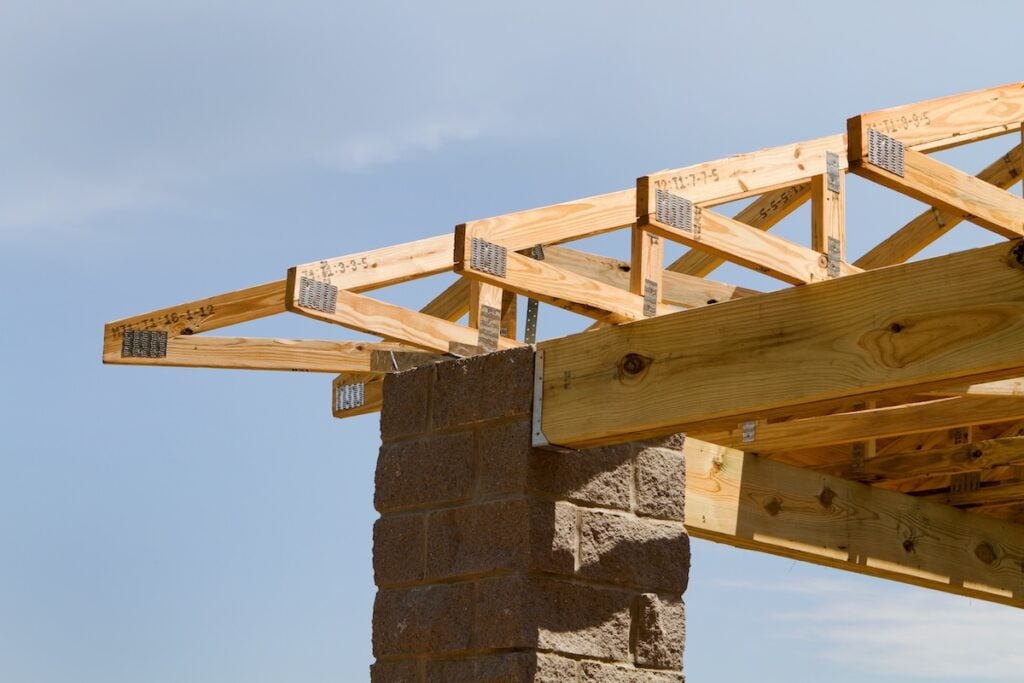
Trusses are engineered wood structures built off-site in a factory and delivered as complete units ready to set in place. Their interlocking triangular webbing distributes weight evenly and spans long distances without interior support walls. Because they’re factory-made to precise specifications, they install fast and consistently.
- Factory-built: Engineered and assembled off-site to exact specifications.
- Triangular webbing: Interlocking triangles distribute loads efficiently.
- Long spans: Can span wide distances without interior load-bearing walls.
- Delivered ready: Arrive as complete units for quick installation.
- Engineered precision: Consistent strength with minimal on-site error.
Why Homeowners Choose Trusses
Trusses win on speed, cost, and engineered reliability. For a standard roof, they’re hard to beat.
- Fast installation: Often set in a day or two.
- Lower cost: Less on-site labor and less material waste.
- Engineered strength: Built to handle wind and snow loads consistently.
- Fewer errors: Factory precision reduces construction mistakes.
- Long-span capability: Opens up flexible interior floor plans below.

7 Key Differences Between Rafters and Trusses
Here’s the side-by-side that actually drives the decision. These seven differences are what we walk homeowners through when they’re weighing framing options.
1. Installation Method
Rafters are built on-site from hand-cut lumber. Trusses are prefabricated off-site and delivered ready to install. This single difference drives most of the others, from cost to timeline to flexibility.
- Rafters: Cut and assembled piece by piece on the job site.
- Trusses: Manufactured in a factory and delivered complete.
- Impact: On-site building is slower but more adaptable.
- Precision: Factory trusses are more uniform than hand-cut rafters.
- Site conditions: Rafters adapt to surprises; trusses require accurate planning.
2. Labor and Time
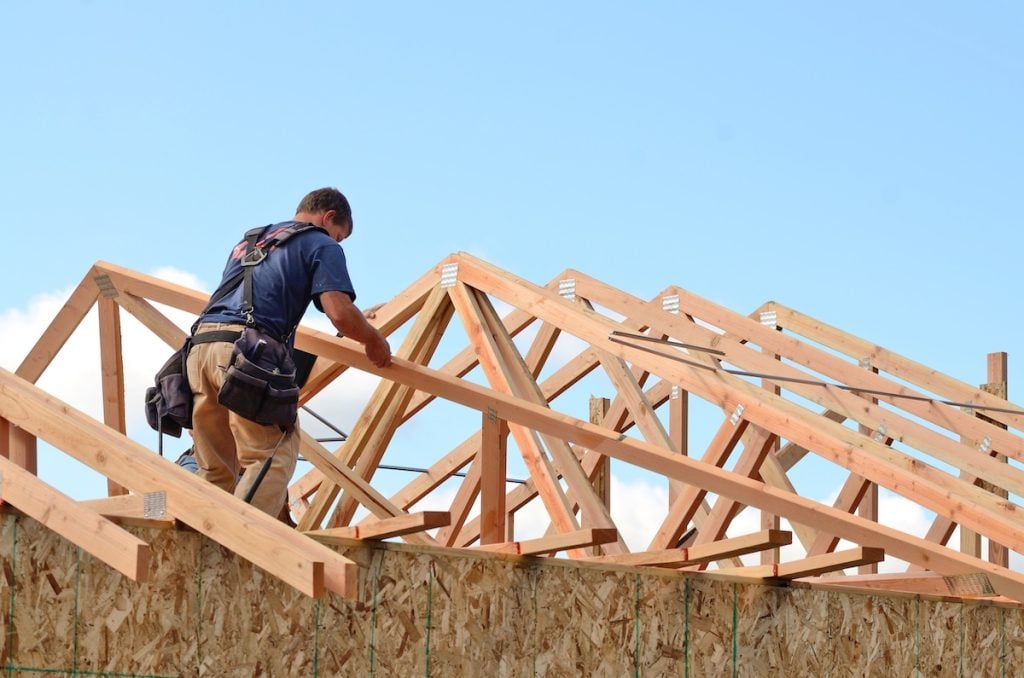
Rafters take longer and require skilled carpenters working on-site for several days. Trusses install in a day or two with a smaller crew. Time is money, and this is where trusses pull ahead for most builds.
- Rafters: 2 to 5 days of skilled on-site labor.
- Trusses: 1 to 2 days to set prefabricated units.
- Crew size: Rafters need more carpenters; trusses need fewer.
- Skill level: Rafters demand experienced framers.
- Weather exposure: Faster truss installs mean less weather risk mid-build.
3. Cost
Trusses are the more budget-friendly option for most projects. Installed, trusses run roughly $5 to $14 per square foot, while rafters run $7 to $30 per square foot. According to Angi, trusses cost less largely because prefabrication reduces on-site labor. The gap widens on bigger, more complex roofs.
- Trusses: Roughly $5 to $14 per square foot installed.
- Rafters: Roughly $7 to $30 per square foot installed.
- Why the gap: Rafters carry higher labor and slower build time.
- Scale effect: The cost difference grows on larger roofs.
- Complexity: Custom rooflines push rafter costs to the high end.
4. Design Flexibility
Rafters are the clear winner for custom and complex designs. Trusses are built for standard layouts and are difficult to alter. If your roof is anything but standard, rafters give you room to work.
- Rafters: Handle vaulted ceilings, dormers, and irregular rooflines.
- Trusses: Best for standard, repeatable roof shapes.
- Modifications: Rafters adjust on-site; trusses can’t be altered easily.
- Architectural features: Skylights and chimneys are simpler to frame around with rafters.
- Standard builds: Trusses are perfectly suited to conventional designs.
5. Attic Usability
Rafters leave the roof cavity open for storage or future living space. Trusses fill that cavity with webbing, limiting what you can do up there. This is one of the biggest long-term considerations.
- Rafters: Open attic, usable for storage or conversion.
- Trusses: Internal webbing blocks most usable space.
- Future plans: Rafters suit homeowners who may finish the attic later.
- Storage needs: Trusses limit attic storage significantly.
- Conversion cost: Adding attic space to a truss roof is expensive.
6. Structural Strength
Trusses are engineered for consistent strength and long spans without interior support. Rafters are strong but may need support beams or load-bearing walls on wide spans. Both are sound when built correctly.
- Trusses: Engineered for even load distribution over long spans.
- Rafters: Strong, but large spans need extra support.
- Load handling: Trusses efficiently manage snow and wind loads.
- Interior walls: Trusses can eliminate the need for load-bearing walls below.
- Engineering: Truss strength is calculated and certified.
7. Remodeling Potential
Rafters are far easier to modify during a future renovation. Trusses require structural re-engineering for any change. If you like to remodel, that matters.
- Rafters: Easier to alter for additions and renovations.
- Trusses: Changes require an engineer and permits.
- Renovation cost: Modifying trusses is costly and complex.
- Flexibility over time: Rafters adapt to changing needs.
- Resale remodels: Rafter homes are simpler for buyers to reconfigure.
Cost Comparison by Project Type
The rafters vs trusses cost gap plays out differently depending on your project. Here’s how it breaks down.
Small Additions
For a small addition, trusses are usually the cost-effective choice. They install quickly with minimal labor, which keeps a small project on budget and on schedule.
- Best choice: Trusses, for speed and lower labor cost.
- Exception: Rafters if the addition needs to match existing rafter framing.
- Timeline: Trusses keep small projects moving fast.
- Budget: Lower labor keeps small-addition costs down.
- Matching: Consider rafters when tying into an older rafter-framed home.
Medium Renovations
On mid-sized renovations, trusses still tend to cost less, but rafters may be worth it when the project needs design flexibility or has to blend with an existing structure.
- Cost leader: Trusses usually still come in cheaper.
- Flexibility case: Rafters when the design is custom or irregular.
- Matching: Rafters when integrating with existing rafter framing.
- Attic goals: Rafters if the renovation adds usable attic space.
- Balance: Weigh budget against design needs.
New Home Builds
For new construction, trusses are the most common choice thanks to lower cost and faster installation. Rafters are worth the investment when you want attic space or a custom roof design from day one.
- Standard choice: Trusses for most new builds.
- Custom case: Rafters for vaulted ceilings and unique rooflines.
- Planning ahead: Choose rafters upfront if attic conversion is likely.
- Speed: Trusses shorten the overall build timeline.
- Long-term value: Rafters add flexibility that can pay off later.
Can You Convert Trusses to Rafters Later?
This question comes up a lot, usually from homeowners who bought a truss-framed home and now want attic space. It’s possible, but it’s a major, expensive project.
What Conversion Actually Involves
Trusses are engineered systems where every component carries load, so you can’t just cut them out. Converting to an open, rafter-style attic requires professional engineering and structural reinforcement. It’s rarely the cheap fix homeowners hope for.
- Structural engineer: Required to redesign the roof load path.
- Reinforcement: New beams or load-bearing walls to carry the load.
- Permits and inspections: Structural changes must be permitted and inspected.
- Typical cost: Often $10,000 to $30,000 or more depending on scope.
- Better approach: Plan for rafters from the start if you want attic space.
Frequently Asked Questions
Do trusses last as long as rafters?
Yes. Both rafters and trusses can last the full lifespan of the home when properly designed, installed, and maintained. The framing system isn’t usually what fails on a roof. Water intrusion from a failing roof covering is the bigger long-term threat, which is why the roof system on top matters as much as the frame beneath it.
Can I add attic space if my roof uses trusses?
Not easily. The internal webbing that gives trusses their strength also fills the attic cavity, and removing or altering it requires a structural engineer, reinforcement, permits, and inspections. Converting a truss roof for attic space often costs $10,000 to $30,000 or more, so it’s far better to plan for rafters upfront if you want that space.
Are rafters stronger than trusses?
Not necessarily. Trusses are engineered to distribute loads evenly and span longer distances than rafters, often without interior support walls. Rafters are strong but may need additional beams or load-bearing walls on wide spans. Both are structurally sound when designed and installed correctly for the specific home.
Which is cheaper, rafters or trusses?
Trusses are generally cheaper. Installed, trusses run roughly $5 to $14 per square foot compared to $7 to $30 per square foot for rafters. The savings come from factory prefabrication, which cuts on-site labor and material waste. The cost gap widens on larger and more complex roofs.
Why do most new homes use trusses?
Most new homes use trusses because they’re faster to install, more affordable, and engineered for consistent strength. A truss roof can be set in a day or two versus several days for rafters, and the long-span capability allows more open floor plans below. For standard designs, trusses simply make the most economic sense.
Which Is Better for Your Home?
There’s no universal winner. The better system is the one that fits your project. Trusses are better for most standard new builds where speed and budget lead. Rafters are better when you want attic space, vaulted ceilings, or a custom roofline, and when you’re renovating a home that’s already rafter-framed. The right call depends on your design goals, your budget, and how you plan to use the space over time. Whatever framing you choose, the roof that goes on top is what protects your home for the next few decades, and that’s where the material, installation, and warranty matter just as much as the frame beneath it. As a GAF Master Elite Contractor and CertainTeed SELECT ShingleMaster in the top 3% of roofers nationwide, Roof Medic inspects first and recommends second on every roof we touch, and we install roof systems built to last on whatever framing supports them. Reach out to Roof Medic today for guidance on your roof replacement or new build. We work with homeowners throughout Charlotte and surrounding areas. Contractor License #79946.


