 704.228.7788

 704.228.7788

 12/19/2024
 7 minutes Read
Roof felt is the layer most homeowners never think about, right up until it’s the only thing standing between a storm and their living room. When you protect your roof with a new shingle system, the underlayment underneath it, whether 15 lb felt, 30 lb felt, or modern synthetic, quietly does the work of keeping water out if a shingle ever fails. The three options aren’t equal, and the one your contractor uses says a lot about the quality of the install. This guide breaks down 15 lb vs 30 lb vs synthetic underlayment so you know exactly what belongs under your shingles in Matthews and surrounding areas.
Here’s what you’ll learn in this guide:
- What roof felt actually does: The job of underlayment and why it matters.
- 15 lb vs 30 lb vs synthetic: A straight comparison of cost, durability, and performance.
- Which to choose: The right underlayment for your roof and climate.

What Roof Felt Is and Why It Matters
Roof felt, also called underlayment or tar paper, is the protective layer installed between your roof deck and your shingles. It’s the backup waterproofing that protects your home if wind, hail, or age ever compromises the outer roof layer. You can’t see it once the roof is finished, but it’s working every day.
The Job of Roof Underlayment
Roof felt does several critical jobs at once, all of them invisible from the ground. Understanding them explains why the type you choose actually matters.
- Secondary water barrier: Blocks water that gets past the shingles from reaching the deck.
- Moisture protection: Keeps the roof deck from absorbing moisture and rotting.
- Wind protection: Adds a layer that resists wind-driven rain.
- Installation safety net: Protects the home if weather hits mid-install before shingles go on.
- Deck protection: Shields the wood deck from the elements during and after the job.
Why the Type You Choose Matters
Not all underlayment performs the same, and the difference shows up years later when a roof is tested by a storm. A cheap, thin underlayment is a weak link in an otherwise good roof, while a quality one backs up the shingles for decades. This is one of the easiest places for a contractor to cut corners, and one of the most important places not to.
- Longevity gap: Quality underlayment can last decades longer than the cheapest option.
- Tear resistance: Better underlayment holds up to wind and foot traffic during install.
- Water performance: Higher grades resist wrinkling and water absorption.
- Warranty tie-in: Some manufacturer warranties specify underlayment requirements.
- A quiet quality signal: The underlayment a contractor quotes reflects their standards.

15 lb vs 30 lb vs Synthetic: The Full Comparison
Here’s the heart of it. The three main underlayment options differ in weight, durability, UV tolerance, and cost. This comparison lays them out side by side.
Quick Comparison Table
| Feature | 15 lb Felt | 30 lb Felt | Synthetic |
| Thickness | Thin | Roughly 2x thicker | Varies, engineered |
| Tear resistance | Lowest | Better than 15 lb | Highest (6–10x felt) |
| UV exposure tolerance | About 2 weeks | About 30 days | 60–180 days |
| Water resistance | Absorbs, can wrinkle | Better than 15 lb | Does not absorb |
| Lifespan | 15–20 years | 15–25 years | 25–50 years |
| Weight | Light | Heavy | Lightest |
| Cost per square | $5–$25 | $8–$40 | $12–$70 installed |
| Best for | Tight budgets, quick jobs | Code needs, heavy roofing | Long-term protection |
15 lb Felt
Fifteen-pound felt is the thinnest, cheapest, and oldest underlayment option, essentially the code-minimum choice. It provides genuine water protection, but it tears easily, wrinkles when wet, and tolerates only about two weeks of sun exposure before it degrades. It’s been the industry standard since the 1930s, but it’s 80-year-old technology.
- Cost: The cheapest option, roughly $5 to $25 per square.
- Durability: The lowest tear resistance of the three.
- UV tolerance: About two weeks exposed before degrading.
- Weakness: Wrinkles when wet, tears in wind during installation.
- Best for: Tight budgets and quick jobs where shingles go on fast.
30 lb Felt
Thirty-pound felt is roughly twice as thick as 15 lb, lies flatter, tears less, and tolerates about 30 days of sun exposure. It’s the better felt choice and is sometimes required by code in high-wind areas or specified under heavy materials like slate and tile. If a homeowner insists on felt over synthetic, 30 lb is the only grade worth using.
- Cost: Mid-range, roughly $8 to $40 per square.
- Durability: Better tear and water resistance than 15 lb.
- UV tolerance: About 30 days exposed.
- Code role: Sometimes required in high-wind zones or under slate and tile.
- Best for: Code requirements and heavier roofing materials.
Synthetic Underlayment
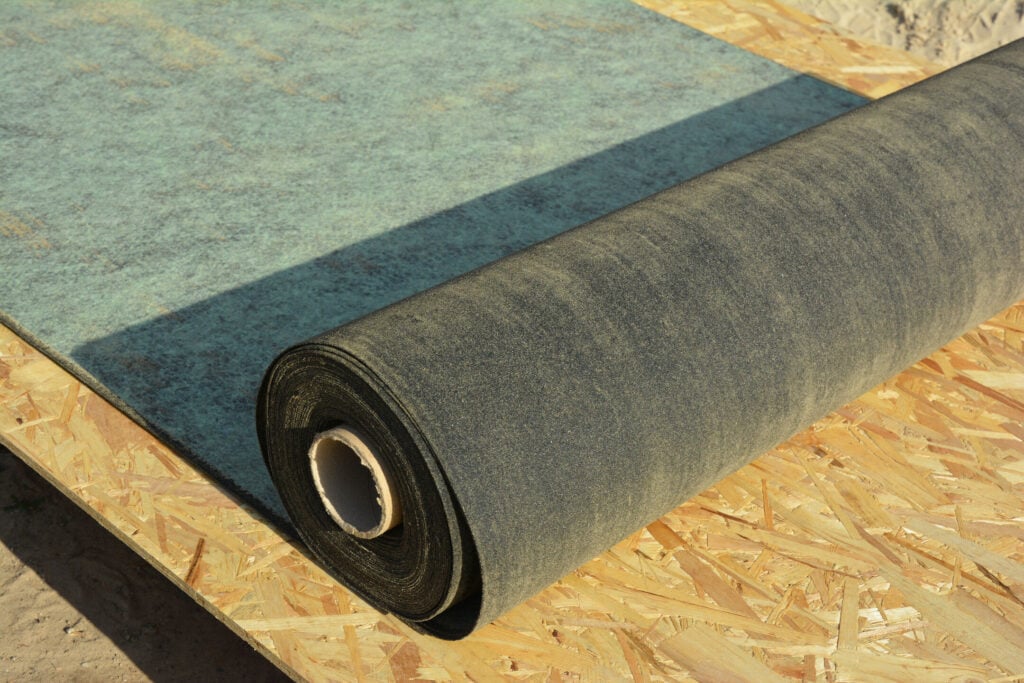
Synthetic underlayment is the modern standard on quality installs. Made from woven polypropylene or polyethylene, it’s 6 to 10 times stronger than felt, far lighter, doesn’t absorb water or wrinkle, tolerates 60 to 180 days of sun exposure, and lasts 25 to 50 years. It covers more area per roll, installs faster, and is safer to walk on. The only downside is a higher upfront cost.
- Cost: Highest, roughly $12 to $70 per square installed.
- Durability: 6 to 10 times the tear resistance of felt.
- UV tolerance: 60 to 180 days exposed depending on product.
- Performance: Doesn’t absorb water, wrinkle, or tear easily.
- Best for: Long-term protection and virtually every quality install.
Which Underlayment Should You Choose?
For most homeowners in Matthews and surrounding areas, synthetic underlayment is the right answer, and it’s what we install as standard. The modest added cost buys dramatically better protection, and in North Carolina’s heat, humidity, and storm exposure, that protection earns its keep. Here’s how to think about the choice.
When Synthetic Is the Right Call
Synthetic wins in nearly every scenario, especially in NC’s climate. According to Bob Vila, synthetic underlayment has grown quickly in popularity because it outperforms felt on durability and handling.
- Hot, humid climates: Synthetic doesn’t wrinkle or degrade in NC heat.
- Storm exposure: Superior tear resistance in high winds.
- Long-term value: Lasts as long as or longer than the shingles above it.
- Quality installs: The standard on professional, warranty-backed roofs.
- Steep or complex roofs: Safer to walk on during installation.
When Felt Still Makes Sense
Felt isn’t obsolete, and there are cases where it’s a reasonable choice. Thirty-pound felt in particular still has its place.
- Tight budgets: When upfront cost is the deciding factor.
- Under slate and tile: Some manufacturers specify 30 lb felt for these materials.
- Quick re-roofs: When shingles go on immediately with minimal exposure.
- Code-minimum jobs: When meeting the baseline is the goal.
- Vapor permeability: Felt breathes in ways some synthetics don’t, which matters in specific assemblies.
Signs Your Underlayment Needs Attention
Underlayment doesn’t last forever, and when it fails, leaks follow. Watch for these signs that your underlayment may no longer be doing its job.
5 Things to Watch For
These red flags often point to failing underlayment beneath the shingles. Catching them early prevents deck damage and interior leaks.
- Interior leaks or stains: Water reaching the ceiling means the underlayment may be compromised.
- Missing or damaged shingles: Exposed underlayment degrades fast.
- Visible wrinkles or tears: Spotted during an inspection, these reduce protection.
- Mold or mildew in the attic: Trapped moisture signals an underlayment problem.
- Roof age: Underlayment near the end of its life should be replaced with the roof.

Choosing the Right Underlayment for Your Home
Roof felt is the quiet backbone of a roof system, and the choice between 15 lb, 30 lb, and synthetic underlayment is one of the clearest signals of how a roof is built. For most homeowners in North Carolina’s heat and storm exposure, synthetic is the right call, with 30 lb felt a reasonable budget alternative and 15 lb the bare code minimum. The underlayment a contractor quotes tells you a lot about the quality of the whole install. As a GAF Master Elite Contractor and CertainTeed SELECT ShingleMaster in the top 3% of roofers nationwide, Roof Medic installs synthetic underlayment as standard and builds every roof to last. If you’re concerned about your existing underlayment or planning a roof replacement in the Charlotte area, reach out to Roof Medic today for guidance.


