704.228.7788
 04/30/2026
 6 minutes Read
Metal roof leak repair sealant is often the first solution homeowners consider when they spot water stains, loose fasteners, or small seam gaps on a metal roofing system. And in many cases, the right sealant can stop a leak quickly and effectively. But it is not a cure-all. Knowing when sealant works and when it is just a temporary patch is the key to protecting your home long term.
For homeowners in Ballantyne and surrounding areas, where heavy rain and wind-driven storms are common, catching metal roof leaks early can prevent insulation damage, wood rot, and interior repairs. Here is what you need to know before reaching for a tube of sealant.
- Stops minor leaks quickly: Ideal for small gaps, seams, and fastener issues.
- Extends roof life: Reinforces vulnerable areas before they worsen.
- Prevents interior damage: Limits water intrusion and structural impact.
What Causes Metal Roof Leaks in the First Place?
Before applying any metal roof leak repair sealant, it is important to understand why the leak occurred. Sealant should address the root cause, not just cover the symptom.
Metal roofs expand and contract with temperature changes. Over time, that movement can loosen fasteners, stress seams, and weaken flashing around penetrations. In Ballantyne and surrounding areas, seasonal temperature swings combined with humidity can accelerate these issues.
Common causes of metal roof leaks include:
- Loose fasteners: Screws back out over time.
- Worn washers: Rubber gaskets degrade and crack.
- Failed seam sealant: Original sealant dries and separates.
- Flashing separation: Around chimneys, vents, and skylights.
- Improper installation: Gaps left at panel overlaps.
If the underlying issue is structural, sealant alone will not solve it.
6 Pros, Cons & Types of Metal Roof Leak Repair Sealant
Choosing the right product requires understanding both the advantages and the limitations. Below are six important factors every homeowner should consider.
1. Pro: Fast and Cost-Effective for Minor Repairs
One of the biggest benefits of metal roof leak repair sealant is speed. When applied correctly, it can stop small leaks immediately without requiring panel removal.
For isolated issues such as a cracked fastener washer or small seam split, sealant can provide an efficient repair.
- Quick application: Minimal downtime.
- Lower upfront cost: Compared to panel replacement.
- Targeted repair: Focuses only on the affected area.
This makes it ideal for early-stage problems caught during inspection.
2. Con: Not a Structural Fix
Sealant cannot repair structural decking damage or widespread seam failure. If water has already saturated insulation or weakened the roof deck, applying sealant may only delay necessary repairs.
In Ballantyne and surrounding areas, we often see homeowners apply multiple layers of sealant over years without addressing the underlying issue.
- Temporary solution: May fail if root cause remains.
- Hidden damage risk: Water may continue spreading beneath panels.
- False sense of security: Surface fix does not equal full repair.
That is why a proper inspection always comes first.
3. Type: Silicone Sealant
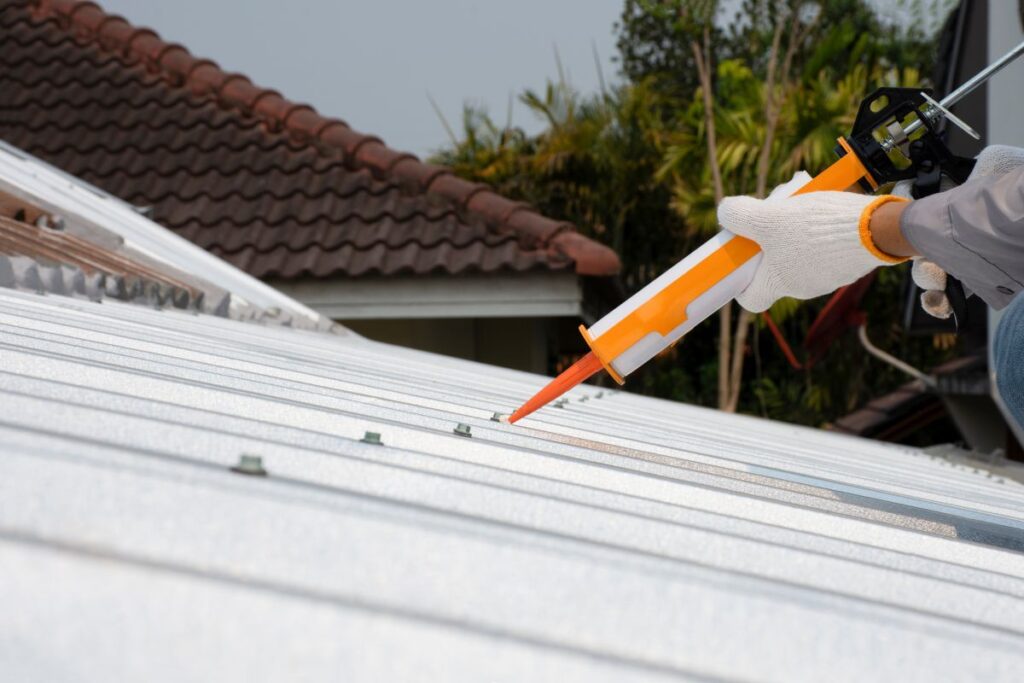
Silicone is one of the most durable sealant options for metal roofs. It handles ponding water and UV exposure extremely well, making it a strong long-term performer.
It remains flexible over time, which is important for metal panels that expand and contract.
- Excellent moisture resistance: Performs well in wet conditions.
- UV stable: Resists cracking from sun exposure.
- Long-lasting flexibility: Adapts to thermal movement.
Silicone is often recommended for seams and flashing repairs.
4. Type: Polyurethane Sealant
Polyurethane sealant offers strong adhesion and impact resistance. It bonds tightly to metal surfaces and performs well in high-stress areas.
This option is particularly useful around penetrations and fasteners where movement and vibration occur.
- High adhesion strength: Bonds securely to metal.
- Impact resistant: Handles hail and debris exposure.
- Flexible bond: Withstands expansion cycles.
For roofs in Ballantyne and surrounding areas exposed to frequent storms, polyurethane is often a solid choice.
5. Type: Butyl Rubber Sealant or Tape
Butyl rubber products are commonly used in seam and overlap repairs. They create a compressed, watertight barrier when installed properly.
Unlike liquid sealants, butyl tape provides consistent thickness and uniform coverage.
- Strong seam protection: Excellent for panel overlaps.
- Long-term elasticity: Maintains flexibility over time.
- Cleaner application: Less mess than liquid products.
Butyl products are often used during installation but can also reinforce aging seams.
6. Con: Application Quality Matters
Even the best metal roof leak repair sealant will fail if applied incorrectly. Surface preparation is critical. Dirt, rust, and moisture prevent proper adhesion.
We see failed DIY sealant jobs frequently during inspections in Ballantyne and surrounding areas.
- Dirty surfaces: Lead to premature peeling.
- Incorrect thickness: Too thin reduces effectiveness.
- Ignoring manufacturer instructions: Impacts curing time and durability.
Precision matters. Sealant is only as good as its application.
Metal Roof Leak Repair Sealant Options
Here is a simplified comparison to help clarify your options:
| Sealant Type | Best For | Water Resistance | Durability |
| Silicone | Seams, flashing | Excellent | Very High |
| Polyurethane | Fasteners, penetrations | Very Good | High |
| Butyl Tape | Panel overlaps | Excellent | High |
Choosing the right type depends on the exact source of the leak.
When to Use Sealant And When to Consider Bigger Repairs
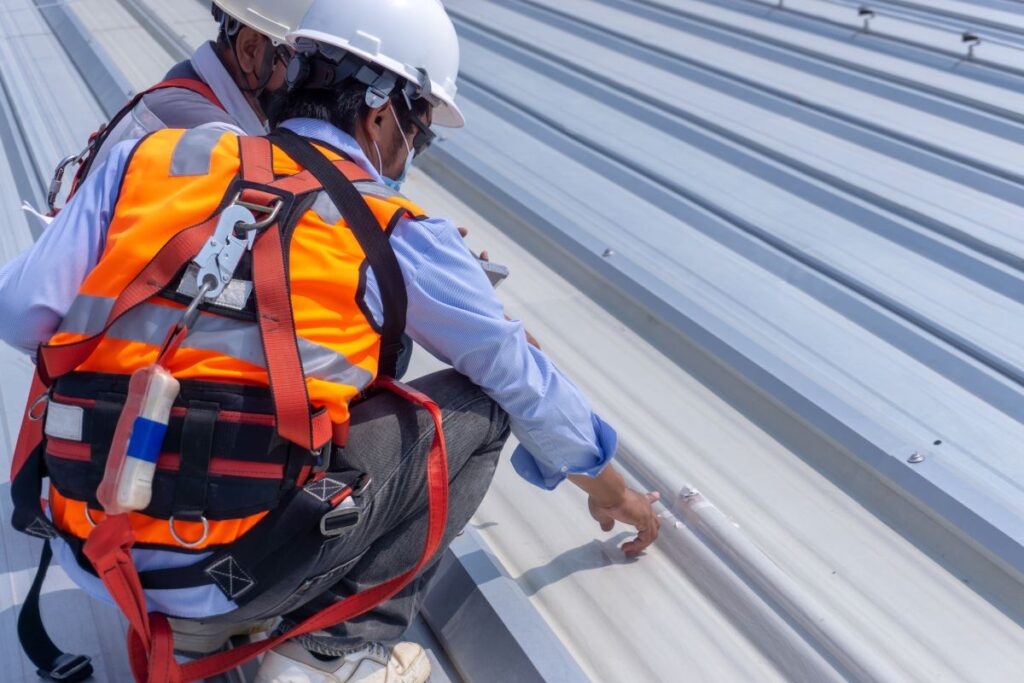
Sealant works best when:
- The leak is isolated.
- The roof deck is still sound.
- Seams are largely intact.
- Damage is caught early.
Sealant may not be enough when:
- Multiple panels are separating.
- Structural sagging is present.
- Insulation is saturated.
- Repeated repairs have failed.
As a GAF Master Elite contractor, a distinction held by only 3% of roofers nationwide, we do not recommend patching problems repeatedly when a long-term solution is needed. We identify the cause first. Then we fix it the right way.
Use Sealant Strategically
Metal roof leak repair sealant can be an effective tool when used properly and at the right time. Silicone, polyurethane, and butyl options each serve specific purposes, and selecting the correct type depends on the nature of the leak.
The goal is not just to stop water today. It is to protect your roof for years to come.
Roof Medic proudly serves homeowners in Ballantyne and surrounding areas with disciplined inspections and clear, honest recommendations. We do not oversell. We do not guess. We fix leaks the right way the first time.
Reach out to Roof Medic for expert guidance on diagnosing and repairing metal roof leaks properly.