704.228.7788
 704.228.7788
 08/26/2026
 10 minutes Read
Hurricane roof prep North Carolina homeowners tackle before June is the difference between riding out a storm with a sound roof and spending months fighting insurance over water damage, tarps, and a roof that failed when you needed it most. Atlantic hurricane season runs June 1 through November 30, and while the coast takes the headlines, inland cities like Charlotte and Raleigh sit right in the path of the wind, rain, and flooding these storms drive up the I-77, I-85, and I-95 corridors. Tropical Storm Chantal proved that in July 2025, and Helene reminded the whole state in 2024 that inland doesn’t mean safe. This guide walks Charlotte and Raleigh homeowners through exactly how to get a roof ready before the first storm forms.
Here’s what you’ll learn in this guide:
- When and why to prep: The NC hurricane timeline and why inland cities are at real risk.
- The 7-step roof prep checklist: What to do before the season peaks.
- How to handle insurance and damage: What’s covered, what isn’t, and what to do after a storm.
Why Charlotte and Raleigh Homeowners Can’t Ignore Hurricane Season
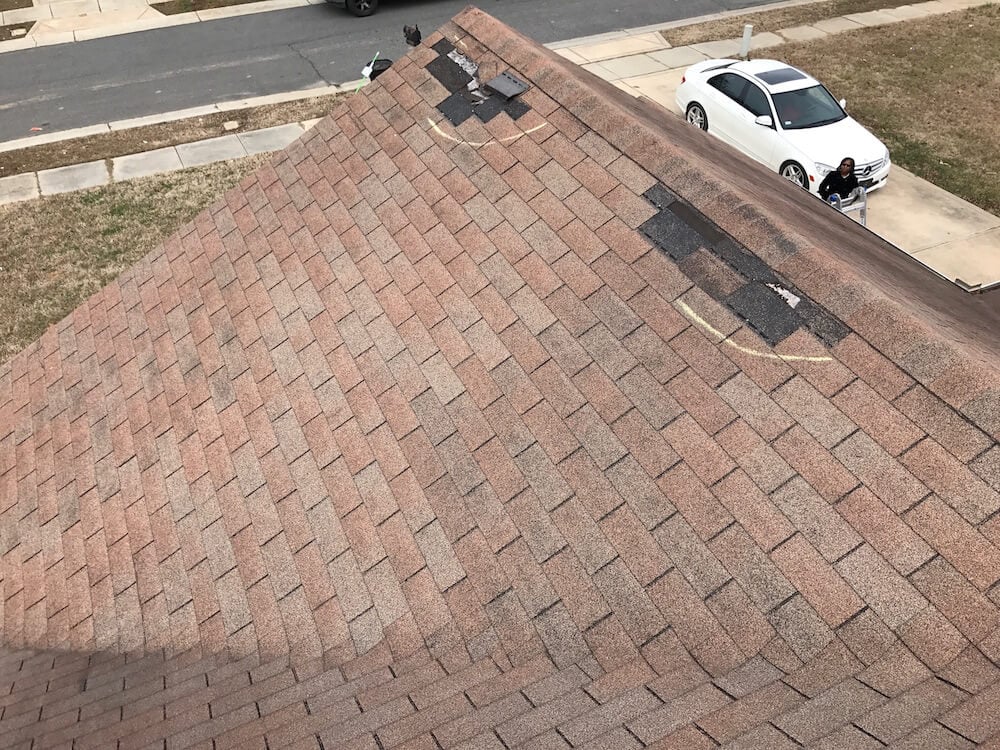
Inland doesn’t mean safe. Charlotte and Raleigh sit far from the coast, but hurricanes and tropical systems regularly push inland with enough wind and rain to tear off shingles, drive water under roofing, and drop trees on homes. The 2024 and 2025 seasons made that clear.
The NC Hurricane Timeline
Atlantic hurricane season is a six-month window, and knowing the timeline tells you when to prep. The work should be done before the season ramps up, not while a storm is spinning toward the Carolinas.
- Season dates: June 1 through November 30 every year.
- Peak months: August and September see the most activity.
- Prep window: Get roof work done in spring, before June.
- 2026 outlook: NC State forecasters projected multiple hurricanes for the season.
- The rule: It only takes one storm to make a bad season.
Why Inland Cities Take Real Damage
The storms that reach Charlotte and Raleigh have usually weakened from their coastal peak, but they still carry serious wind and enormous amounts of rain. Inland flooding and wind damage are the real threats this far from the coast.
- High winds: Tropical systems still pack shingle-stripping gusts inland.
- Torrential rain: Slow-moving storms dump inches of rain that find every roof weakness.
- Falling trees: Saturated ground plus wind drops limbs and whole trees on roofs.
- Flooding: Charlotte and Raleigh both saw significant flooding from recent storms.
- Corridor risk: The I-77, I-85, and I-95 corridors funnel storms through both metros.
7-Step Hurricane Roof Prep Checklist
Getting a roof ready for hurricane season isn’t complicated, but the order and the timing matter. Do this before June, not during a storm warning. Here’s the checklist we walk Charlotte and Raleigh homeowners through every spring.
1. Get a Professional Roof Inspection
The single most important step is a professional inspection before the season starts. The number one mistake homeowners make is assuming the roof is fine until it leaks. By then the storm has already done its damage. A pre-season inspection catches the loose shingles, worn flashing, and weak spots that a hurricane will find and exploit.
- Why it matters: Catches weaknesses before a storm can exploit them.
- Timing: Schedule in spring, before June 1.
- What it covers: Shingles, flashing, penetrations, decking, and ventilation.
- Documentation: A pre-storm inspection documents your roof’s condition for insurance.
- The mistake to avoid: Waiting until the roof leaks to find out it was compromised.
2. Replace Damaged or Missing Shingles
Any shingle that’s already loose, cracked, curling, or missing is a starting point for wind damage. Wind gets under a compromised shingle, peels it back, and takes the ones next to it. Replacing damaged shingles before the season closes those gaps.
- Why it matters: Compromised shingles are where wind damage starts.
- What to look for: Loose, cracked, curling, or missing shingles.
- Wind behavior: Wind lifts weak shingles and peels back the surrounding area.
- Seal check: Make sure shingle seal strips are bonded, not lifted.
- Fix first: Close these gaps before the first storm.
3. Secure and Inspect Flashing
Flashing seals the joints around chimneys, vents, skylights, and roof-to-wall transitions, and it’s one of the most common failure points in a storm. Loose or corroded flashing lets wind-driven rain straight into the home. Every penetration needs sound, well-sealed flashing before the season.
- Why it matters: Flashing failures are a top source of storm leaks.
- Where to check: Chimneys, vents, skylights, and wall transitions.
- What fails: Loose, lifted, or corroded flashing.
- Wind-driven rain: Storms push water sideways into any flashing gap.
- Seal it: Every penetration needs sound flashing before June.
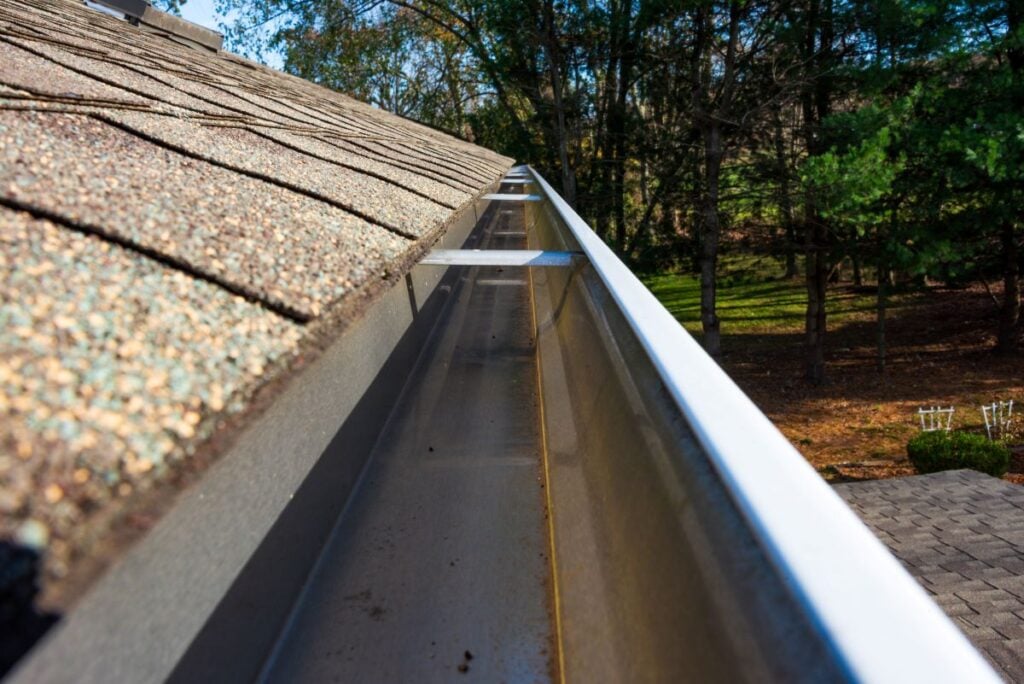
4. Clean Gutters and Downspouts
Hurricane rain comes fast and heavy, and clogged gutters can’t move it. When water backs up, it overflows against the fascia, works under the roof edge, and pools around the foundation. Clean, clear gutters are essential before the season.
- Why it matters: Clogged gutters overflow and drive water into the home.
- Rain volume: Tropical systems dump rain faster than clogged gutters can handle.
- What to clear: Leaves, pine needles, and debris from gutters and downspouts.
- Downspout direction: Confirm water discharges away from the foundation.
- Guards help: Gutter guards reduce clogs but still need a pre-season check.
5. Trim Overhanging Tree Branches
Falling limbs are one of the biggest causes of storm roof damage inland. Saturated ground loosens roots and high winds snap branches, and anything hanging over the roofline is a threat. Trim back overhanging branches before the season.
- Why it matters: Falling limbs cause major inland roof damage.
- What to trim: Any branches hanging over the roofline.
- The physics: Wet ground plus wind drops limbs and whole trees.
- Dead limbs first: Remove dead or weak branches that break easily.
- Professional help: Large limbs near the roof are a job for an arborist.
6. Check and Improve Attic Ventilation
Proper attic ventilation isn’t just about summer heat. During a storm, balanced ventilation helps manage the pressure differences that can lift a roof, and it keeps moisture from building up if any water does get in. Confirm intake and exhaust vents are clear and functioning.
- Why it matters: Ventilation supports the roof system under storm pressure.
- Intake and exhaust: Confirm soffit and ridge vents are clear.
- Moisture control: Ventilation helps dry any moisture that enters.
- Vent covers: Make sure vent components are secured against wind.
- Pre-season check: Include ventilation in the spring inspection.
7. Consider a FORTIFIED Roof Upgrade
For homeowners who want the strongest protection, the FORTIFIED standard from the Insurance Institute for Business and Home Safety is worth considering. According to the Insurance Institute for Business and Home Safety, FORTIFIED is a re-roofing and building method engineered to help homes survive severe weather through specific, tested upgrades. Some insurers offer premium discounts for FORTIFIED roofs.
- Sealed roof deck: A waterproof barrier keeps water out even if shingles blow off.
- Ring-shank nails: Hold significantly better than standard smooth nails in high wind.
- Reinforced roof edge: Addresses the number one failure point in hurricane winds.
- Insurance benefit: Some carriers offer discounts for FORTIFIED-designated roofs.
- Best timing: Build FORTIFIED features in when you replace the roof.
Insurance and Storm Damage: What NC Homeowners Need to Know
Roof prep is only half the equation. The other half is understanding your insurance before a storm, because what you assume is covered and what actually is can be very different. About 75% of the work we do at Roof Medic involves insurance claims, so this is our daily terrain.
What Your Policy Does and Doesn’t Cover
The biggest surprise homeowners hit after a storm is what their policy excludes. Wind damage is typically covered. Flooding is not, and that catches a lot of NC homeowners off guard.
- Wind damage: Typically covered by standard homeowners insurance.
- Fallen trees: Usually covered when they damage the roof or structure.
- Flooding: Not covered by standard homeowners policies, requires separate flood insurance.
- Hurricane deductibles: Some policies carry separate, higher deductibles for named storms.
- Review before June: Read your policy and confirm coverage before the season.
What to Do After a Storm
If a storm damages your roof, the steps you take in the first days shape your whole claim. Document first, call a contractor who knows insurance claims, and don’t sign with the first storm chaser who knocks.
- Document the damage: Photograph everything from the ground before anything moves.
- Call a local contractor first: Get an independent inspection before the adjuster.
- Avoid storm chasers: Out-of-state crews who door-knock after storms often disappear.
- File promptly: NC policies typically require notice within 30 to 60 days.
- Hire local and licensed: Choose a contractor who’ll be here for warranty service.
Getting Your Roof Storm-Ready in Charlotte and Raleigh
Hurricane season comes every year, and the homeowners who come through it best are the ones who prepped their roof in spring instead of scrambling when a storm is 48 hours out. A professional inspection, sound shingles and flashing, clear gutters, trimmed trees, and good ventilation cover the basics, and a FORTIFIED upgrade takes it further when it’s time to replace. Just as important, know your insurance before the storm, not after. As a GAF Master Elite Contractor and CertainTeed SELECT ShingleMaster in the top 3% of roofers nationwide, Roof Medic prepares roofs for storm season and handles insurance claims start to finish when storms do hit. We inspect first and recommend second, telling you honestly whether your roof is ready or what it needs to get there. Contact Roof Medic today for guidance on getting your roof storm-ready. We work with homeowners throughout Charlotte, Raleigh, and surrounding areas, and we’re happy to walk you through your options.
Frequently Asked Questions
When should I prepare my roof for hurricane season in NC?
Prepare your roof in spring, before hurricane season starts on June 1. This gives you time to schedule an inspection, complete any repairs, and address issues before storms form. Waiting until a storm is in the forecast leaves no time for repairs and puts you at the back of every contractor’s list.
Does homeowners insurance cover hurricane roof damage in North Carolina?
Standard homeowners insurance typically covers wind damage and fallen trees, but not flooding. Flood damage requires separate flood insurance. Some NC policies also carry higher deductibles specifically for named storms. Review your policy before hurricane season so you know exactly what’s covered and what isn’t before a storm hits.
Do Charlotte and Raleigh really get hurricane damage this far inland?
Yes. While storms weaken as they move inland, they still bring shingle-stripping winds, torrential rain, and falling trees to Charlotte and Raleigh. Tropical Storm Chantal caused significant flooding in the Carolinas in July 2025, and Helene brought severe inland damage in 2024. Inland does not mean safe.
What is a FORTIFIED roof and is it worth it?
FORTIFIED is a building standard from the Insurance Institute for Business and Home Safety designed to help roofs survive severe weather. It uses a sealed roof deck, ring-shank nails, and a reinforced roof edge. It costs more than a standard roof but offers dramatically better storm resistance, and some insurers offer premium discounts for it.
Should I trim trees near my roof before a storm?
Yes. Overhanging branches are one of the biggest causes of inland roof damage during storms. Saturated ground and high winds bring down limbs and entire trees. Trim back anything hanging over your roofline before the season, and have an arborist remove large or dead limbs near the house.