704.228.7788
 704.228.7788
 07/08/2026
 15 minutes Read
Storm damage Charlotte NC homeowners face every spring is one of the most expensive and most preventable problems in the Carolinas, and what you do in the first 48 hours after a storm often determines whether your insurance pays for a full replacement or you end up out of pocket. About 75% of the work Roof Medic does involves storm damage and insurance claims. We’re on Charlotte-area roofs every week after hail and wind events, and we’ve seen every version of how this goes right and how it goes wrong. This guide walks through what to actually do when your roof takes a hit, what damage to look for, and how to make sure your insurance claim gets paid the way it should.
Here’s what you’ll learn in this guide:
- The 7 steps to take right after a storm: From documentation to final settlement.
- What hail and wind damage actually looks like: Signs you can spot from the ground and what only shows up on the roof.
- How to avoid the mistakes that cost homeowners thousands: The single biggest errors we see on claims.
Why Charlotte Roofs Take So Much Storm Damage
Charlotte sits in one of the more active storm corridors in the Southeast. Spring brings the worst of it, with severe weather patterns rolling through the region from late March through June. Summer adds hurricane remnants pushing inland from the coast. The result is a roof that takes more punishment than homeowners realize, year after year.
The Charlotte Storm Reality
According to the National Weather Service forecast office in Greer, SC, the greater Charlotte region averages 30 or more severe weather days per year, with hailstorms producing stones large enough to crack shingles, bruise wood decking, and dent metal flashing. Local insurance carriers have processed thousands of qualifying hail claims in Mecklenburg County over the past four years alone, with major storms hitting in spring 2022, 2023, 2024, and 2025. If a storm went over your neighborhood, your roof took damage. The question is whether you caught it in time.
- Severe weather days: Charlotte sees 30+ per year per NWS data.
- Hail season: Late March through June is peak.
- Hurricane remnants: August through October can push high winds inland from the coast.
- Recent major events: Spring 2022, 2023, 2024, and 2025 all produced qualifying claims.
- Hidden damage: Hail damage often isn’t visible from the ground.
What Counts as Storm Damage on a Roof
Insurance covers sudden, accidental damage from a covered event. It doesn’t cover age, wear, or maintenance issues. Knowing the difference saves you from filing a claim that won’t go anywhere and from missing damage that should be covered.
- Covered events: Hail impact, wind damage, fallen trees, lightning, hurricane remnants.
- Not covered: Normal wear, age, deferred maintenance, pre-existing damage.
- Common confusion: Hail damage often gets misattributed to “wear” by inexperienced adjusters.
- Documentation matters: Dated photos before and after the storm strengthen your claim.
- Time-sensitive: NC policies typically require notification within 30 to 60 days.
7 Steps to Take Right After a Charlotte Storm
The order of these steps matters. We’ve watched homeowners do them out of sequence and lose thousands of dollars on what should have been a covered claim. Here’s exactly how to handle storm damage in Charlotte the right way.
1. Stay Off the Roof and Document From the Ground
The first thing to do after a storm is document the damage. Walk the perimeter of your home. Take photos of the yard, the driveway, the gutters, and any visible roof damage from the ground. Note the date and time of the storm. Save any local weather reports or hail size confirmations. Don’t climb on the roof. Even a roof that looks intact from the ground can have damaged decking, dislodged flashing, or hidden weak spots. Falls from roofs send thousands of homeowners to emergency rooms every year. Let a pro inspect it.
- Exterior photos: Wide shots of the home and close-ups of visible damage.
- Yard photos: Debris, fallen branches, hail accumulation, shingle pieces on the ground.
- Gutter photos: Dents, granule accumulation, damaged components.
- Date and time: Storm date, time of damage, time photos were taken.
- Don’t climb up: Fall risk outweighs anything you’d gain from a closer look.
2. Call a Roofing Contractor Before You Call Insurance
This is the single biggest mistake homeowners make on storm damage claims. Calling your insurance company first means an adjuster will be on your roof before you have an independent expert looking out for your interests. The adjuster works for the carrier, not for you. They’ll write up whatever damage they see and miss what they don’t, and that initial scope becomes the starting point for your settlement. Call a contractor experienced with insurance claims first, get a thorough inspection, and have documented damage ready before the adjuster shows up.
- Why this order matters: A contractor inspection catches damage the adjuster might miss.
- Independent documentation: Photos and written scope of loss before insurance involvement.
- Insurance experience matters: Pick a contractor who handles claims regularly.
- No-pressure inspection: A legitimate contractor inspects without pressuring you to file.
- Common adjuster shortcut: Many spend 15 to 20 minutes on the roof, missing damage on rear or north-facing slopes.
3. File the Claim With Your Insurance Company
Once you have independent documentation, call your insurance company to file the claim. Have your policy number, the date of the storm, and a clear description of the damage ready. The carrier will assign a claim number and schedule an adjuster visit. Do this within your policy’s notification window, typically 30 to 60 days from the storm, to avoid coverage problems. North Carolina’s statute of limitations gives you up to 3 years from the date of loss to file a lawsuit if your claim is mishandled, but waiting that long is rarely advisable.
- Filing channels: Phone, mobile app, online portal, or your agent.
- Information needed: Policy number, storm date, damage description.
- Claim number: Save it. Reference it on every interaction.
- NC policy window: Typically 30 to 60 days for initial notification.
- NC statute of limitations: 3 years from date of loss, but file quickly.
4. Meet the Adjuster With Your Contractor Present
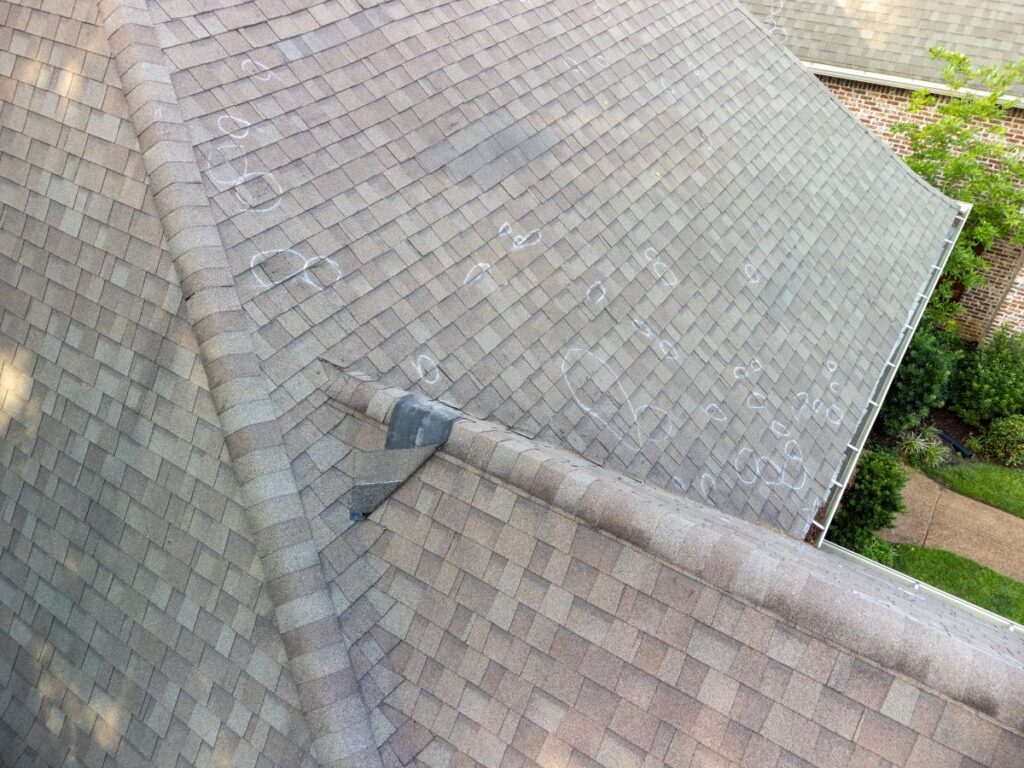
The adjuster meeting is where the claim gets won or lost. Most homeowners try to do this alone. Don’t. Have your contractor present at the adjuster meeting. A roofer who knows insurance claims will walk the roof with the adjuster, point out damage the adjuster might miss, and document scope items that often get left off the initial estimate. This is the single biggest reason our clients get full settlements where homeowners alone get partial ones. The adjuster works for the carrier. Your contractor works for you.
- Walk the roof together: Contractor and adjuster review damage in person.
- Slopes adjusters often miss: North-facing and rear slopes get inspected less thoroughly.
- Components often overlooked: Gutters, vents, flashing, HVAC penetrations, skylights.
- Code upgrades: NC code-required items that need updating during the replacement.
- Written scope of loss: Make sure everything identified is on paper before the meeting ends.
5. Review the Estimate and Supplement What’s Missing
After the adjuster meeting, the carrier sends a written estimate, usually generated in Xactimate (the industry-standard estimating platform). Almost every initial estimate misses something. Common missing items include starter strips, ice and water shield, drip edge, ridge cap, debris haul-off, and disposal fees. Your contractor can file a supplement, which is a formal request to add missing items to the scope. Most carriers approve supplements when documented properly with photos and code citations.
- Initial estimate: Carrier’s first scope of loss and dollar figure.
- Common missing items: Starter, ridge, drip edge, code-required ice and water shield, debris haul-off.
- Supplement process: Formal request to add missing items, backed by documentation.
- Approval rate: Most well-documented supplements get approved.
- Documentation needed: Photos, manufacturer specs, code citations, itemized line items.
6. Schedule the Work and Receive the First Check
Once the scope is approved, your contractor signs a contract with you to perform the work. The carrier issues the first check, called the actual cash value (ACV) payment, which covers the depreciated value of the work. You pay your deductible upfront, the contractor schedules the project, and the work begins. A standard residential asphalt shingle replacement takes 1 to 3 days under good weather conditions.
- Contract signing: Between you and the contractor, separate from the carrier.
- ACV payment: First insurance check covering depreciated value minus your deductible.
- Your deductible: Your responsibility, paid to the contractor at start of work.
- Project timeline: Typically 1 to 3 days for an asphalt shingle re-roof.
- Completion documentation: Photos, certificate of completion, warranty paperwork.
7. Submit Final Documentation and Collect Recoverable Depreciation
After the work is complete, your contractor submits the final invoice and proof of completion to the carrier. The carrier reviews the documentation and issues the recoverable depreciation payment, which is the difference between the actual cash value (already paid) and the full replacement cost value of the work. This second check, plus the ACV check, plus your deductible should add up to the full project cost. Most carriers process this final payment within 2 to 4 weeks. Some take longer.
- Final invoice: Submitted by contractor with proof of completion.
- Documentation required: Photos, completion certificate, manufacturer warranty paperwork.
- Timeline: Typically 2 to 4 weeks for clean claims.
- The math: ACV check + deductible + depreciation check = total project cost.
- What to do if delayed: Contractor follows up with carrier on missing payment.
What Hail and Wind Damage Actually Looks Like
Most Charlotte homeowners can’t see hail or wind damage from the ground. Hail bruising and granule loss are common but often invisible from below. Wind damage that lifts and reseats shingles can leave the roof looking fine while the seal underneath is broken. Here’s what we actually look for during a storm damage inspection.
Signs of Hail Damage
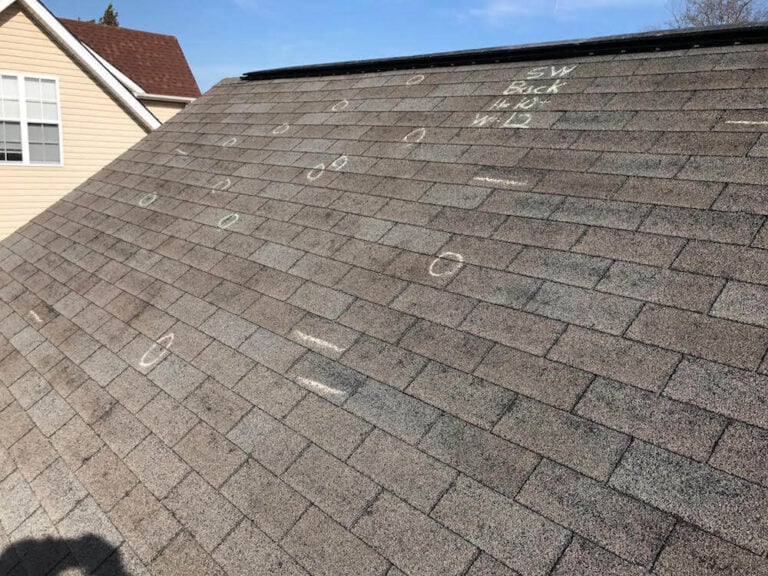
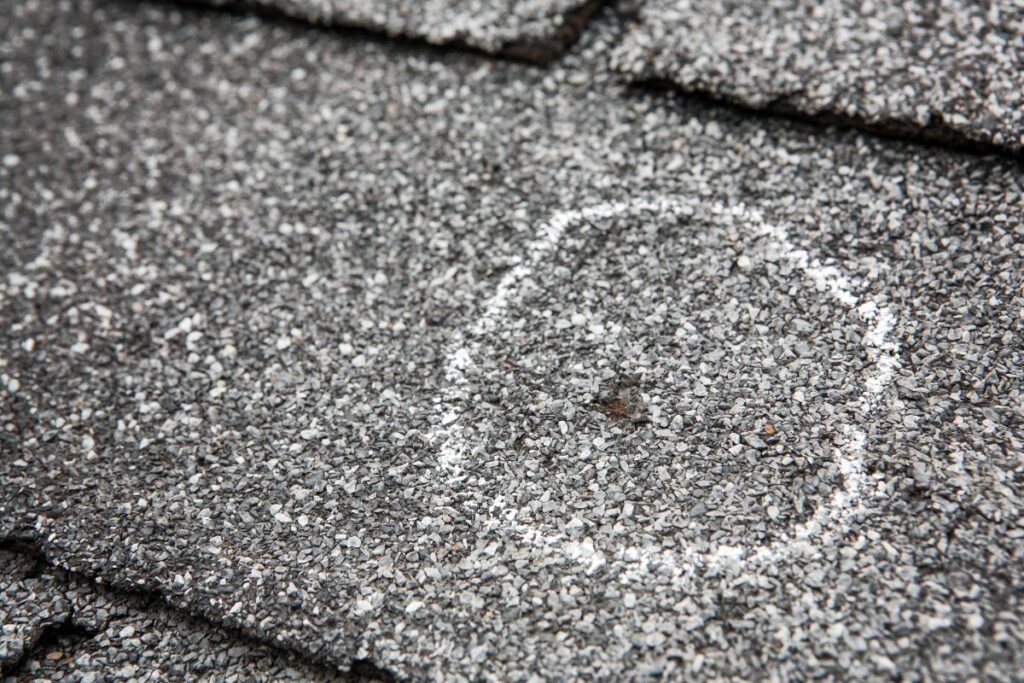
Hail damage on asphalt shingles creates circular impact marks where the mat beneath the granules has been bruised, compressed, or fractured. These show up as round bare spots, soft spots, or visible dimples. Other components on the roof show damage that confirms a hail event happened, even if the shingles look intact at first glance.
- Shingle bruising: Circular impact marks where the shingle mat is compressed or fractured.
- Granule loss: Bare spots where granules have been knocked off by impact.
- Dented gutters: Visible dimples in metal gutters confirm hail size and event.
- Damaged vents and flashing: Dented metal roof vents, pipe boots, and HVAC flashing.
- Cracked or split shingles: Larger hail can crack shingles completely.
Signs of Wind Damage
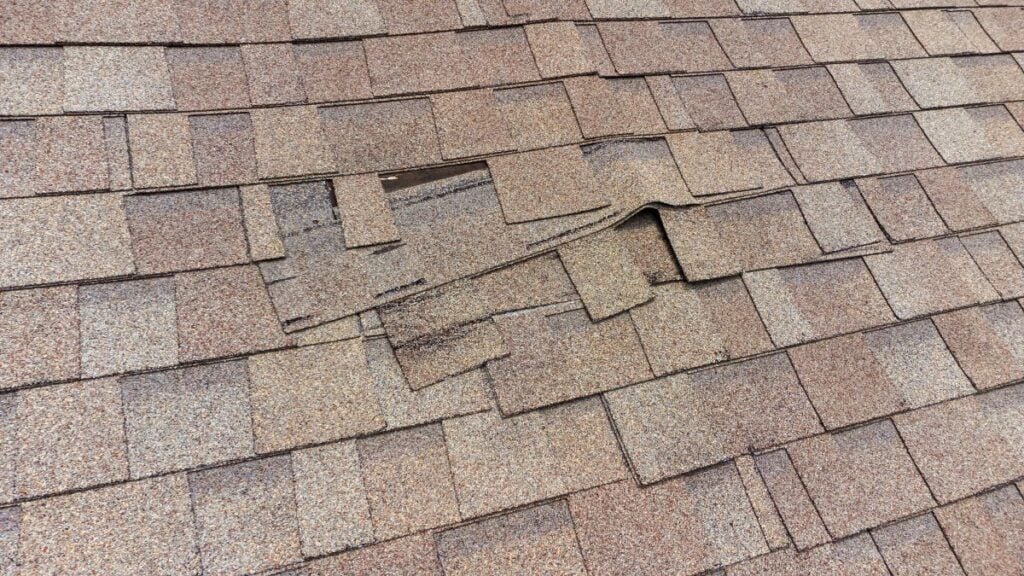
Wind damage takes more forms than most homeowners realize. Obvious missing shingles are easy to spot. Less obvious is wind that lifts shingles, breaks the seal underneath, and reseats them looking intact. The shingles are now compromised even though the roof looks fine. The next storm finishes the job.
- Missing shingles: Obvious damage from high winds.
- Lifted or curling shingles: Edges curling up or tabs lifted at the bottom edge.
- Broken seal lines: Underside of shingle no longer adhered to the shingle below.
- Creased shingles: Visible folds across the shingle from wind flexing.
- Damaged ridge cap: Ridge shingles lifted or torn off entirely.
Damage You Can’t See From the Ground
Some of the most expensive storm damage isn’t visible from the ground or the curb. This is the damage that an inexperienced adjuster misses and an experienced contractor catches.
- Bruised wood decking: Hail can damage the wood deck under the shingles.
- Compromised underlayment: Hail and wind can damage the felt or synthetic layer.
- Dented flashing: Step flashing and counter flashing damage shows up under shingles.
- Damaged seals: Broken adhesive seals between shingles aren’t visible from below.
- Hidden penetration damage: Vent boots, skylights, and chimney flashing all take impact.
The Mistakes That Cost Homeowners Thousands
We see the same mistakes over and over on Charlotte storm claims. Most are preventable if you know what to avoid.
Top Storm Claim Mistakes
These are the patterns we watch homeowners stumble into on a regular basis. Each one can cost you thousands of dollars on a claim that should have been straightforward.
- Calling insurance before a contractor: Locks in the adjuster’s incomplete scope as the starting point.
- Skipping the contractor at adjuster meetings: Damage gets missed when no advocate is present.
- Signing the initial estimate without a supplement: Leaves money on the table.
- Hiring a storm chaser: Out-of-state contractors who disappear after the check clears.
- Waiting too long to file: NC policies have 30 to 60 day notification windows.
How to Avoid Them
The biggest piece of advice we give Charlotte homeowners on storm damage is simple. Call a local, experienced insurance claims contractor first, before you call your carrier. Get the damage documented properly. Walk the roof with the adjuster. Push for the supplement when the initial scope misses things. And hire a local contractor who’ll still be in business in five years when you need warranty service.
- Local contractor: Pick a Charlotte-based team with deep local insurance experience.
- Manufacturer credentials: GAF Master Elite or CertainTeed SELECT contractors install the strongest systems.
- Insurance experience: 75% of Roof Medic’s work involves claims, so we know the process inside out.
- No-pressure inspection: Legitimate contractors inspect without high-pressure tactics.
- Long-term presence: Avoid out-of-state storm chasers who won’t honor warranties later.
Frequently Asked Questions
How long do I have to file a roof insurance claim in NC?
North Carolina policies typically require homeowners to notify their carrier within 30 to 60 days of the damage event. The state statute of limitations gives you up to 3 years from the date of loss to file a lawsuit against your insurer if needed. File as soon as possible after the storm to avoid coverage issues and to catch damage before it gets worse from secondary leaks or weather exposure.
Will my insurance premium go up if I file a hail claim?
Filing a claim can affect future premiums, but the impact varies by carrier and claim type. Storm-related claims like hail and wind, which are outside the homeowner’s control, typically affect premiums less than maintenance-related issues. The cost of paying out of pocket for major storm damage almost always exceeds any long-term premium impact.
What if my insurance adjuster says my roof has no damage?
Adjusters miss damage all the time, especially on north-facing and rear slopes where they don’t spend as much time. If you suspect damage that the adjuster missed, request a reinspection with your contractor present. Independent documentation from a contractor experienced with insurance claims often results in claim approval where initial inspections came up short. Roof Medic helps Charlotte homeowners with second-chance claims every week.
Can I file an insurance claim months after a storm?
Yes, but it gets harder the longer you wait. NC policies typically require notification within 30 to 60 days, though many policies use language like “prompt” notice without specifying days. Hidden damage that only shows up later (interior leaks from previously undetected hail) may still be eligible if you act when you discover it. Don’t assume a claim is too late without talking to a contractor first.
How can I tell if I have hail damage if I can’t see it from the ground?
You usually can’t. Hail damage on shingles requires a roof-level inspection to identify properly. Visible signs from the ground include dented gutters, damaged downspouts, dings on metal vents, and shingle pieces on the ground. Even those signs aren’t reliable indicators of the full damage scope. A free storm damage inspection from a credentialed contractor is the only way to know.
Should I use a public adjuster or a roofing contractor for my claim?
Most Charlotte homeowners get the best results working with a credentialed roofing contractor who handles insurance claims regularly. Public adjusters charge a percentage of your settlement, often 10 to 15 percent, which comes out of the homeowner’s pocket. A roofing contractor experienced with claims advocates for the right scope without that fee. For especially complicated or denied claims, a public adjuster or attorney may be the right call.
Why Roof Medic Is the Right Team for Your Storm Damage Claim
Roof Medic is a GAF Master Elite Contractor and a CertainTeed SELECT ShingleMaster with Wizard certification, which places us in the top 3% of roofers nationwide. About 75% of the work we do involves insurance claims, so we’re meeting adjusters and documenting storm damage every week of every month. We handle claims from the first storm damage inspection through the final recoverable depreciation check. We inspect first and recommend second on every roof we evaluate. If the storm caused real damage, we’ll document it thoroughly and help you get a full settlement. If your roof came through fine, we’ll tell you that too. Our workmanship warranty is 2 years standard and 5 years when homeowners follow our recommended approach, all backed by a veteran-owned team that takes your home as seriously as you do.
Want guidance on storm damage you’re seeing on your roof or want to learn more about how the insurance claim process actually works? Contact Roof Medic today. We work with homeowners throughout Charlotte and surrounding areas, and we’re happy to walk you through what we see on your specific roof, what your policy covers, and how to make sure your claim gets the full settlement you’re owed. Contractor License #79946.