704.228.7788
 05/12/2026
 12 minutes Read
The best attic ventilation system for an older home is the one that works with your existing roof structure, not against it. Older homes built before the 1980s in North Carolina were constructed with different framing standards, thinner insulation, and often minimal ventilation, which means a modern upgrade has to account for what’s already there. For homeowners in Huntersville and surrounding areas, the right ventilation choice protects your roof, lowers your cooling costs, and prevents moisture damage that can cost thousands to repair.
Here’s what you’ll learn in this guide:
- Why ventilation matters more on older homes: The specific problems that show up in pre-1980s construction.
- The four ventilation options: Ridge, gable, powered, and retrofit systems compared side by side.
- How to choose the right one: The factors that should drive your decision and the FAQs we hear most often.
Why Older Homes Need Different Ventilation Solutions
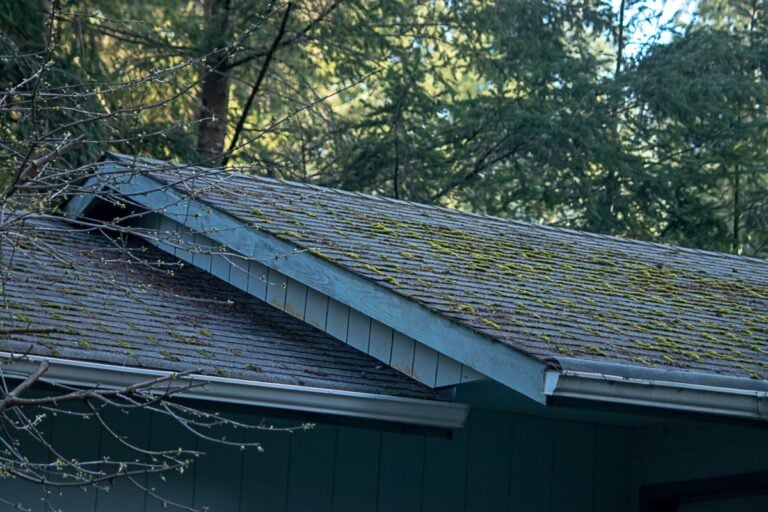
Older homes need different ventilation solutions because their original construction rarely matches modern airflow standards. Most homes built before the 1980s either lacked a ventilation system entirely or used passive vents that have since been blocked, sealed, or rendered ineffective by added insulation.
What Poor Ventilation Does to an Older Home
Poor attic ventilation shortens roof life, raises cooling costs, and traps moisture inside the roof assembly. The damage usually shows up gradually, which is why most homeowners don’t realize there’s a problem until a roofing team flags it during an inspection. By that point, the repair bill has often climbed into the thousands. We see the same patterns on older homes across Huntersville and surrounding areas, and the fix almost always involves rebalancing the intake and exhaust on a system that was never designed to handle modern insulation levels.
- Premature shingle failure: Heat trapped in an unventilated attic can cut shingle lifespan by 25% or more.
- Moisture damage to roof decking: Warm air rising into a cold attic condenses on the underside of the roof deck, leading to rot and mold.
- Higher cooling costs: An overheated attic radiates heat into the living space, forcing the air conditioner to work harder.
- Ice dam formation: Heat escaping into the attic melts snow at the peak, which refreezes at the eaves and forces water under the shingles.
- Insulation degradation: Persistent moisture reduces insulation R-value over time, compounding the energy efficiency problem.
How Modern Insulation Changed the Equation
Modern insulation made older homes more efficient but also exposed how inadequate their original ventilation systems were. When you add R-38 of blown-in insulation to an attic that was originally built with an inch of mineral wool, you trap heat and moisture in ways the original builders never planned for. The fix isn’t less insulation. It’s a ventilation system designed to work alongside the new insulation levels and current building codes.
- Blocked soffit vents: Blown-in insulation often covers soffit openings without baffles to maintain airflow.
- Sealed gable vents: Some older homes had gable vents intentionally closed during energy retrofits without a replacement system.
- Vapor barrier conflicts: Insulation upgrades that include vapor barriers change how moisture moves through the attic and can require ventilation adjustments.
- Code compliance gaps: Most older systems don’t meet the 1/150 or 1/300 net free ventilation area standards used in current building codes.
4 Best Attic Ventilation Options for Older Homes
The four ventilation systems below cover almost every older home we work on. Each one solves the airflow problem in a different way, and the right choice depends on your roof geometry, your existing construction, and how the system has to integrate with the rest of the roof assembly.
1. Ridge and Soffit Vent Combination
A ridge and soffit vent combination is the most effective passive ventilation system available, and it’s our most common recommendation during a roof replacement on an older home. The ridge vent runs along the peak and lets hot air escape, while continuous soffit vents at the eaves draw cool air in. The two work together to create a continuous flow of air through the attic with no moving parts and no electricity. This setup is the gold standard for homes with long, uninterrupted ridge lines, which covers most traditional residential roofs in Huntersville and surrounding areas.
- Continuous airflow: Air enters at the soffits and exits at the ridge, creating consistent ventilation across the entire attic.
- No moving parts: Passive systems require no electricity and have no motors to fail.
- Long lifespan: A quality ridge vent typically lasts the full 25 to 30 year life of the roof.
- Best installed during reroofing: Ridge vents are installed under the cap shingles, so the right time to add one is when the roof is being replaced.
- Code compliant: Properly sized ridge and soffit systems easily meet the 1/300 net free ventilation area standard.
2. Gable Vents
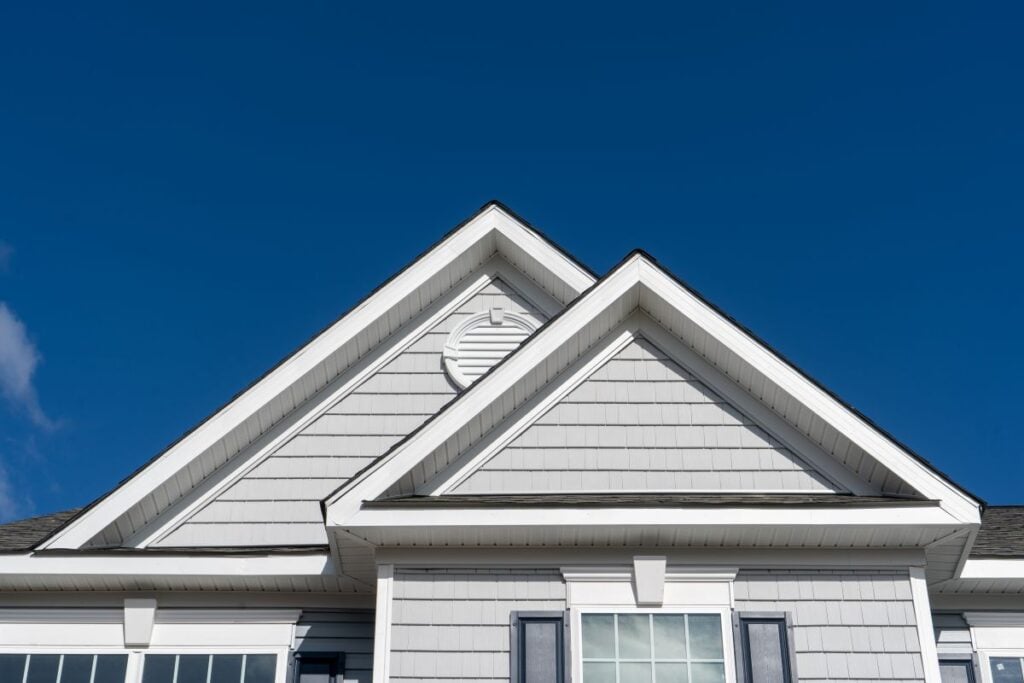
Gable vents are louvered openings installed at the peak of the gable ends and are one of the oldest ventilation systems still in use. On older homes, gable vents are often the existing system, and the question is whether to keep them, supplement them, or replace them with a more effective combination. Gable vents earn their place on hip roofs and complex roof geometries that don’t have enough continuous ridge to support a ridge vent. They also matter on historic homes where the original gable vents are part of the architectural identity and shouldn’t be removed for the sake of an upgrade.
- Works on hip roofs and complex geometries: Roofs without long ridge lines can still get adequate ventilation through gable vents.
- Lower upfront cost: Gable vents cost less to install than a full ridge and soffit system as a retrofit.
- Cross-flow ventilation: Wind blowing across the roof creates cross-flow that moves significant air volume.
- Preserves architectural character: On historic homes, gable vents maintain the original exterior appearance.
- Pairs with soffit vents: Gable vents combined with soffit intake can work well when ridge vents aren’t practical.
3. Powered Attic Ventilators
Powered attic ventilators are electric or solar fans that actively pull hot air out of the attic. They’re often marketed as a quick fix, but they only work properly when paired with adequate intake ventilation at the eaves or soffits. Without enough intake air, a powered ventilator will pull conditioned air out of your living space through ceiling penetrations, which actually increases your energy bills. According to ENERGY STAR, attic fans installed on homes with blocked soffit vents will draw cool conditioned air up out of the house and into the attic, raising summer utility bills rather than lowering them. That’s why we evaluate the full system before recommending a powered option.
- Active air movement: Fans physically move air rather than relying on convection.
- Solar-powered options available: Solar attic fans run during peak heat without adding to the electric bill.
- Targeted heat reduction: Useful when an attic consistently exceeds 130 to 150 degrees Fahrenheit during summer.
- Requires balanced intake: Powered systems only work when intake ventilation matches exhaust capacity.
- Has moving parts that fail: Motors and bearings wear out, unlike passive systems that last as long as the roof.
4. Retrofit Soffit and Roof Deck Vents
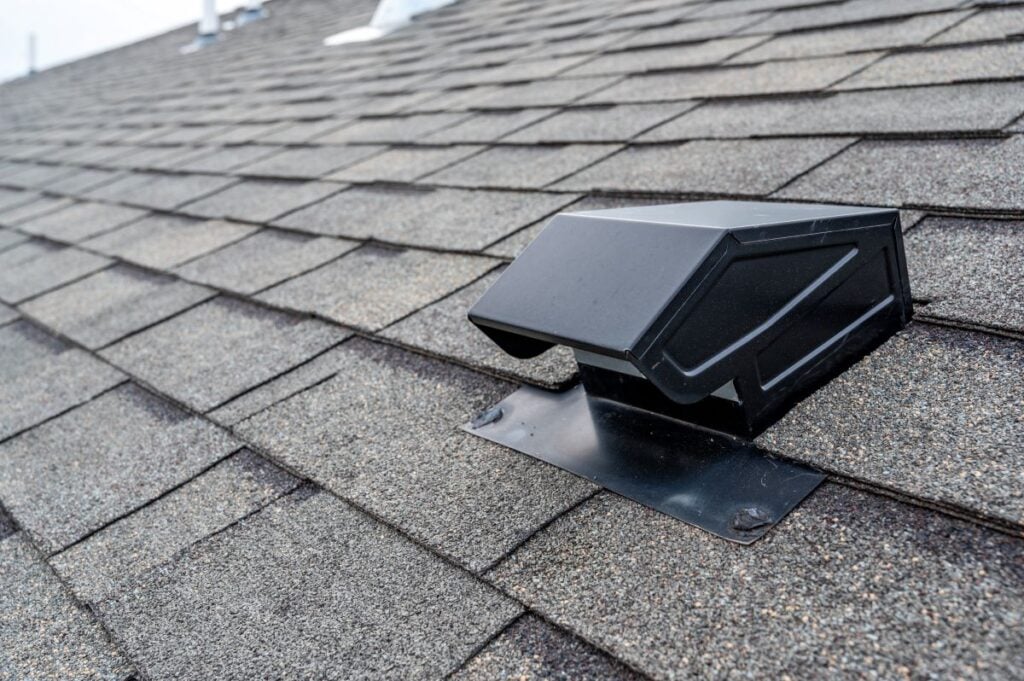
Retrofit ventilation systems are designed for older homes that can’t accommodate a traditional ridge and soffit setup. These include drip edge vents, intake vents installed at the eaves where there are no soffit overhangs, and slot vents cut into the roof deck during a roof replacement. Retrofit vents are the right answer for older homes with sealed soffits, no overhangs, or complex roof shapes that don’t fit standard ventilation patterns. They preserve the home’s exterior appearance while restoring proper airflow to the attic.
- Works without soffit overhangs: Some older homes were built with the roof terminating at the wall, leaving no soffit space.
- Restores blocked airflow: Sealed or filled soffits can be bypassed with retrofit intake vents.
- Installs during reroofing: Roof deck retrofit vents go in during a full replacement without major exterior changes.
- Preserves architectural details: Retrofit options keep the original exterior intact on historic homes.
- Targets specific roof sections: Vents can be added to individual roof planes on complex geometries.
How to Choose the Right Ventilation System for Your Older Home
The right ventilation system for your home depends on your specific roof, attic, and ownership timeline. A thorough inspection is the only way to know which option actually fits, and the right answer often combines elements from more than one system.
What Factors Should Drive Your Decision
The decision should come from the specifics of your home, not a generic formula. When we evaluate older homes for ventilation upgrades, we look at the same set of factors every time. The conversation always starts with what’s already on the roof and ends with what your home actually needs to perform well over the next 20 to 30 years.
- Roof geometry: Long continuous ridges favor ridge vents. Hip roofs and complex shapes lean toward gable or retrofit options.
- Existing soffit condition: Intact soffits support passive intake systems. Sealed or absent soffits need retrofit alternatives.
- Insulation type and depth: Modern blown-in insulation can block soffit vents and requires baffles to maintain airflow.
- Climate considerations: North Carolina’s hot, humid summers make balanced intake and exhaust more important than in dry climates.
- Roof replacement timing: Major upgrades are most cost-effective when the roof is already being replaced.
Common Ventilation Mistakes to Avoid
Most ventilation problems on older homes trace back to a short list of mistakes during installation or insulation upgrades. Avoiding these protects both the roof and the rest of the home, and they’re worth checking even if your current system seems to be working.
- Mixing systems incorrectly: Installing a ridge vent without sealing existing gable vents short-circuits airflow.
- Inadequate intake: Adding exhaust without enough intake creates negative pressure in the attic.
- Blocked soffit vents: Insulation upgrades without baffles cut off the intake side of the system.
- Skipping the moisture inspection: Existing moisture damage should be addressed before installing new ventilation.
- Choosing on price alone: The cheapest option rarely lasts the 25 plus years a quality system should deliver.
Frequently Asked Questions
How much does attic ventilation cost on an older home?
Most attic ventilation upgrades on older homes range from $300 for a single retrofit vent installation to $1,500 to $3,000 for a full ridge and soffit system installed during a roof replacement. Powered ventilators typically cost $400 to $800 installed. The total depends on your roof size, the system you choose, and whether the work is paired with a roof replacement.
How long does an attic ventilation upgrade take?
A standalone ventilation upgrade usually takes one day for most older homes. Ridge and soffit systems installed during a full roof replacement add minimal time to the overall project, since the ridge vent goes in as part of the cap shingle installation. Retrofit projects on complex roofs may extend to two days.
Can I install attic ventilation myself?
Some homeowners install gable vents and powered ventilators as DIY projects, but ridge vents and soffit retrofit systems require roof access, proper flashing, and integration with the shingle system that should be left to a professional roofing team. DIY installations that don’t account for intake and exhaust balance often make ventilation problems worse rather than better.
How often should attic ventilation be inspected?
Attic ventilation should be inspected at least once a year, ideally during the same visit as your annual roof inspection. Insulation settling, debris in soffit vents, and pest damage can all reduce airflow over time, and catching these issues early prevents the moisture and heat damage that comes with a failing system.
Does attic ventilation affect my homeowners insurance?
Proper attic ventilation can affect insurance claims related to moisture damage, mold, and ice dam losses because insurers may deny claims tied to inadequate maintenance or improper ventilation. Documenting your ventilation system and any upgrades helps if a future claim involves attic-related damage. Talk to your agent about specific policy language.
Do I need permits for attic ventilation work in North Carolina?
Most attic ventilation upgrades in North Carolina don’t require a separate permit when performed as part of a roof replacement covered under a roofing permit. Standalone electrical work for powered ventilators may require a permit depending on local code. A licensed contractor will handle permit requirements as part of the project scope.
Why Roof Medic Is the Right Team for Your Attic Ventilation Upgrade
Roof Medic is a GAF Master Elite Contractor and CertainTeed SELECT ShingleMaster, which places us in the top 3% of roofers nationwide and qualifies us for the highest-tier manufacturer warranties available. We inspect first and recommend second, which means we look at your full roof and attic system before suggesting any ventilation upgrade. If your existing system is working, we’ll tell you. If it needs to be rebalanced, replaced, or supplemented, we’ll explain exactly what we see and why a specific fix is the right call. Our workmanship warranty is 2 years standard and 5 years when homeowners follow our recommended approach, all backed by a veteran-owned team that takes your home as seriously as you do.
Ready for an honest evaluation of your attic ventilation? Contact Roof Medic today to schedule a roof and attic inspection in Huntersville and surrounding areas. We’ll walk you through what your home actually needs and give you a clear plan for protecting your roof, your insulation, and your energy bills for decades to come.