704.228.7788
 05/07/2026
 9 minutes Read
The gutter materials you choose for a commercial building have a direct effect on how often you’ll be dealing with repairs, leaks, and interior water damage over the next 20 to 40 years. Commercial roofs shed far more water than residential roofs, and the drainage system has to handle that volume without failing in ways that affect tenants, operations, or the building envelope. For property owners and facility managers in Ballantyne and surrounding areas, the right material choice comes down to durability, cost, and how well the gutter works with the commercial roofing system already in place.
This guide breaks down the three gutter materials we install most often on commercial buildings, where each one performs best, and how to decide which one fits your property.
In this post, you’ll learn:
- The three top commercial materials: Aluminum, galvanized steel, and copper compared head to head.
- Where each one excels: The specific building types and conditions that favor each material.
- How to choose: The factors that should drive the decision on your building.
Why Material Choice Matters More on Commercial Buildings
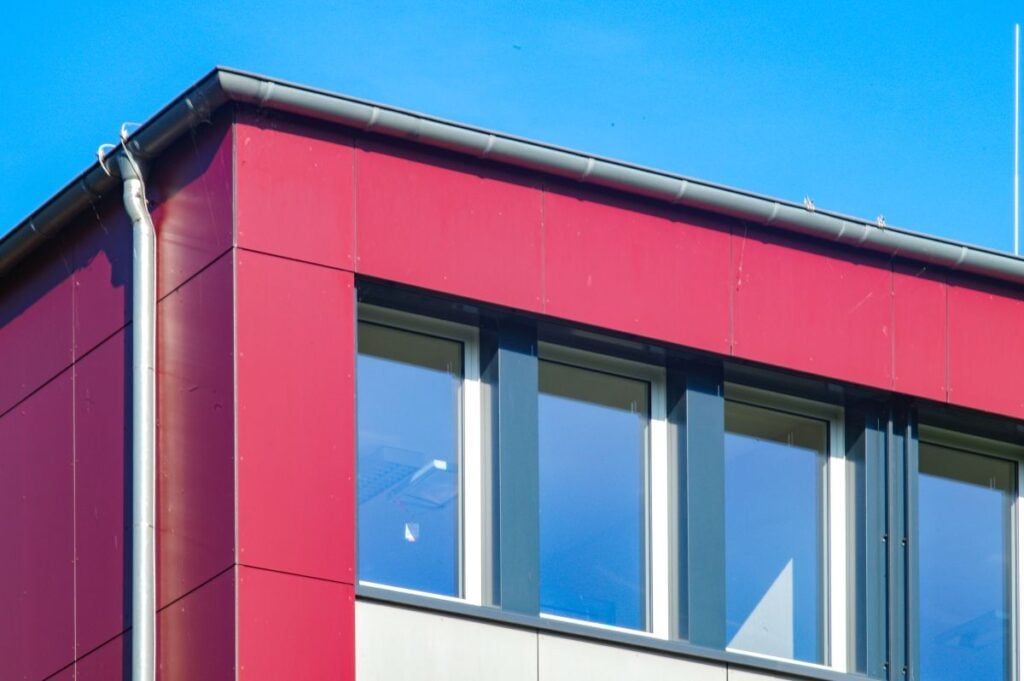
Commercial gutter systems face conditions residential systems rarely see. Larger roof areas, higher water volumes, longer lifespans expected, and interior failure consequences that can shut down operations. A residential gutter leak drips down the side of a house. A commercial gutter leak can damage ceilings, inventory, electrical systems, or tenant property. That’s why material durability matters more at this scale.
According to the National Association of Home Builders, gutter system lifespan varies significantly by material, with some metals lasting decades longer than others in the same environment. That spread is amplified on commercial buildings, where the water volumes and maintenance patterns push materials closer to their limits.
3 Best Gutter Materials for Commercial Buildings
Every commercial property has different priorities. Some owners need the lowest upfront cost on a large installation. Others need the longest lifespan on a historic or architecturally significant building. The three gutter materials below cover the vast majority of commercial installations we see on inspections in Ballantyne and surrounding areas, and each one solves a different problem.
1. Aluminum
Aluminum is the most common commercial gutter material we install, and for good reason. It’s lightweight, resistant to rust, available in a wide range of factory-baked color finishes, and can be fabricated seamlessly on site for longer continuous runs. On commercial buildings with moderate water volumes and budget-conscious ownership, aluminum is almost always the right call. It typically lasts 20 to 30 years when installed and maintained correctly.
Where aluminum earns its place on commercial properties:
- Cost-effective for large installations: The lower material cost matters on commercial buildings with hundreds of linear feet of gutter.
- Corrosion resistance: Aluminum doesn’t rust, which matters in humid North Carolina conditions where moisture sits in gutters year round.
- Seamless fabrication compatibility: Aluminum is the easiest material to extrude on site into continuous seamless runs, which reduces leak points dramatically.
- Color flexibility: Factory-baked finishes hold up well and allow the gutter to match the building’s exterior color scheme.
- Workable with most roofing systems: Aluminum integrates cleanly with TPO, EPDM, modified bitumen, and shingle commercial roof assemblies.
Where aluminum falls short: it dents more easily than steel under hail or falling debris, and it’s not the best choice for buildings with extremely high water volumes or structures where ladder traffic and maintenance impacts the gutter regularly.
2. Galvanized Steel
Galvanized steel is the workhorse material for heavy-duty commercial applications. It’s significantly stronger than aluminum, which makes it the better choice on warehouses, industrial buildings, and structures that see heavy water volumes, debris loads, or physical impact. Galvanized steel typically lasts 20 to 25 years, and the heavier-gauge stainless steel options can push past 50 years when properly maintained.
Where galvanized steel is the right material:
- High-impact environments: Warehouses, industrial facilities, and buildings with nearby tree cover or hail exposure benefit from the material’s dent resistance.
- Heavy water volume structures: Larger commercial roofs that push hundreds of gallons through the gutter during a storm hold up better in steel.
- Buildings with roof traffic: If maintenance workers, HVAC technicians, or equipment regularly interact with the roof edge, steel handles the stress better than aluminum.
- Long-term ownership: Property owners planning to hold the building for decades get a better return on the higher upfront cost of steel.
- Compatibility with GAF Premium Coating Systems: Galvanized steel integrates well with commercial coating systems, which matters on roofs we service with those assemblies.
Where galvanized steel falls short: it’s heavier, which increases installation labor cost, and the galvanized coating can corrode at cut edges or where the coating is damaged. Regular inspection and touch-up maintenance matter more on steel than on aluminum.
3. Copper
Copper is the premium option and the longest-lasting commercial gutter material available. A properly installed copper gutter system can last 60 to 100 years, which is why it’s the go-to choice on historic buildings, architect-designed commercial properties, and high-end institutional structures. Copper develops a natural patina over time that most property owners consider a feature rather than a flaw, and it requires virtually no ongoing maintenance during its service life.
Where copper justifies its higher cost:
- Historic and architectural preservation: Buildings where the gutter is visible and part of the design deserve a material that ages gracefully.
- Institutional and legacy properties: Churches, universities, municipal buildings, and long-held commercial properties where decades of service outweigh upfront cost.
- Low-maintenance priorities: Property managers who want to install and forget for the life of the building get that with copper.
- Corrosion resistance: Copper doesn’t rust, doesn’t need coatings, and handles humidity, salt air, and acidic conditions better than any other common gutter material.
- Resale and property value: Commercial buildings with copper drainage systems command higher appraisals and maintain their architectural integrity longer.
Where copper falls short: the material cost is 3 to 4 times higher than aluminum, which makes it impractical for budget-conscious installations or buildings where the gutter isn’t part of the visual identity. Copper also requires specific installation expertise, including proper soldering of joints, which not every roofing contractor can deliver.
How to Choose the Right Material for Your Building
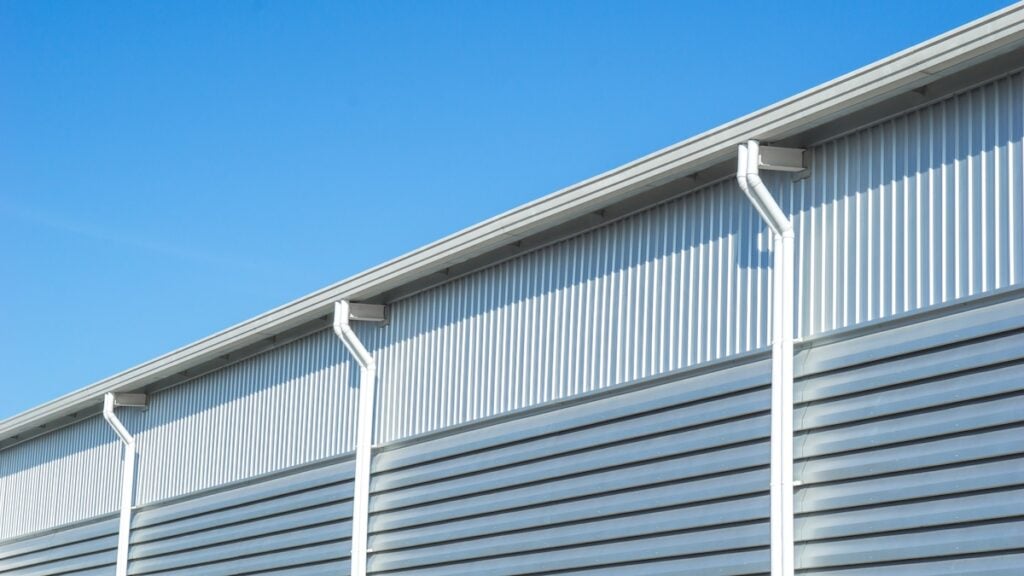
No single material is best for every commercial building. The right choice depends on specific factors tied to the property itself, not on generic recommendations.
Factors That Should Drive the Decision
When we work with commercial property owners in Ballantyne and surrounding areas on material selection, the conversation always starts with the building itself. Here’s what we evaluate before making a recommendation.
- Building type and use: Warehouses and industrial buildings have different drainage demands than office complexes or retail centers.
- Roof area and water volume: Larger roofs push toward steel or heavy-gauge aluminum. Smaller commercial roofs work with any of the three.
- Ownership timeline: Short-term holds favor aluminum. Long-term ownership favors steel or copper.
- Budget for the full project: Material cost is only part of the picture. Installation labor, fabrication requirements, and long-term maintenance all factor in.
- Architectural significance: If the gutter is visible and part of the building’s identity, copper’s appearance and lifespan justify the premium.
- Maintenance capacity: Properties with reliable maintenance budgets can get more out of steel systems. Properties with limited maintenance often do better with aluminum or copper.
When to Replace vs When to Repair
Before committing to a new material, the right first step is a thorough inspection of the existing system. A targeted repair is often cheaper and lower-impact than a full replacement, and the honest answer isn’t always a new installation.
- Isolated leaks or damage: A single failing seam or damaged section often warrants a repair rather than a full system replacement.
- Consistent failure across the system: When multiple sections are failing in the same ways, the material has reached the end of its service life.
- Changing building use: A building converted from office to industrial use may need a gutter system upgrade to handle new drainage demands.
- Roof system replacement timing: When the commercial roof is being replaced, it’s the right moment to evaluate whether the existing gutters should be replaced or upgraded to a different material.
How Roof Medic Approaches Commercial Gutter Material Selection
Roof Medic is a GAF Authorized Commercial Roofing Company and GAF Master Elite Contractor. That certification stack matters on commercial material selection because the gutter system has to integrate with the roofing assembly already on the building, and not every contractor has the training to make those integrations work over the long term.
What Our Commercial Material Consultation Includes
Before we recommend any material, we run a full commercial inspection to understand what the building actually needs. Every material recommendation is grounded in what we see on the roof, not what’s easiest to install.
- Roof assembly review: We verify how the existing or planned roofing system integrates with each material option.
- Water volume calculation: We calculate peak flow based on roof area and regional rainfall data to size the gutter correctly.
- Existing system condition: We inspect current gutters, downspouts, and drains to identify what can be reused and what needs replacement.
- Warranty coordination: We confirm that our work preserves the commercial roof warranty and aligns with manufacturer requirements.
- Cost and lifespan analysis: We lay out the upfront cost, expected lifespan, and projected maintenance for each material option so you can make an informed call.
Materials and Workmanship Warranty
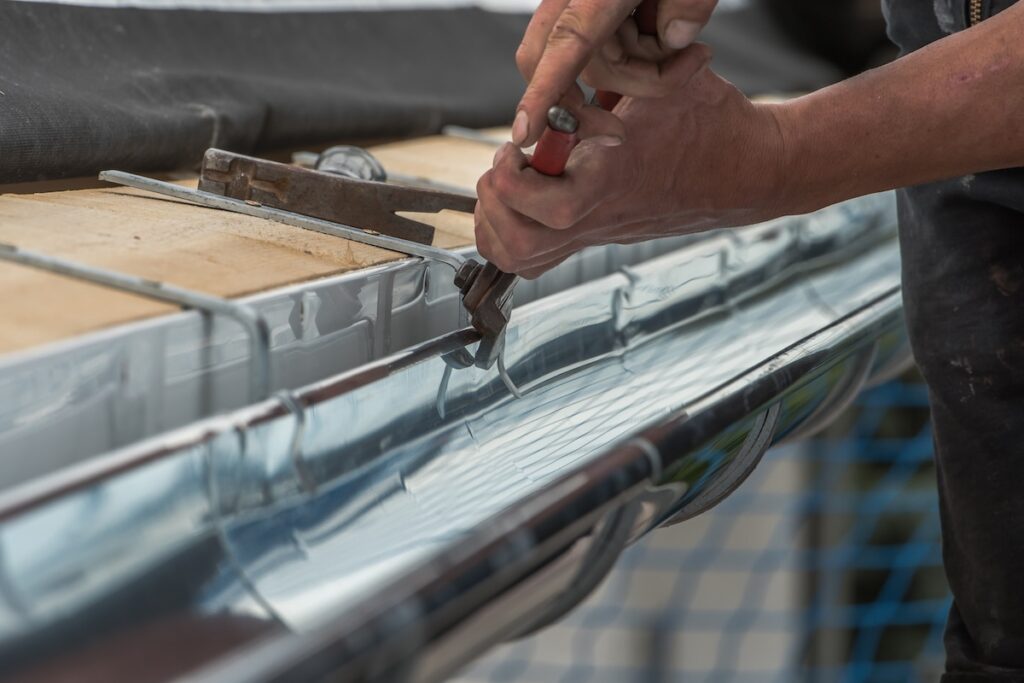
Roof Medic installs aluminum, galvanized steel, and copper gutter systems on commercial buildings, paired with the roof assembly so both systems work together. Our workmanship warranty is 2 years standard and 5 years when property owners follow our recommended approach. That’s backed by the same team that holds GAF Master Elite, GAF Authorized Commercial Contractor, and CertainTeed SELECT ShingleMaster status, placing us in the top 3% of roofers nationwide, and an A+ rating with the Better Business Bureau.
Choose the Commercial Gutter Material That Actually Fits Your Building
Aluminum, galvanized steel, and copper each earn their place on commercial buildings for different reasons. Aluminum for cost-effective installations on most commercial properties. Galvanized steel for heavy-duty industrial and high-volume applications. Copper for historic and architectural buildings where lifespan and appearance matter most. The right material for your building depends on what you actually need from the system over the next 20 to 50 years.
Roof Medic has served Ballantyne and surrounding areas with commercial gutter installations and repairs, backed by elite manufacturer certifications and a veteran-owned team that takes your property as seriously as you do. We’ll tell you whether your existing system needs a repair or a replacement, and we’ll explain exactly why based on what we see on your building.
Ready for a real commercial gutter consultation? Contact Roof Medic today to schedule an inspection. We’ll give you the honest answer on which material fits your property, not a sales pitch for the most expensive option.