704.228.7788
 06/02/2026
 11 minutes Read
Retrofit roof drains are one of the most cost-effective upgrades a commercial property owner can make during a re-roofing project, and one of the most overlooked. Old, corroded, or undersized drains are a common reason flat roofs fail before their time. Replacing them used to mean hiring a plumber, cutting through pipes, and shutting down sections of the building for hours or days. Retrofit drains changed that math entirely. For commercial property owners and facility managers in Raleigh and surrounding areas planning a re-roof or dealing with persistent drainage issues, understanding what retrofit drains do and why they’re worth the investment can save tens of thousands of dollars over the life of the building.
Here’s what you’ll learn in this guide:
- What retrofit roof drains actually are: How they work and where they fit in a commercial roofing project.
- The major benefits for commercial buildings: Cost, performance, and operational advantages.
- How to evaluate the right drain system: What to ask your roofing contractor.
What Retrofit Roof Drains Are and How They Work
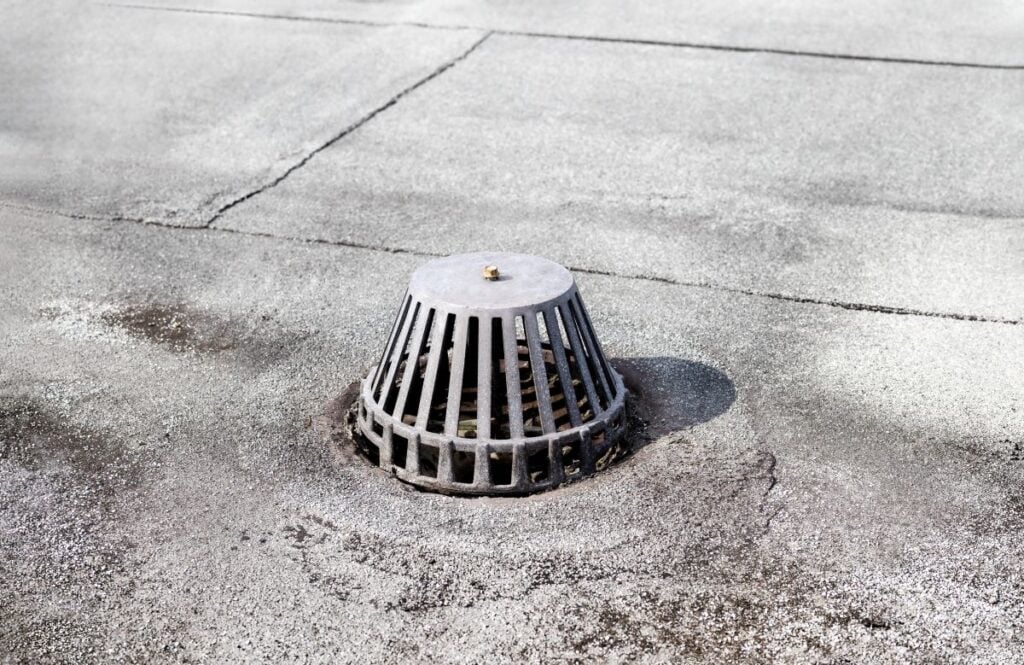
Retrofit roof drains are drainage assemblies designed to replace existing commercial roof drains without removing the original drain fixture or disturbing the plumbing below. The new drain slides into the existing drain pipe, seals against the inside of that pipe, and integrates with the new roof membrane above. No plumbers required. No interior work needed.
How a Retrofit Drain Installation Works
The process is straightforward when handled by an experienced commercial roofing team. The old strainer dome and clamping ring come off. The drain pipe gets cleaned. The retrofit drain inserts into the existing pipe, where a watertight mechanical seal expands outward against the pipe wall to lock it in place. The flange of the retrofit drain sits flush on the new roof membrane, where it integrates with the TPO, PVC, or other roofing system being installed. The whole process takes roughly an hour per drain.
- Existing drain removal: Old strainer dome and clamping ring removed from the rooftop.
- Pipe preparation: Drain pipe cleaned of debris and corrosion.
- Retrofit drain insertion: New drain assembly slides into the existing pipe.
- Mechanical seal activation: Rubber or compression seal expands against pipe wall.
- Membrane integration: Roof membrane heat-welded or clamped to the new drain flange.
How Retrofit Drains Differ From Plumber-Installed Replacements
Replacing a commercial roof drain through a plumber means cutting the existing drain connection, removing the old drain, installing a same-size new drain, and reconnecting the plumbing. The work happens from inside the building, costs more, and requires scheduling between the plumber and the roofer.
- Plumber-installed cost: Often $1,500 or more per drain plus the roofing labor.
- Retrofit drain cost: Typically $250 to $600 per drain installed.
- Installation time: Plumber-installed can take 2 hours per drain. Retrofits run closer to 1 hour.
- Building disruption: Plumber work requires interior access. Retrofits are rooftop-only.
- Coordination: Retrofits eliminate the need to align plumber and roofer schedules.
6 Major Commercial Benefits of Installing Retrofit Roof Drains
Retrofit drains earn their place on commercial buildings for specific reasons that go beyond the cost savings. The six benefits below cover what we see firsthand on commercial re-roofing projects in Raleigh and surrounding areas.
1. Significantly Lower Total Project Cost
Retrofit drains save commercial property owners thousands of dollars compared to traditional drain replacement. Eliminating the plumber line item alone can save $1,000 or more per drain, and on a building with 8 to 12 drains, that adds up fast. The roofing contractor handles the entire drain replacement as part of the re-roofing project, which means one bid, one schedule, and one team responsible for the work.
- Plumber elimination: Removes the largest single cost in a traditional drain replacement.
- Single-contractor billing: Roofing contractor handles everything as part of the project.
- Material cost savings: Retrofit drain assemblies cost less than full replacement assemblies plus pipe modifications.
- Reduced scheduling overhead: No need to coordinate multiple trades on the same roof.
- Long-term value: Properly installed retrofits perform as well as new construction drains.
2. No Interior Building Disruption
Traditional drain replacement requires interior access to cut and reconnect plumbing below the roof line. That means moving tenants, pausing operations, or accessing ceiling space in occupied areas. Retrofit drains install entirely from the rooftop. The interior of the building stays untouched. For commercial property owners with active tenants or 24/7 operations, that’s a major operational advantage.
- No interior access required: Entire installation happens on the rooftop.
- Tenant disruption avoided: Active offices, retail spaces, and warehouses stay operational.
- Ceiling access not needed: No drop ceiling tiles removed or interior walls opened.
- Liability reduced: Less interior work means fewer potential complications.
- Off-hours work possible: Rooftop-only work can often happen during non-business hours.
3. Faster Project Completion
Retrofit drain installations cut project time significantly. A roofing team can replace a drain in about an hour, compared to the multi-step plumber-and-roofer coordination that traditional replacements require. On a building with multiple drains, that time savings shortens the entire re-roofing project. Faster completion means less time with equipment on site, less time for weather to cause problems, and faster return to normal operations.
- Per-drain installation time: Approximately 1 hour for a retrofit versus 2 hours for traditional.
- Project timeline reduction: Multi-drain buildings see total project time drop by a day or more.
- Single-trade efficiency: Roofing team flows directly from membrane to drain to membrane.
- Weather window protection: Faster work reduces exposure to rain delays.
- Return to operations: Buildings return to full normal operations sooner.
4. Improved Drainage Performance
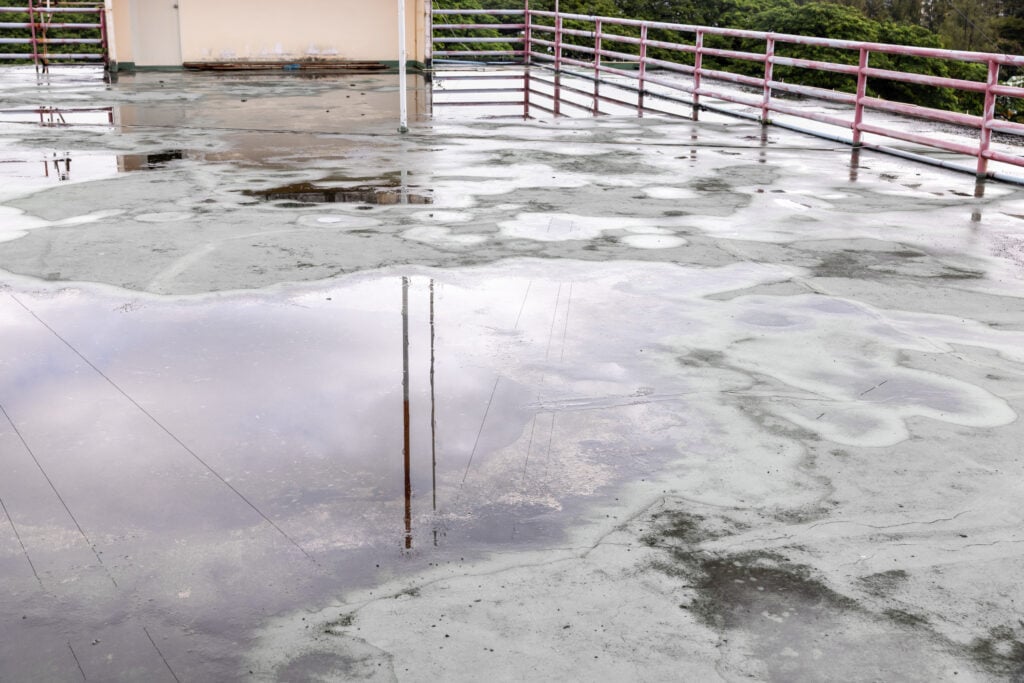
Modern retrofit drains are precision-engineered with features that older drains often lacked. Vortex breakers improve water flow. Heavy-duty cast aluminum strainer domes prevent rust. TPO or PVC-coated flanges allow direct heat-welding to the roof membrane, eliminating leak points. The result is a drainage system that often performs better than the original it replaced.
- Vortex breakers: Prevent air entrainment that slows water flow through the drain.
- Improved flow rates: Modern designs move water off the roof faster than older drains.
- Corrosion-resistant materials: Cast aluminum and stainless components last longer than original cast iron.
- Coated flange options: TPO and PVC-coated flanges create direct membrane bonds.
- Code-compliant performance: Meets ANSI/SPRI RD-1, ASME 112.6.4, and CSA-B79-08 standards.
5. Reduced Risk of Future Leaks
Retrofit drains create a watertight mechanical seal between the new drain and the existing pipe, with a clamping ring or heat-welded flange securing the roof membrane to the drain itself. That double-layer seal eliminates the most common leak points on commercial flat roofs. Compared to reusing old drains during a re-roof, which is a common shortcut some contractors take, retrofit drains dramatically reduce the chance of drainage-related water intrusion.
- Mechanical pipe seal: Watertight connection inside the drain pipe.
- Membrane attachment options: Clamping ring or heat-welded flange depending on the membrane.
- No reused components: New seals, domes, and clamping rings throughout.
- Reduced ponding risk: Better drainage performance reduces standing water.
- Long-term warranty support: Many retrofit drain manufacturers carry 10 to 20 year warranties.
6. Easier Long-Term Maintenance
Retrofit drains often come with maintenance-friendly features the original drains lacked. Easy-removal strainer domes simplify debris cleaning. Standardized parts make replacement components easy to source. Heavy-duty construction reduces the frequency of repairs. Property managers and facility teams spend less time and money keeping the drainage system functional over the life of the roof.
- Removable strainer domes: Quick debris cleaning during regular maintenance.
- Standardized replacement parts: Common manufacturer parts available from supply houses.
- Heavy-duty construction: Lower repair frequency than older drain assemblies.
- Visual condition assessment: Modern domes show wear and damage clearly during inspections.
- Warranty documentation: Manufacturer warranties create accountability over decades.
How to Decide If Retrofit Drains Are Right for Your Building
Retrofit drains aren’t always the right answer. Some commercial buildings need full drain replacement, and a few situations require plumber involvement regardless. Knowing when retrofit makes sense and when it doesn’t protects your investment.
When Retrofit Drains Are the Right Choice
Most commercial re-roofing projects benefit from retrofit drains. The fit is especially strong on buildings with intact drain piping, standard pipe sizes, and active operations that can’t tolerate interior disruption. We’ve installed retrofit drains on commercial properties throughout Raleigh and surrounding areas, and the math almost always favors them on these projects.
- Re-roofing projects: Retrofits are designed specifically for re-roof installations.
- Intact drain piping: Pipes in good condition support retrofit installations cleanly.
- Standard pipe sizes: 3, 4, 5, and 6 inch pipe sizes have ready retrofit options.
- Active commercial operations: Buildings that can’t afford interior disruption benefit most.
- Multiple-drain buildings: Cost savings scale with the number of drains being replaced.
When Full Drain Replacement Makes More Sense
Some situations call for a full drain replacement and a plumber. If the existing pipe is corroded, undersized, or at the wrong angle, sliding a retrofit inside it doesn’t fix the underlying problem. A new construction-style drain may also be required by spec on certain projects, or by union rules in specific markets.
- Corroded or damaged piping: Pipe that’s failing should be replaced, not retrofitted around.
- Undersized drains: Buildings with insufficient drainage capacity need larger pipes, not retrofit inserts.
- Specifier requirements: Some commercial specifications require new construction-style drains.
- Wrong-angle pipe routing: Retrofits don’t solve drainage problems caused by improper pipe slope.
- Code requirements: Local code or building requirements may mandate full replacement.
Frequently Asked Questions
How much does a retrofit roof drain cost?
A retrofit roof drain typically costs $250 to $600 per drain installed, including materials and labor. Larger drain sizes and TPO or PVC-coated flanges cost more. Compared to traditional drain replacement, which can run $1,500 or more per drain when a plumber is involved, retrofits save 60 to 75% of the per-drain cost.
How long do retrofit roof drains last?
Quality retrofit roof drains made from heavy-duty cast aluminum and stainless steel components typically last 25 to 40 years, often matching or exceeding the lifespan of the roof membrane they’re installed in. Manufacturer warranties on most commercial retrofit drains run 10 to 20 years on the components.
Will retrofit drains void my roof warranty?
Properly installed retrofit drains do not void roof manufacturer warranties when matched correctly to the roofing system. TPO and PVC-coated flanges are designed for direct heat-welding to the membrane, which integrates seamlessly with the warranty system. Confirm compatibility with your roofing manufacturer before installation.
Can retrofit drains handle heavy commercial water volumes?
Modern retrofit drains are engineered with vortex breakers and high-flow designs that often outperform the original drains they replace. They meet ANSI/SPRI RD-1 standards and handle the same water volumes as new construction drains in the same pipe sizes. For very large roofs, multiple drains and proper sizing matter more than the drain type.
Do retrofit drains require interior access for installation?
No. One of the main advantages of retrofit drains is that they install entirely from the rooftop. No interior work, ceiling access, or tenant disruption is required. This makes them especially valuable on occupied commercial buildings.
How often should commercial roof drains be inspected?
Commercial roof drains should be inspected at least twice per year, ideally in spring and fall. Inspections should include debris removal, strainer dome condition checks, and verification that water flows through each drain freely. Buildings with heavy tree cover or industrial debris may need more frequent inspections.
Why Roof Medic Is the Right Team for Your Commercial Drain Project
Roof Medic is a GAF Authorized Commercial Roofing Company and a GAF Master Elite Contractor, which places us in the top 3% of roofers nationwide and qualifies us to install commercial roofing systems including GAF Premium Coating Systems, TPO, and modified bitumen assemblies. We treat drain replacement as a critical part of any commercial re-roofing project, not an afterthought. We inspect first and recommend second on every commercial property we evaluate. If your existing drains can be retrofitted, we’ll explain why that’s the right call. If full replacement is the better path, we’ll explain that too. Our workmanship warranty is 2 years standard and 5 years when property owners follow our recommended approach, all backed by a veteran-owned team that takes your building as seriously as you do.
Want guidance on retrofit roof drains for your commercial building or want to learn more about how they fit into a re-roofing project? Contact Roof Medic today. We work with commercial property owners and facility managers throughout Raleigh and surrounding areas and we’re happy to walk you through what proper drainage looks like, what it costs, and how the right system protects your building for decades to come.