704.228.7788
 704.228.7788
 06/26/2026
 11 minutes Read
The flat roof replacement cost on a commercial building in 2026 ranges from $4 to $15 per square foot installed, with most projects landing in the $5 to $10 per square foot range depending on the material you choose. That spread comes down to a handful of factors that every commercial property owner needs to understand before signing off on a quote. For property owners and facility managers in Ballantyne and surrounding areas, the difference between a quality flat roof and a cheap one shows up in the operating cost, the leak history, and how long the system actually lasts before you’re back at the bidding table.
Here’s what you’ll learn in this guide:
- Real 2026 pricing: What flat roof systems actually cost this year by material.
- The 7 cost factors: What drives one quote higher than another.
- Which material we recommend: Why TPO is the system we install on most commercial properties.
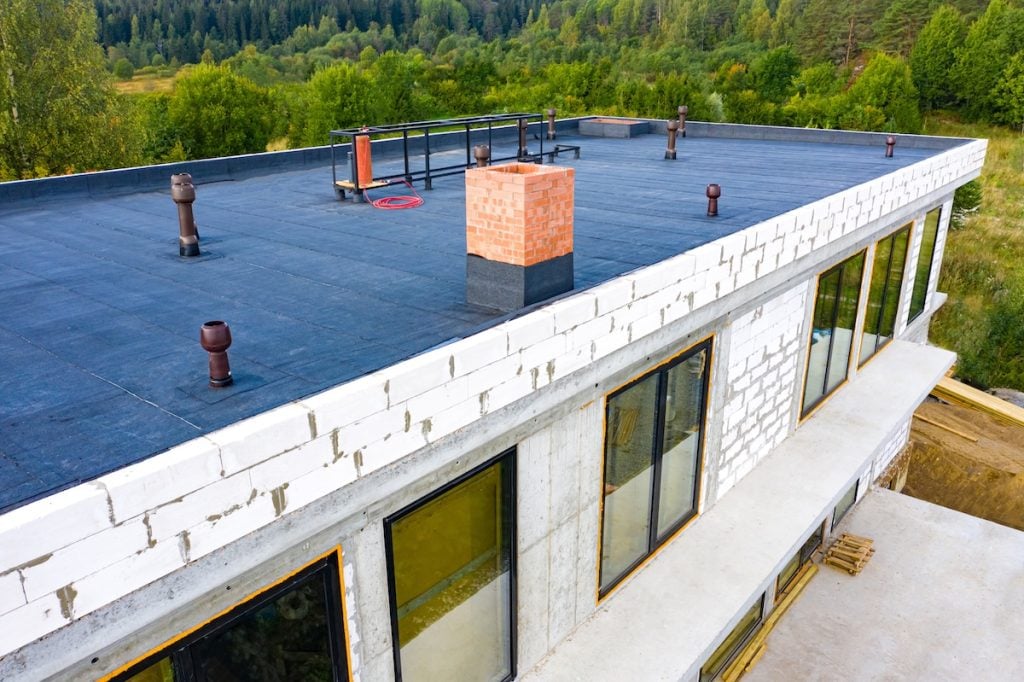
What a Flat Roof Replacement Costs in 2026
Flat roof pricing depends mostly on material choice and roof size. The other factors layer on top. Here’s the real range for a 5,000 sq ft commercial building in the Charlotte metro this year.
2026 Flat Roof Pricing by Material
We install TPO on the vast majority of commercial projects we handle, and the pricing below reflects what we see in the market in 2026. The dollar amounts include both materials and labor for a standard installation, not including tear-off, decking repairs, or insulation upgrades. Note that the prior version of this article included tar and gravel (BUR) systems. We don’t install those anymore, and the reasons are below.
- TPO (Thermoplastic Polyolefin): $5 to $10 per square foot installed. Our standard recommendation.
- EPDM (Rubber): $5 to $9 per square foot installed. The black sheet you’ve seen on older flat roofs.
- PVC (Polyvinyl Chloride): $7 to $12 per square foot installed. Premium option for restaurants and chemical exposure.
- Modified Bitumen: $4 to $8 per square foot installed. Asphalt-based, lower lifespan than the membranes.
- Tar and Gravel (BUR): Not installed by Roof Medic. Heavy, labor-intensive, and outperformed by modern membranes.
Total Project Cost by Building Size
The per-square-foot number gets you in the ballpark. The total project cost depends on building size, complexity, and existing conditions. According to industry pricing data, TPO’s white reflective surface can lower cooling costs by 15 to 30 percent compared to dark membrane systems, which makes the material a real operating-cost decision, not just a roofing decision.
- 2,000 sq ft building: Roughly $10,000 to $20,000 for a TPO replacement.
- 5,000 sq ft building: Roughly $25,000 to $50,000 for TPO.
- 10,000 sq ft building: Roughly $50,000 to $100,000 for TPO.
- Tear-off cost: Adds $1 to $2 per square foot.
- Decking repairs: $70 to $150 per 4×8 sheet of replacement decking.
7 Factors That Drive Flat Roof Replacement Cost
Every flat roof quote moves around the same seven factors. Knowing what they are helps you spot a fair bid versus one that’s missing critical line items. Here’s how we break it down for property owners in Ballantyne and surrounding areas during the inspection.
1. Roof Material Choice
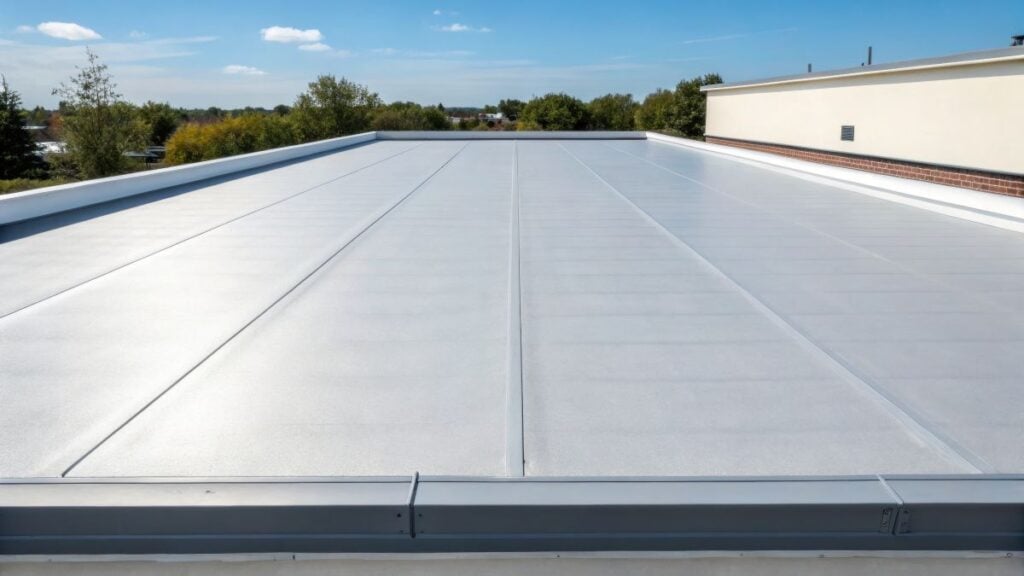
Material is the single biggest line item on a flat roof project. TPO is our standard recommendation for almost every commercial property we work on. The reasons matter. TPO is a single-ply white reflective membrane that bounces solar heat off the roof instead of absorbing it. That keeps the building cooler in summer, drops cooling bills meaningfully, and reduces heat stress on the membrane itself. As a GAF Authorized Commercial Roofing Company, we can warranty the TPO systems we install for up to 25 years, which is the kind of coverage that protects an investment of this size.
- TPO: White reflective, 20 to 30 year lifespan, 25-year warranty available through our credentials.
- EPDM: Black absorbent rubber, 15 to 25 year lifespan, runs hotter than TPO in summer.
- PVC: Heat-welded seams, chemical resistant, ideal for restaurants and food service.
- Modified Bitumen: Asphalt-based, lower upfront cost, shorter lifespan than membranes.
- Tar and Gravel (BUR): Heavier, harder to inspect, outdated. We don’t install it.
2. Roof Size and Geometry
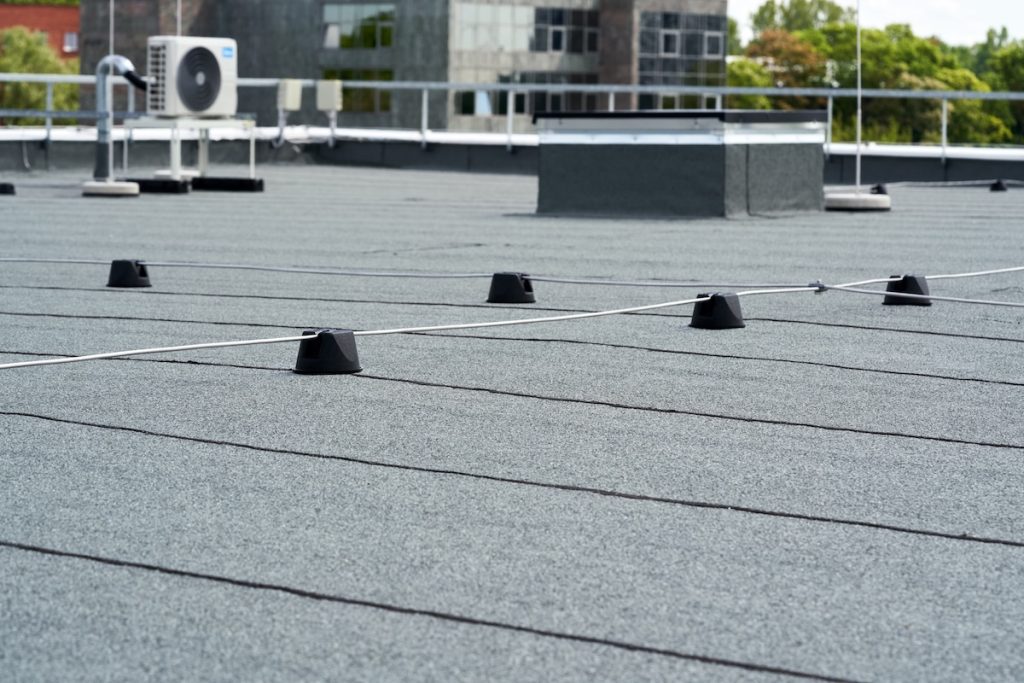
Bigger flat roofs cost more in absolute dollars but often less per square foot because of installation efficiencies. A wide-open warehouse roof is the easiest type to install, while a roof packed with HVAC units, skylights, parapet walls, and changes in elevation costs significantly more per square foot due to the labor on every penetration.
- Open commercial roofs: Lowest per-square-foot pricing due to install efficiency.
- Penetration count: Each HVAC unit, drain, vent, or skylight adds $200 to $500 in flashing labor.
- Parapet walls: Walls require additional membrane work and edge metal.
- Roof elevation changes: Multiple roof levels require step flashing and additional details.
- Total square footage: Larger roofs may qualify for material volume pricing.
3. Existing Roof Condition and Tear-Off
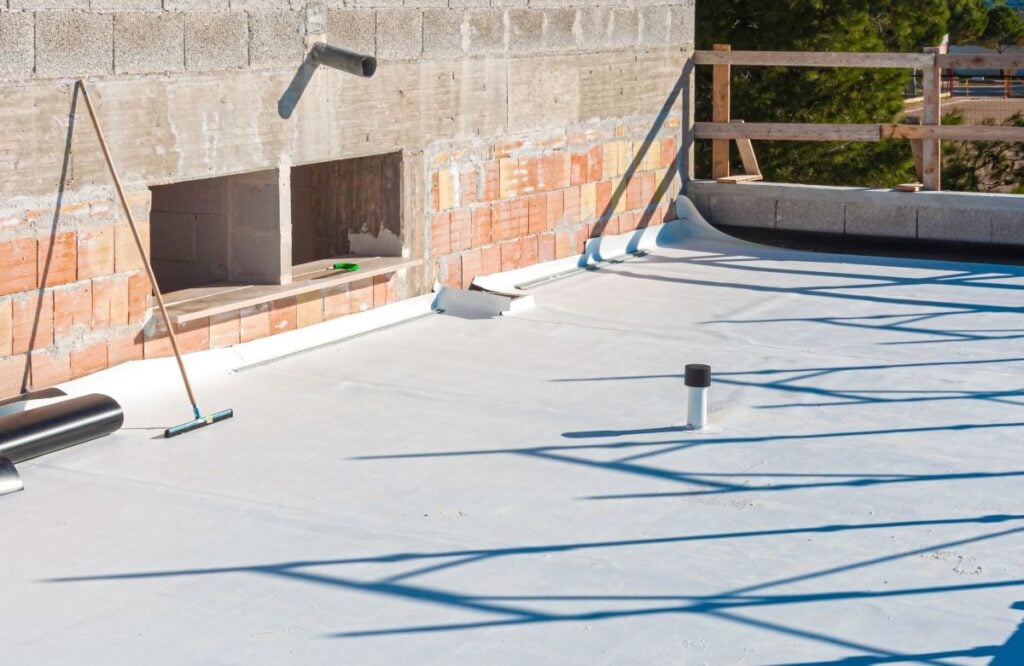
The condition of the existing roof determines whether the project can be a recover or requires a full tear-off. Recovers cost less but only work when the existing system is sound and there’s only one existing layer. Most commercial roofs we evaluate need a full tear-off, especially if there’s water damage, ponding history, or multiple existing layers. Manufacturer warranties on TPO and other modern membranes typically require tear-off, not overlay.
- Single existing layer in good shape: Recover may be viable, saving $1 to $2 per square foot.
- Multiple existing layers: Full tear-off required.
- Water-damaged decking: Discovered during tear-off, charged per sheet.
- Saturated insulation: Must be removed and replaced.
- Warranty implications: Most manufacturer warranties require tear-off for top-tier coverage.
4. Decking and Insulation
The deck under the flat roof has to be sound to support the new membrane. Saturated, rotted, or damaged decking gets replaced before the new system goes down. Insulation is its own line item and a major opportunity to improve building performance. Polyiso insulation paired with a TPO membrane creates a high-performance assembly that drops energy bills well beyond what the membrane alone delivers.
- Decking replacement: $70 to $150 per 4×8 sheet of OSB or plywood.
- Polyiso insulation: $0.50 to $3 per square foot installed.
- Cover boards: Add a layer of protection between insulation and membrane.
- Vapor barriers: Required in some climate zones to prevent moisture issues.
- R-value targets: Current code in many jurisdictions requires R-25 or higher for commercial roofs.
5. Roof Access and Building Height
How easy your roof is to get to changes the labor cost. A single-story warehouse with clear loading access is the cheapest scenario. A multi-story office building in a tight urban lot with no equipment staging area costs more in setup, safety equipment, and material handling. Cranes and lifts add to the bill on taller buildings.
- Single-story buildings: Lowest labor cost for material handling.
- Multi-story buildings: Often require crane or boom lift access.
- Tight lots: Limited equipment staging slows the work.
- Active business operations: Working around tenants adds cost.
- Off-hours work: Some projects require night or weekend work to avoid disruption.
6. Drainage System Upgrades
The drainage system on a flat roof is part of any replacement project. Old, corroded, or undersized drains need to come out. Retrofit drains are the cost-effective answer for most commercial buildings because they install from the rooftop without a plumber. New downspouts, scuppers, and edge metal all factor into the bid.
- Retrofit drain installation: $250 to $600 per drain installed.
- Full drain replacement: $1,500 or more per drain when a plumber is required.
- Scupper repairs: Vary widely based on parapet condition.
- Edge metal: $5 to $15 per linear foot for new edge metal and fascia work.
- Internal drain locations: Drains in the center of the roof require special detailing.
7. Permits, Inspections, and Local Compliance
Most North Carolina jurisdictions require permits for commercial roof replacements. Permit costs vary by jurisdiction and project value. Code-required upgrades to insulation, fire-rated assemblies, or drainage capacity can add to the total. North Carolina law requires a General Contractor license for projects over $40,000, so verify your contractor’s credentials match the project size.
- Permit fees: $200 to $1,500 depending on jurisdiction and project size.
- NC GC license threshold: Projects $40,000 and over require a licensed General Contractor.
- Code-required upgrades: Insulation R-value, fire-rated assemblies, drainage capacity.
- Final inspection: Required by most jurisdictions before project sign-off.
- Warranty documentation: Required for manufacturer warranty activation.
Why TPO Is the Right Choice for Most Commercial Buildings
The original version of this article hedged on which material to choose. We won’t. TPO is the right answer for the vast majority of commercial flat roofs we work on, and the reasons are tied to performance, warranty, and operating cost.
What Makes TPO the Better Choice Over EPDM
EPDM has been the default on commercial flat roofs for decades, but TPO outperforms it on the metrics that matter most for buildings in the Charlotte metro. EPDM is black, which absorbs heat and drives up cooling bills during NC summers. TPO is white and reflective, which keeps the building cooler. EPDM is glued or seamed with tape. TPO is heat-welded, which creates a stronger waterproof seam. Both materials are durable. Only one of them helps your bottom line every month.
- Color and reflectivity: White TPO reflects solar heat. Black EPDM absorbs it.
- Cooling cost impact: TPO can reduce cooling bills by 15 to 30 percent.
- Seam strength: Heat-welded TPO seams are stronger than glued or taped EPDM seams.
- UV resistance: TPO is engineered for direct UV exposure.
- Modern manufacturing: TPO formulations have improved significantly over the past decade.
What Our 25-Year TPO Warranty Means
We can warranty the TPO systems we install for up to 25 years because of our manufacturer credentials. That’s not a sticker on the product. It’s a full system warranty that covers the membrane, the installation, and the long-term performance of the assembly. Most commercial roofing contractors can’t offer that level of coverage because they don’t hold the certifications. As a GAF Authorized Commercial Roofing Company and GAF Master Elite Contractor, we do.
- 25-year coverage: Full system warranty on qualifying TPO installations.
- Manufacturer-backed: Backed by GAF, not just by us.
- Installation requirements: Warranty requires GAF-certified contractor installation.
- System components: Covers membrane, insulation, fasteners, and accessories.
- Long-term value: A 25-year warranty on a 25-year system protects the investment for its full life.
Frequently Asked Questions
How long does a TPO roof last?
A properly installed TPO roof lasts 20 to 30 years in most North Carolina conditions. Lifespan depends on installation quality, membrane thickness, regular maintenance, and exposure conditions. The 25-year warranty we offer through our GAF credentials covers the system for the bulk of its expected service life.
Is TPO better than EPDM?
For most commercial buildings in the Charlotte metro, TPO is the better choice. TPO’s white reflective surface reduces cooling costs by 15 to 30 percent compared to black EPDM. TPO also uses heat-welded seams that are stronger than the glued seams typical of EPDM. EPDM still has its place in cold climates and certain specialty applications.
How long does a flat roof replacement take?
Most commercial flat roof replacements take 1 to 4 weeks depending on building size, weather, and project complexity. A 5,000 sq ft TPO replacement typically completes in 5 to 10 working days under good conditions. Larger or more complex roofs can stretch to 4 weeks or more.
Will my business have to close during the replacement?
Most flat roof replacements happen with the business fully operational. The work happens above the ceiling, and we coordinate scheduling and staging to minimize disruption. Some projects require sectioning off areas of the building or working off-hours to accommodate operations.
Does commercial roof insurance cover flat roof replacement?
Commercial property insurance typically covers flat roof replacement when the damage is caused by a covered event like a storm, hail, fallen tree, or sudden water intrusion. Age-related wear and gradual deterioration are not covered. Documentation of the cause of damage matters for the claim, and we handle the claim process start to finish on storm-driven projects.
Why Roof Medic Is the Right Team for Your Flat Roof Replacement
Roof Medic is a GAF Authorized Commercial Roofing Company, a GAF Master Elite Contractor, and a CertainTeed SELECT ShingleMaster, which places us in the top 3% of roofers nationwide and qualifies us for the highest-tier manufacturer warranties available on the market. We inspect first and recommend second on every commercial roof we evaluate. If your existing roof has years of life left, we’ll tell you. If it’s time to replace, we’ll explain why TPO is the right call for most buildings and walk you through what a 25-year warranted system looks like on your property. Our workmanship warranty is 2 years standard and 5 years when property owners follow our recommended approach, all backed by a veteran-owned team that handles insurance claims start to finish and takes your building as seriously as you do.
Want guidance on a flat roof replacement for your commercial property or want to learn more about TPO and what our 25-year warranty actually covers? Contact Roof Medic today. We work with commercial property owners and facility managers throughout Ballantyne and surrounding areas, and we’re happy to walk you through what your building actually needs, what it’ll cost, and why the right system saves you money every month it’s on your roof.