704.228.7788
 704.228.7788
 07/10/2026
 12 minutes Read
Filing a roof insurance claim NC homeowners can actually win starts with knowing the process, the deadlines, and the moves that get claims paid versus denied. About 75% of the work we do at Roof Medic involves insurance claims, and we’ve seen every version of how this goes right and wrong. The homeowners who come to us first usually walk away with a fully covered roof. The ones who try to handle it alone with their adjuster often end up underpaid, denied, or stuck with damage they didn’t know about until water was coming through the ceiling. This guide walks through how the process actually works in Raleigh and surrounding areas, what to do at each step, and where the common pitfalls hide.
Here’s what you’ll learn in this guide:
- The 7-step claim process: From storm damage to final check, what happens at each stage.
- Critical NC deadlines: When you have to act and what the statute of limitations means.
- What to do if you’re denied: The second-chance options most homeowners don’t know exist.
What North Carolina Homeowners Need to Know Before Filing
Before you call your insurance company, there are a few things that change how a claim plays out. Knowing them up front saves you weeks of headaches and thousands of dollars.
Key NC Deadlines and Legal Protections
North Carolina law sets specific deadlines and protections for insurance claims that homeowners need to know. According to the Insurance Institute for Business and Home Safety, 70 to 90 percent of storm-related insurance claims involve roof damage, which means most homeowners filing claims after a storm are looking at roof work. North Carolina’s statute of limitations gives you three years from the date of loss to file a lawsuit against your insurer if they deny coverage, and that timeline can’t be shortened by policy language. Your policy itself usually requires faster notification, typically within 30 to 60 days of the damage event.
- Statute of limitations: 3 years from date of loss to file a lawsuit against an insurer.
- Policy notification window: Most NC policies require notice within 30 to 60 days.
- Discovery rule: Hidden damage timelines may start when damage is found, not when it occurred.
- NC Unfair Trade Practices Act: N.C.G.S. § 58-63-15 requires insurers to affirm or deny coverage in a reasonable time.
- Appraisal clause: Most policies include a dispute resolution process when the carrier and homeowner disagree on amount.
What’s Covered and What Isn’t
This is the part most homeowners get wrong. Insurance covers sudden, accidental damage. It doesn’t cover age, wear, or maintenance issues. Knowing the difference saves you from filing a claim that won’t go anywhere.
- Covered events: Hail, wind, fallen trees, fire, falling objects, hurricane damage.
- Not covered: Normal wear, age, lack of maintenance, pre-existing damage.
- Gray area: A storm that accelerates pre-existing wear can sometimes be partially covered.
- Documentation matters: Dated photos of pre-storm and post-storm condition help your case.
- Policy type: ACV (actual cash value) versus RCV (replacement cost value) changes your payout significantly.
7 Steps to Filing a Roof Insurance Claim in North Carolina
The claim process is the same for most North Carolina homeowners. The order matters. Skip a step or get one wrong and you’ll spend weeks unwinding it. Here’s how we walk homeowners through it in Raleigh and surrounding areas, every single week.
1. Document the Damage Immediately
The first thing to do after a storm is document the damage before anything moves. Take photos from the ground showing missing shingles, debris, fallen branches, dented gutters, dented vents, broken windows, and any visible damage. Note the date and time of the storm. If you have security camera footage of the storm itself, save it. Don’t climb on the roof. Don’t pick up debris. Just document what you can see from the ground and from inside the home (interior leaks, water stains, attic damage).
- Exterior photos: Wide shots of the home and close-ups of visible damage.
- Interior photos: Water stains, leaks, attic damage.
- Date and time: Storm date, time you discovered damage, time you took photos.
- Weather records: Save local weather reports confirming the storm event.
- Don’t disturb the scene: Move what’s dangerous, leave the rest for the adjuster and contractor.
2. Contact a Roofing Contractor Before the Insurance Company
This step trips up almost every homeowner who tries to handle a claim alone. Calling your insurance company first means an adjuster will be at your home before you have an independent expert on your side. The adjuster works for the carrier, not for you. They’ll write up whatever damage they see (and miss what they don’t), and that scope of loss becomes the starting point for your settlement. We recommend calling a contractor experienced with insurance claims first, getting a thorough inspection, and having a documented scope ready before the adjuster shows up.
- Why this order matters: A contractor inspection identifies damage the adjuster might miss.
- Storm damage inspection: Should include the full roof, flashing, gutters, vents, and any related exterior damage.
- Documentation: Photo evidence and a written scope of loss for your records.
- Insurance experience matters: Pick a contractor who handles claims regularly, not occasionally.
- No-pressure inspection: A legitimate contractor inspects without pressuring you to file.
3. File the Claim With Your Insurance Company
Once you have documentation and an independent inspection, call your insurance company to file the claim. Most carriers let you file by phone, through their app, or online. Have your policy number, the date of the storm, and a clear description of the damage ready. The carrier will assign a claim number and schedule an adjuster visit. Do this within your policy’s notification window (usually 30 to 60 days from the storm) to avoid coverage problems.
- Filing channels: Phone, mobile app, online portal, or your agent.
- Information to have ready: Policy number, storm date, damage description.
- Claim number: Save it. Reference it on every interaction.
- Adjuster timeline: Most carriers schedule an adjuster visit within 7 to 14 days.
- Document every call: Note dates, times, and names for every conversation with the carrier.
4. Meet the Adjuster With Your Contractor Present
The adjuster meeting is where the claim gets won or lost. Most homeowners try to do this alone, walk through the damage with the adjuster, and accept whatever the adjuster writes up. Don’t. Have your contractor present at the adjuster meeting. A roofer who knows insurance claims will walk the roof with the adjuster, point out damage the adjuster might miss, and document scope items that often get left off the initial estimate. This is the single biggest reason our clients get full settlements where homeowners alone get partial ones.
- Walk the roof together: Contractor and adjuster review the damage in person.
- Common missed items: Drip edge, starter strips, ridge cap, ice and water shield, ventilation.
- Code upgrades: NC code-required items the existing roof didn’t have but the new one needs.
- Damage outside the roof: Gutters, fascia, soffit, windows, siding.
- Written scope of loss: Make sure everything you and your contractor identified is on paper.
5. Review the Initial Settlement and Supplement If Needed
After the adjuster meeting, the carrier will send you a written estimate (usually generated in Xactimate, the industry-standard estimating platform). Review it carefully with your contractor. Almost every initial estimate misses something. Common missing items include starter strips, ice and water shield in code-required areas, drip edge, ridge cap, debris haul-off, and disposal fees. Your contractor can file a supplement (a formal request to add missing items to the scope) which the carrier reviews and typically approves when documented properly.
- Initial estimate: Insurance company’s first scope of loss and dollar figure.
- Xactimate platform: Industry-standard estimating software used by most carriers.
- Supplement process: Formal request to add missing items to the scope.
- Common supplement items: Starter, ridge, drip edge, ice and water shield, code upgrades.
- Documentation requirement: Supplements require photos, code citations, and itemized line items.
6. Sign the Contract and Begin Work
Once the scope is approved, your contractor signs a contract with you to perform the work. The carrier issues the first check (called the actual cash value or ACV payment) which covers the depreciated value of the work. You’re responsible for the deductible upfront. The contractor schedules and completes the work according to the approved scope. This phase typically runs 1 to 3 days for a residential asphalt shingle roof replacement.
- Contract signing: Between you and the contractor, separate from the insurance carrier.
- ACV payment: First insurance check covering depreciated value minus your deductible.
- Your deductible: Your responsibility, paid to the contractor at start of work.
- Work timeline: Typically 1 to 3 days for an asphalt shingle re-roof.
- Completion documentation: Photos, certificate of completion, manufacturer paperwork.
7. Submit Final Documentation and Collect Recoverable Depreciation
After the work is complete, your contractor submits the final invoice and proof of completion to your insurance carrier. The carrier reviews the documentation and issues the recoverable depreciation payment, which is the difference between the actual cash value (already paid) and the full replacement cost value of the work. This second check, plus the first ACV check, plus your deductible should add up to the full project cost. Some carriers process this final payment within 2 to 4 weeks. Others take longer, especially if documentation is incomplete or contested.
- Final invoice: Submitted by contractor with proof of completion.
- Required documentation: Photos, completion certificate, manufacturer warranty paperwork.
- Recoverable depreciation timeline: Typically 2 to 4 weeks for clean claims.
- The math: ACV check + deductible + depreciation check = total project cost.
- Final permits: Inspection sign-off and code compliance documentation as required.
What to Do If Your Claim Gets Denied
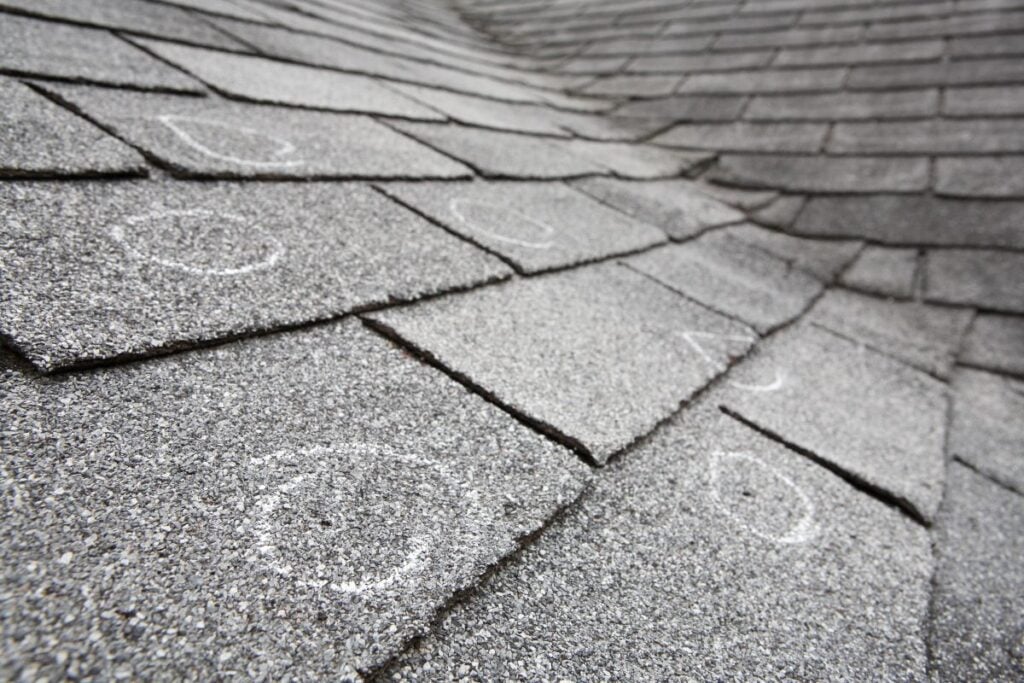
A denied claim isn’t always the end of the road. We’ve helped homeowners reverse denials on a regular basis when the original adjuster missed damage, miscategorized the cause, or wrote up the wrong scope. Here’s how second-chance claims actually work in NC.
Common Reasons Claims Get Denied
Most claim denials come down to a handful of issues. Knowing them helps you understand why a denial happened and whether a re-file is realistic.
- Adjuster missed damage: The most common and most fixable reason.
- Damage attributed to wear: Adjuster called age-related what was actually storm damage.
- Late filing: Notice provided outside the policy window.
- Insufficient documentation: Damage wasn’t documented well enough to prove storm causation.
- Pre-existing damage exclusion: Carrier argued damage existed before the covered storm event.
How a Second-Chance Claim Works
A denied claim can often be refiled with additional documentation, a contractor-led inspection, and sometimes a public adjuster or attorney involved. The key is acting before the statute of limitations expires (3 years from date of loss in NC). We’ve walked dozens of homeowners through second-chance claims that turned an initial denial into a full settlement.
- Document the missed damage: Photographs, contractor reports, and damage timeline.
- Request reinspection: Carriers often agree to re-evaluate when new documentation is provided.
- Appraisal clause: If the dispute is about amount (not coverage), invoke the appraisal clause.
- Public adjusters: Independent licensed professionals who advocate for the homeowner.
- Legal action: Last resort within the 3-year statute of limitations.
Frequently Asked Questions
How long do I have to file a roof insurance claim in NC?
North Carolina policies typically require homeowners to notify their insurance carrier within 30 to 60 days of the damage event, though many policies require “prompt” notice without specifying days. The state statute of limitations gives you 3 years from the date of loss to file a lawsuit against your insurer if needed. File as soon as possible after the damage to avoid coverage issues.
Will filing a roof insurance claim raise my premium?
Filing a claim can affect future premiums, but the impact varies by carrier and claim type. Storm-related claims (out of the homeowner’s control) typically affect premiums less than maintenance-related issues. Many homeowners see their premiums rise after a major claim regardless of fault, but the cost of paying out of pocket for major roof damage almost always exceeds the long-term premium impact.
Can I choose my own roofing contractor for an insurance claim?
Yes. North Carolina homeowners have the right to choose their own contractor for insurance-covered roof work. Your carrier may suggest a preferred contractor list, but you’re not required to use them. Choose a contractor experienced with insurance claims, properly licensed and insured, and with strong manufacturer credentials.
What’s the difference between ACV and RCV insurance policies?
Actual Cash Value (ACV) policies pay the depreciated value of your roof, which decreases as the roof ages. Replacement Cost Value (RCV) policies pay the full cost to replace the roof regardless of age, typically in two payments (ACV first, then recoverable depreciation after work is complete). RCV policies cost more upfront but pay significantly more on a claim.
Will my deductible apply to the full roof or just the damaged section?
Your deductible applies once per claim, not per item or section. If the storm damaged your roof, gutters, and siding, you pay one deductible for the entire claim. Some hurricane and named-storm policies have separate (and higher) deductibles for those specific events, so check your policy language.
How long does the entire claim process take?
A straightforward roof insurance claim in North Carolina typically takes 30 to 90 days from filing to final check. Simple claims with clean documentation can wrap up in under 30 days. Complex claims involving denials, supplements, or appraisals can take 6 months or longer. Working with an experienced contractor speeds up almost every step of the process.
Why Roof Medic Is the Right Team for Your Insurance Claim
About 75% of the work Roof Medic does involves insurance claims. We handle storm damage restoration from the first inspection through the final check. Our team meets with adjusters every week, knows what they look for, knows the documentation supplements that get scopes approved, and knows the second-chance options when claims get denied initially. As a GAF Master Elite Contractor and CertainTeed SELECT ShingleMaster, we install roof systems that qualify for the highest-tier manufacturer warranties available, all integrated with the insurance settlement. Our workmanship warranty is 2 years standard and 5 years when homeowners follow our recommended approach, all backed by a veteran-owned team that handles the claim process so you don’t have to.
Want guidance on a roof insurance claim or want to learn more about what to do after storm damage? Contact Roof Medic today. We work with homeowners throughout Raleigh and surrounding areas, and we’re happy to walk you through what your damage looks like, what your policy covers, and how to make sure your claim gets the full settlement you’re owed.