 704.228.7788

 704.228.7788

 10/23/2025
 6 minutes Read
The three main types of skylights, fixed, vented, and tubular, each solve a different problem, and picking the wrong one for your space is the most common skylight mistake we see. For homeowners in Matthews and surrounding areas considering a skylight, the right choice comes down to whether you want light, airflow, or both, how big the space is, and what your budget allows. This guide compares the three main types head to head, covers mounting styles and 2026 costs, and helps you choose the right skylight for your home.
Here’s what you’ll learn in this guide:
- Fixed vs vented vs tubular: A straight comparison of the three main types.
- Mounting and glass options: The details that affect leak resistance and cost.
- Which type fits your space: How to match the skylight to the room.

3 Main Types of Skylights Compared
Fixed, vented, and tubular skylights differ in cost, function, and where they fit best. Not all skylights are created equal, so here’s the quick comparison before we break each one down.
Quick Comparison Table
| Feature | Fixed | Vented | Tubular |
| Opens for airflow | No | Yes | No |
| Best for | Light and views | Light and ventilation | Light in small spaces |
| Typical installed cost | 1,500–4,000 | 3,200–7,250 | 500–1,500 |
| Leak risk | Lowest | Higher (moving parts) | Low |
| Best rooms | Living rooms, stairwells | Kitchens, bathrooms | Hallways, closets |
| View of the sky | Yes | Yes | No |
1. Fixed Skylights
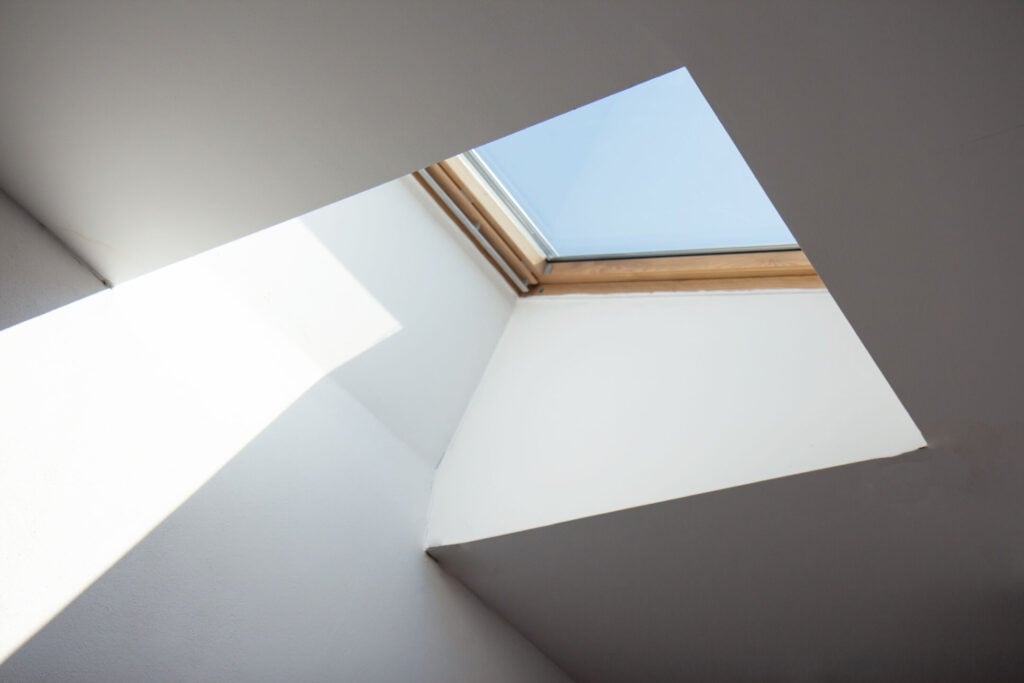
Fixed skylights are sealed units that don’t open. They’re the most leak-resistant traditional skylight because they have no moving parts, and they’re ideal when you want natural light and a view but don’t need ventilation. Because there’s no motor or crank, they’re the simplest to install and the least likely to develop problems over time.
- Opens: No, sealed for light and views only.
- Installed cost: $1,500 to $4,000.
- Leak resistance: Highest of the traditional types.
- Best for: Living rooms, stairwells, hallways, and any space needing light not airflow.
- Advantage: Fewest maintenance issues and the lowest cost per unit.
2. Vented Skylights
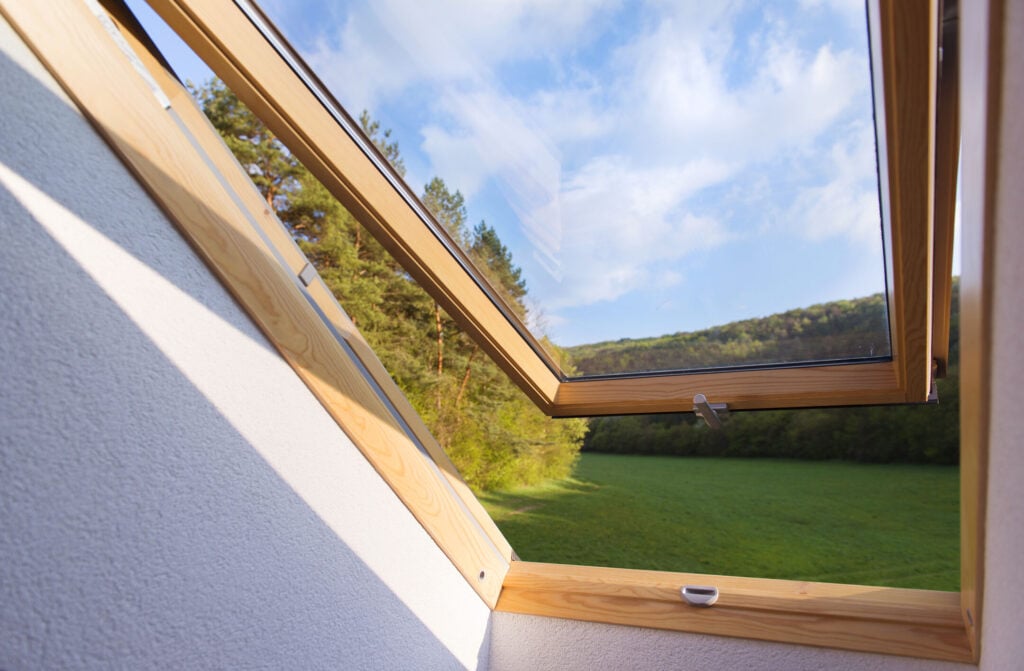
Vented skylights open to release heat and moisture, which makes them the best choice for kitchens and bathrooms. They come in manual (hand crank or rod), electric (remote, wired to power), and solar-powered (remote, built-in solar panel, no wiring) versions. The solar version is popular because it skips the electrician and includes a rain sensor that closes the unit automatically.
- Opens: Yes, manually, electrically, or solar-powered.
- Installed cost: $3,200 to $7,250 depending on operation type.
- Leak risk: Higher than fixed because of the moving parts.
- Best for: Kitchens, bathrooms, and rooms that need heat and moisture release.
- Bonus: Electric and solar models close automatically when rain is detected.
3. Tubular Skylights (Sun Tunnels)
Tubular skylights, also called sun tunnels, are compact units that channel daylight from a small roof dome through a reflective tube to a ceiling diffuser. They’re the most affordable type because the roof penetration is small and no light shaft construction is needed. They’re ideal for small spaces where a full skylight would be oversized or too expensive.
- Opens: No, light only.
- Installed cost: $500 to $1,500.
- Leak risk: Low, thanks to the small, simple penetration.
- Best for: Hallways, closets, bathrooms, and small interior rooms.
- Advantage: Fast installation, often under half a day, and reaches spaces a skylight can’t.
Mounting Styles and Glass Options
Beyond the three main types, two installation details, mounting style and glass type, affect both leak resistance and cost. These matter especially in North Carolina’s storm-prone climate.
Curb-Mounted vs Deck-Mounted
Skylights install one of two ways, and the method affects leak resistance and cost. Deck-mounted units sit flush with the roof, while curb-mounted units sit elevated on a built-up frame.
- Deck-mounted: Sits flush with the roof, common on sloped asphalt roofs.
- Curb-mounted: Elevated on a frame, required on flat and low-slope roofs.
- Leak resistance: Curb-mounted often sheds water better on low slopes.
- Flat roof code: Requires curb-mounted units with a minimum rise.
- Cost: Curb-mounted costs more because the curb must be built first.
Glass and Impact Options
The glazing you choose affects energy efficiency and storm resistance. In a hail-prone region, impact-resistant glass is worth considering.
- Tempered glass: Standard, stronger than regular glass.
- Laminated glass: Holds together if cracked, preventing leaks and falling fragments.
- Low-E coatings: Reflect heat in summer and retain it in winter, improving efficiency.
- Impact-resistant: Laminated or tempered glass that withstands hail and debris.
- NC consideration: Impact glass matters in a region with regular hail and storms.

How to Choose the Right Skylight for Your Space
The best skylight depends on the room, your goals, and your budget. Here’s how to match the type to the space. According to This Old House, unless a skylight is easily reachable, a fixed unit is often the smarter, more economical choice over a vented one.
Match the Type to the Room
Each room has a natural fit. Start with what the space actually needs.
- Living rooms and stairwells: Fixed skylights for light and views.
- Kitchens and bathrooms: Vented skylights to release heat and moisture.
- Hallways and closets: Tubular skylights for affordable light in tight spaces.
- Vaulted great rooms: Fixed or vented depending on whether you want airflow.
- Windowless interior rooms: Tubular skylights that route around obstructions.
Factor In Budget and Access
Cost and accessibility shape the decision as much as the room does.
- Tight budget: Tubular skylights deliver light for a fraction of the cost.
- Hard-to-reach locations: Fixed units avoid the cost of a venting mechanism you can’t easily use.
- Energy focus: Low-E glass and proper placement cut cooling costs in NC summers.
- Ventilation need: Only vented skylights provide airflow, worth the added cost in wet rooms.
- Long-term value: Quality units with proper flashing protect against costly leaks.
Why Installation Matters More Than the Skylight
Here’s the part most guides skip. Whatever type you choose, a skylight is a hole cut in your roof, and the flashing and seal determine whether it protects your home or becomes your next leak. In Charlotte’s climate, with heavy summer downpours and hurricane remnants driving rain sideways, a poorly flashed skylight will find water. The type matters, but the installation matters more.
What Proper Installation Requires
A skylight done right integrates with the roof system, not just the surface. These details separate a skylight that lasts decades from one that leaks in a year.
- Manufacturer flashing kits: Required for the warranty and a watertight seal.
- Underlayment integration: The skylight ties into the roof’s water barrier.
- Correct step flashing: Layered properly with the surrounding shingles.
- Ice and water shield: Added around the penetration for extra protection.
- Proper slope: Correct placement so water flows away rather than pooling.

Choosing the Right Skylight for Your Home
The right skylight comes down to matching the type to your space: fixed for light and views, vented for airflow in kitchens and baths, and tubular for affordable light in small rooms. But whatever type you choose, the installation is what keeps it from leaking, and that’s a roofing job, not a handyman task. As a Velux Certified Installer, a GAF Master Elite Contractor, and a CertainTeed SELECT ShingleMaster in the top 3% of roofers nationwide, Roof Medic installs skylights sealed to last through Charlotte weather and backed by the manufacturer warranty. We inspect first and recommend second, helping you choose the right type for your space and your budget. If your skylight is outdated, leaking, or you’re considering adding one, contact Roof Medic today for guidance.
