704.228.7788
 04/14/2026
 7 minutes Read
K style gutters are the most common residential gutter profile in North Carolina, and for good reason: their flat back, decorative front, and high water capacity make them a solid match for the heavy rain and storm activity we see across the Charlotte and Huntersville and surrounding areas. But like any part of your home’s exterior, they wear out. The tricky part is knowing when “worn” tips over into “about to fail.”
This guide walks through the six warning signs homeowners should watch for before a gutter failure turns into fascia rot, foundation damage, or a roof repair that should have been avoided.
In this post, you’ll learn:
- What to look for: The visible warning signs that your gutters are past their prime.
- Why it matters: How failing gutters damage your roof, siding, and foundation.
- What to do next: When to call a roofing team for an honest diagnosis.
Why K Style Gutters Fail in North Carolina
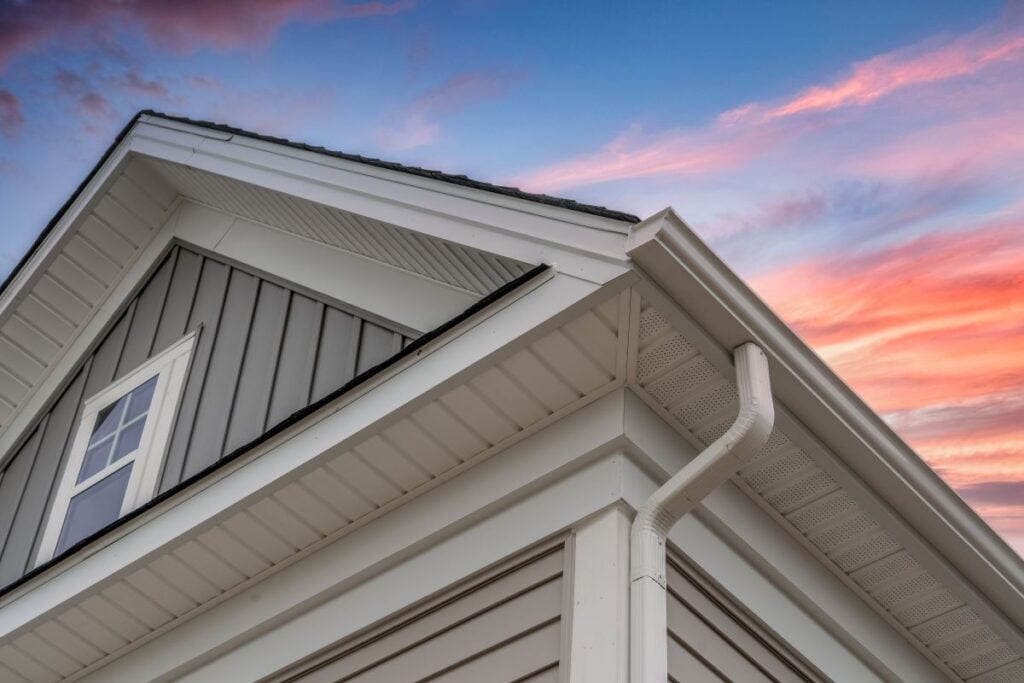
K style gutters typically last 20 years when installed properly and maintained, according to guidance from the National Association of Home Builders. In North Carolina, that lifespan can shrink based on tree cover, storm exposure, and installation quality. Charlotte averages around 43 inches of rainfall per year, and a single inch of rain on a 2,000 square foot roof produces more than 1,200 gallons of water that your gutters have to move.
That’s a lot of work for a system most homeowners never think about until it fails.
Common Causes of Gutter Failure
Before we get to the signs, it helps to understand what’s actually going wrong inside the system. Most K style gutter failures trace back to the same short list of causes, and knowing them makes the warning signs easier to spot on your own home.
- Clogged downspouts: Leaves, shingle granules, and debris restrict water flow and force overflow at the seams.
- Loose hangers or spikes: Fasteners pull away from the fascia over time, leaving gutters sagging or detached.
- Seam separation: Sectional K style gutters have joints that crack and leak as the metal expands and contracts.
- Improper pitch: Gutters that aren’t sloped correctly toward the downspout hold standing water and corrode from the inside out.
- Storm impact: Hail, falling limbs, and high winds dent, bend, or tear gutters off the house entirely.
How Local Weather Accelerates Wear
Huntersville and surrounding areas see a mix of summer thunderstorms, fall hurricane remnants, and winter freeze and thaw cycles. Each one stresses your gutters in a different way. Summer storms dump water volume that exposes undersized or clogged systems. Hurricane remnants bring sustained wind that loosens hangers and drives debris into downspouts. Winter freezes cause water trapped in the gutter to expand, widening cracks and pulling seams apart. That combination is why a gutter system that might last 25 years in a mild climate often fails sooner here.
6 Signs Your K Style Gutters Need to Be Replaced
The following six signs are the ones our team sees most often during roof and gutter inspections in Huntersville and surrounding areas. If you spot more than one, it’s time for a professional look.
- Visible cracks or splits: Small cracks let water seep behind the gutter and onto the fascia board. Left alone, they widen with every freeze and thaw cycle.
- Sagging or pulling away from the house: Gutters that dip in the middle or gap from the fascia are no longer draining correctly and are close to tearing loose.
- Rust, corrosion, or peeling paint: Rust on a K style gutter usually means standing water has been sitting inside for a long time. Peeling paint on the fascia or siding below the gutter is a sign of chronic overflow.
- Water damage on the fascia or soffit: Dark staining, soft wood, or visible rot under the gutter line means water is getting where it shouldn’t. This is a leading cause of roof deck damage.
- Pooling water near the foundation: If you see puddles, erosion, or basement moisture after a storm, your gutters aren’t carrying water far enough from the house.
- Gutters that overflow in every storm: Overflow during heavy rain isn’t always a clog. Undersized, misaligned, or failing K style gutters can’t keep up with the volume, and that water ends up on your roof edge, siding, and foundation.
What Happens When You Wait Too Long
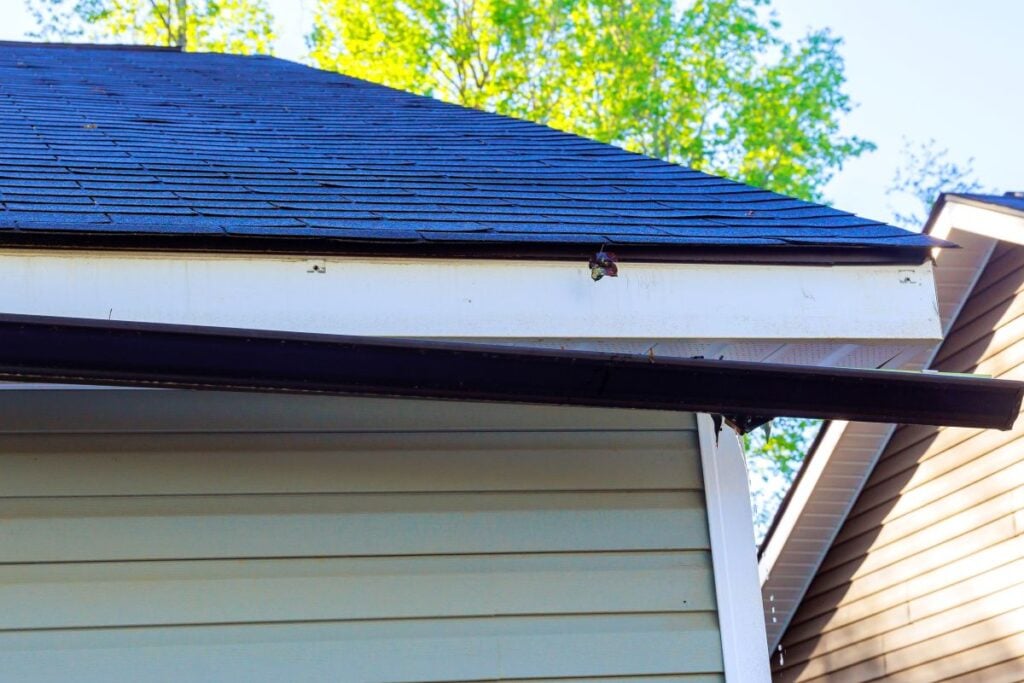
Most homeowners don’t replace gutters until something breaks. That’s usually the most expensive path. A failing gutter system rarely causes one isolated problem. It creates a chain reaction across the roof, siding, and foundation.
Damage to the Roof Edge and Decking
When K style gutters overflow or back up, water runs behind them and soaks into the fascia, soffit, and roof decking. That moisture rots the wood your shingles are nailed to, which shortens the life of the entire roof. A gutter replacement priced in the low thousands can turn into a roof replacement several times that amount when the problem is ignored long enough. This is the single biggest reason our team pushes homeowners in Huntersville and surrounding areas to address gutter issues early.
Foundation and Landscaping Problems
Water that pools at the base of your home doesn’t stay there. It seeps into the foundation, erodes landscaping, and can cause settling or cracks in the concrete. The Federal Emergency Management Agency notes that proper drainage is one of the most effective ways to protect a home’s foundation from long-term water damage, and your gutters are the first line of that drainage system.
Interior Leaks and Mold
Once water finds its way behind the fascia, it often travels into the attic or wall cavities. That’s when you start seeing ceiling stains, bubbling paint, and in worst-case scenarios, mold growth inside the home. At that point, you’re no longer dealing with a gutter project. You’re dealing with interior remediation on top of the original exterior issue.
How Roof Medic Approaches Gutter Replacement

Roof Medic inspects first and diagnoses second. If your K style gutters can be repaired, we’ll tell you. If they need to be replaced, we’ll explain why and walk you through the options. No driveway estimates, no pressure to upsell.
What Our Inspection Includes
A thorough inspection is the only way to know what’s actually wrong with a gutter system. Here’s what our team looks at before making any recommendation.
- Gutter pitch and alignment: We check that the system slopes correctly toward every downspout.
- Fastener condition: We inspect hangers, spikes, and brackets for pull-away or corrosion.
- Seam and joint integrity: Every seam on a K style gutter is a potential leak point, and we test each one.
- Fascia and soffit condition: We check the wood behind and under the gutter for rot, staining, or soft spots.
- Downspout flow: We confirm that water is moving away from the foundation, not pooling at the base of the house.
Materials and Warranty
Roof Medic installs seamless K style gutters paired with the roof system so the two work together the way they’re supposed to. Our workmanship warranty is 2 years standard and 5 years when homeowners follow our recommended approach. That’s backed by the same team that holds GAF Master Elite and CertainTeed SELECT ShingleMaster status, placing us in the top 3% of roofers nationwide.
Replace Your K Style Gutters Before the Damage Spreads
If you’re seeing even one of the six signs above, your K style gutters are telling you something. The homeowners who act early save thousands compared to the ones who wait for a failure. Roof Medic has served Huntersville and surrounding areas with honest inspections, straightforward recommendations, and the kind of workmanship that comes from a veteran-owned team that takes your home as seriously as you do.
Ready for a real diagnosis? Contact Roof Medic today to schedule an inspection and find out whether your gutters need a repair, a replacement, or just a tune up. We’ll give you the honest answer, not a sales pitch.