
 704.228.7788
 05/26/2026
 10 minutes Read
Solar panel roof mounting isn’t a one-size-fits-all job, and the method that works perfectly on an asphalt shingle roof can crack a tile roof in five minutes. The mounting system you use depends on your roof type, your home’s structure, and whether you actually want a leak-free roof 20 years from now. For homeowners in Ballantyne and surrounding areas considering solar, understanding the mounting method matters as much as the panels themselves.
Here’s what you’ll learn in this guide:
- Why mounting method matters: How attachment quality affects your roof’s lifespan and your solar performance.
- The six most common mounting methods: What each one does and where it fits.
- How to choose the right approach: What to weigh before installation.
Why the Mounting Method Matters as Much as the Panels
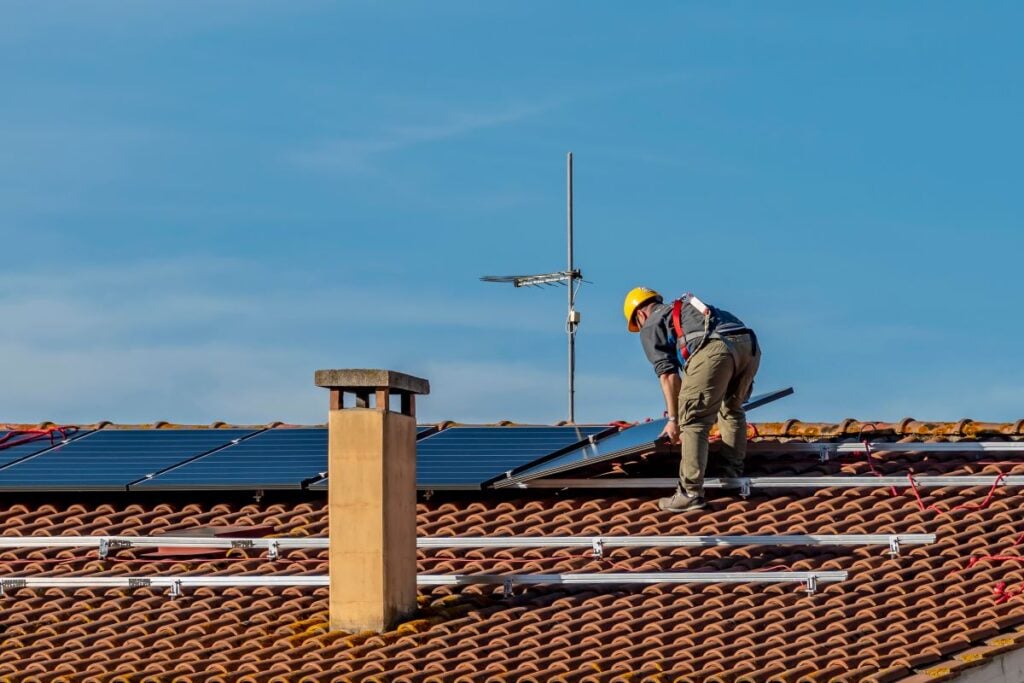
The mounting system holds your panels to the roof for the next 25 plus years. That’s a long time for hardware to stay watertight. Get the mount right and the system performs flawlessly. Get it wrong and you’re looking at leaks, voided warranties, or panels that come loose in a storm.
How Mounting Affects Your Roof Warranty
Every penetration into your roof is a potential leak. Solar mounting hardware drills into the deck, and the seal around that drill point is what keeps water out. A bad install can void your roof manufacturer’s warranty, leaving you on the hook for any future damage. The contractor matters. The mounting method matters more.
- Manufacturer-approved hardware: Required to maintain shingle warranties from GAF, CertainTeed, and others.
- Flashing quality: The waterproof seal around the mount is the difference between a roof that lasts and one that leaks.
- Rafter attachment: Mounts must anchor into structural rafters, not just the deck sheathing.
- Wind rating: Properly mounted systems handle 100 to 180 mph winds when installed correctly.
- Penetration count: Fewer mounts mean fewer leak points, but each one has to support its share of the load.
What Goes Wrong With a Bad Mount
Most solar-related roof failures aren’t the panels. They’re the mounts. We see the same problems on inspection after inspection. A homeowner saved a few thousand dollars on a cheap install and now has water in the attic. That’s the math you don’t want to do.
- Hidden leaks: Water enters around poor seals and damages the deck before the homeowner notices.
- Loose mounts: Improperly anchored hardware loosens under wind and panel weight.
- Voided warranties: Manufacturer-approved methods are required to keep roof warranties intact.
- Panel uplift: Wind can lift improperly secured panels in severe storms.
- Expensive removal: Fixing a mount problem usually requires removing panels, repairing the roof, and reinstalling.
6 Most Common Solar Panel Roof Mounting Methods
Different roof types need different mounting approaches. The six methods below cover almost every residential install in North Carolina. Knowing which one fits your roof helps you ask the right questions when you’re vetting a solar contractor.
1. Penetrating Lag Bolt Mounts for Asphalt Shingle Roofs
Penetrating lag bolt mounts are the standard method for asphalt shingle roofs and the most common solar installation in the country. A lag bolt drives through the shingles, the underlayment, and into the roof rafter. Flashing slides under the shingle above to create a watertight seal. Done right, it lasts the life of the roof. Done wrong, it leaks within a year.
- Best suited for: Asphalt shingle roofs less than 10 years old.
- Hardware: Stainless steel lag bolts, manufacturer-approved flashing, and sealant.
- Installation time: Adds 1 to 2 days to a standard solar install.
- Cost factor: Most affordable mounting method on residential roofs.
- Warranty risk: Improper sealing voids GAF and CertainTeed shingle warranties.
2. Tile Hooks and Tile Replacement Mounts for Tile Roofs
Tile roofs need a completely different approach because tiles crack under direct pressure. The two main methods are tile hooks, which lift the tile slightly and anchor below it, and tile replacement mounts, which swap a tile out for a flashing-and-mount assembly. Both methods keep weight off the tile itself. Tile installs cost more and take longer, but they protect the roof.
- Best suited for: Clay, concrete, and Spanish tile roofs.
- Tile hook method: Specialized hook anchors below the tile without supporting weight on it.
- Tile replacement method: Removes a tile and replaces it with a flashed mount assembly.
- Installation time: Adds 2 to 4 days versus an asphalt install.
- Cost factor: Typically 30 to 50% more than asphalt mounting due to labor and materials.
3. Standing Seam Clamp Mounts for Metal Roofs
Standing seam metal roofs are the easiest roof type to mount solar panels on, and the only major method that requires zero penetrations. The mount clamps directly onto the raised seam of the metal roof, holding the panel in place without drilling into the roof at all. No holes means no leaks. Period.
- Best suited for: Standing seam metal roofs in any condition.
- Hardware: Stainless steel clamps that grip the seam without penetration.
- Installation time: Often the fastest method, sometimes finishing in 1 day.
- Cost factor: Hardware costs more, but labor savings often even out the total.
- Warranty advantage: No penetrations means the roof warranty is fully preserved.
4. Specialty Brackets for Corrugated and Metal Shingle Roofs
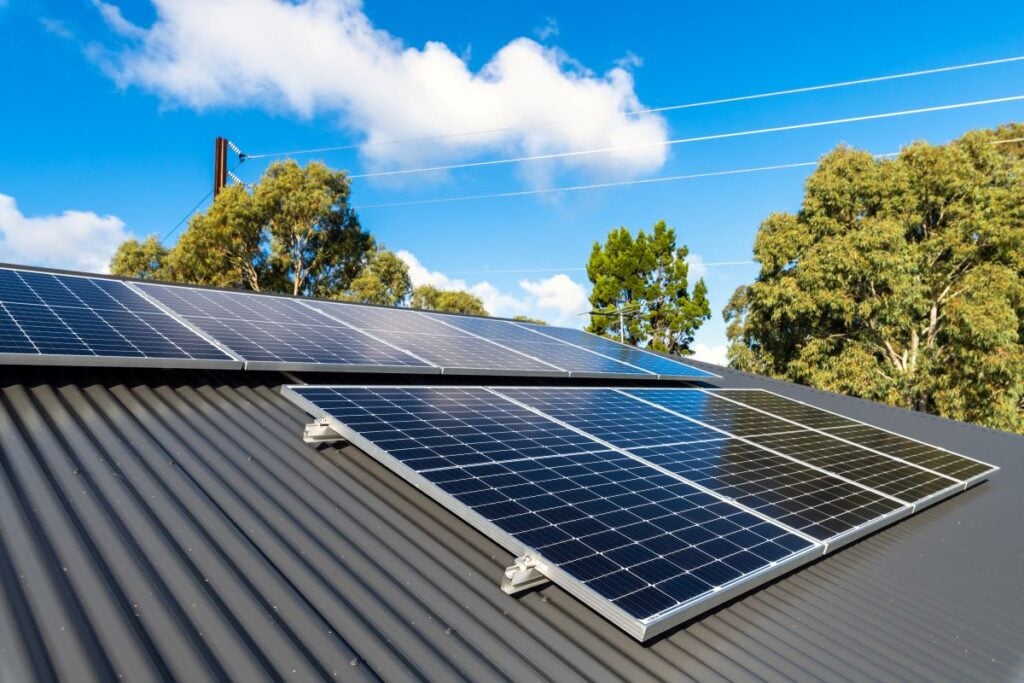
Corrugated metal and metal shingle roofs require a third approach that lands between standing seam and asphalt. These roofs need penetrating brackets with sealing washers because there’s no seam to clamp onto, but the metal panel design makes flashing different from asphalt shingles. Manufacturer-specific hardware matters here. Generic mounts often fail.
- Best suited for: Corrugated metal panels, R-panel, and metal shingle roofs.
- Hardware: Specialty brackets with rubber sealing washers and stainless screws.
- Manufacturer compatibility: Many metal shingle brands like DECRA and Interlock have proprietary mounting systems.
- Installation time: Comparable to asphalt mounting, sometimes slightly longer.
- Cost factor: Mid-range, between asphalt and tile installations.
5. Ballasted Mounts for Flat Roofs
Flat roofs use a completely different category of mounting called ballasted systems. Instead of penetrating the roof, the mounts rest on the membrane and are weighted down with concrete blocks or pavers. The weight holds them in place. No penetrations, no leaks, and full flexibility on panel angle since you’re not following the slope of a pitched roof.
- Best suited for: Flat or low-slope roofs on residential additions or commercial properties.
- Hardware: Self-ballasting racks weighted with concrete pavers.
- Penetration count: Zero, in most installations.
- Tilt flexibility: Panels can be angled for optimal sun exposure regardless of roof slope.
- Cost factor: Hardware costs more, but no flashing labor offsets the difference.
6. Integrated Solar Roofing Systems Like GAF Energy
Integrated solar roofing replaces the traditional panel-on-mount approach entirely. Systems like GAF Energy Timberline Solar shingles install as part of the roof itself, eliminating the separation between the roofing and the solar array. The shingles nail down like asphalt and produce power at the same time. Cleaner look, fewer leak points, single warranty covering both the roof and the solar.
- Best suited for: New roofs or full roof replacements where solar is part of the project.
- Hardware: Solar shingles install with standard nailing techniques, no rails or brackets.
- Aesthetic advantage: The system looks like a roof, not a solar array.
- Warranty advantage: Single manufacturer covers both the roof and the solar performance.
- Cost factor: Premium upfront cost, but eliminates the separate roof and solar installations.
How to Choose the Right Mounting Method for Your Roof
The right mounting method depends on your roof type, age, condition, and long-term plans. A few specific factors should drive the decision, and an inspection is the only way to know what’s actually right for your home.
Factors That Should Drive Your Decision
When we evaluate a roof for solar in Ballantyne and surrounding areas, we look at the same set of factors every time. Skip these conversations and you’ll regret it later.
- Roof age: A roof under 10 years old can support a solar install with confidence. Over 15 years, replace first.
- Material type: Asphalt, metal, tile, or flat. Each has its own mounting category.
- Structural capacity: Solar adds 3 to 4 pounds per square foot. Older roofs may need reinforcement.
- Roof orientation: South-facing slopes generate the most power. Other orientations affect panel placement.
- Future plans: If you’ll replace the roof in 5 years, do it before the solar install, not after.
Why Roof Replacement Often Makes Sense Before Solar
Solar panels last 25 to 30 years. If your roof has 10 years of life left, you’re going to remove and reinstall the entire system mid-cycle. That removal and reinstall costs thousands. Replace the roof first and the math works in your favor for the next 25 plus years.
- Cost of removal and reinstall: Typically $2,500 to $5,000 to take panels down and put them back up.
- Roof lifespan match: New asphalt shingles last 25 to 30 years, matching solar panel lifespan.
- Combined warranty: Single contractor handling both gives you one team responsible for both systems.
- Avoided complications: A roof leak under solar is much harder to find and fix than one without.
- Long-term value: A new roof plus solar adds documented value to the home.
Frequently Asked Questions
How much does solar panel mounting add to the total cost?
Mounting hardware and labor typically account for 10 to 15% of total solar system cost. On an average $20,000 residential solar install, that’s $2,000 to $3,000 in mounts and racking. Tile and metal shingle installs cost more due to labor complexity. Standing seam metal often comes in at the lower end of the range.
How long does solar mounting installation take?
Solar mounting installation usually takes 1 to 3 days for a standard residential system. Asphalt shingle and standing seam metal installs are often the fastest. Tile and metal shingle installations can take 4 days or more due to specialized hardware and careful tile handling.
Will solar panels damage my roof?
Properly installed solar panels do not damage your roof and can actually extend its lifespan by shielding shingles from UV exposure. Damage usually comes from improper installation, not the panels themselves. Choose a contractor with manufacturer-approved methods and the right experience for your specific roof type.
Should I replace my roof before installing solar?
Replace your roof before installing solar if your roof is more than 10 to 12 years old or showing signs of wear. Solar panels last 25 to 30 years, so the roof underneath should match that lifespan. Removing and reinstalling panels later costs thousands and risks damaging both systems.
Can solar mounting void my roof warranty?
Solar mounting can void your roof manufacturer’s warranty if installed with incorrect hardware or improper flashing techniques. Use a roofing contractor or solar installer with manufacturer certifications to keep both warranties intact. Roof Medic is a GAF Master Elite Contractor and a GAF Energy installer, which preserves both warranties.
Is GAF Energy solar roofing worth the upgrade?
GAF Energy Timberline Solar can be worth the upgrade for homeowners replacing their roof and considering solar at the same time. The integrated system eliminates the separation between roof and solar array, looks cleaner, and comes with a single manufacturer warranty. The upfront cost is higher, but the long-term value works for many homeowners.
Why Roof Medic Is the Right Team for Your Solar Mounting Project
Roof Medic is one of the few roofing companies in the area certified to install GAF Energy solar roofing systems. We’re also a GAF Master Elite Contractor and CertainTeed SELECT ShingleMaster, placing us in the top 3% of roofers nationwide. That matters for solar because the roof and the mounting hardware have to work together. We inspect first and recommend second on every solar project we evaluate. If your roof isn’t ready for solar, we’ll tell you. If integrated solar roofing makes more sense than a traditional panel install, we’ll explain why. Our workmanship warranty is 2 years standard and 5 years when homeowners follow our recommended approach, all backed by a veteran-owned team that takes your home as seriously as you do.
Ready for an honest evaluation of your roof’s solar readiness? Contact Roof Medic today to schedule an inspection in Ballantyne and surrounding areas. We’ll tell you exactly what your roof needs, which mounting method fits, and whether solar is the right move for your home right now.
